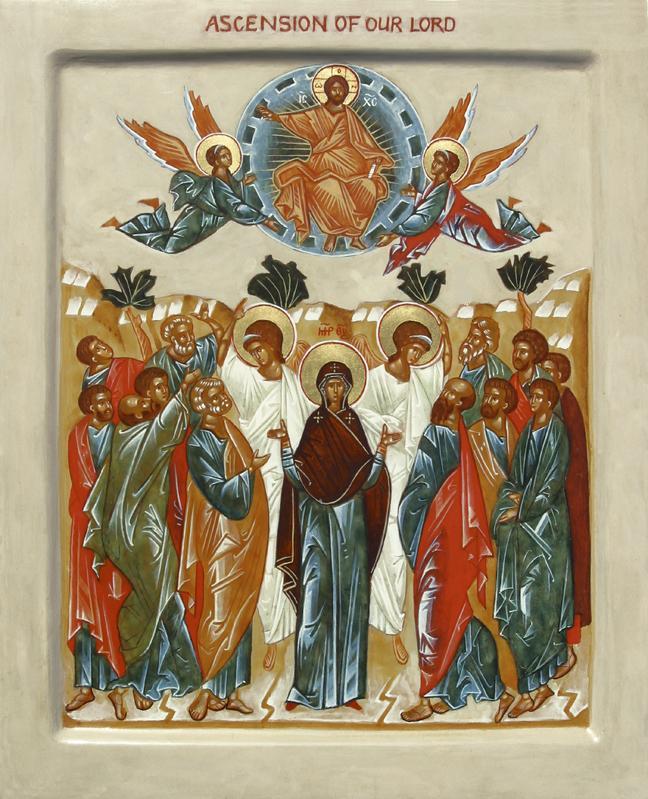
A Fragrant Legacy
By Fr John Parker
Originally published in the Post and Courier on Sunday, October 26, 2008
It was on Miodrag’s account that he and Drazen visited our church on this sad day. Miodrag’s brother, Aleksandar, a long-time resident of Mt. Pleasant, had died—alone—and Miodrag had just arrived from his home in Europe to tend to the affairs of his departed brother.
I had not known Aleksandar in this life. Still, it is our custom to care for the dead and their survivors, the weeping and the grieving, who are looking for the consolation of Christ. We put a plan together and agreed to meet at the morgue on that Monday, in order to wash Aleksandar’s body.
The traditional Christian preparation of a corpse for burial is quite a moving, beautiful, and holy experience, even in the sterile environment of a morgue. After the first few Psalms, one really doesn’t take much notice of the room. In this case, our parish deacon and his wife, with the ever gracious assistance and direction from the head of mortuary services, humbly, delicately, carefully washed Aleksandar’s body, all the while I chanted Psalms, prayers and hymns for the departed, in addition to reading relevant passages on death and resurrection from the Epistles and Gospels. We finished our sacred philoxenia (biblical Greek for “hospitality”—and literally “love of strangers”) by anointing Aleksandar’s body with fragrant Myrrh, one of the three beautiful gifts given to Jesus at his Nativity—precisely with reference to his impending death for our sake. Our last act in preparation for his memorial service was to clothe him in white. It is what he would have worn at his first, and more eternally significant death: his baptism. The Panikhida (memorial service) was simple and beautiful—a small gathered choir and a few dozen of Aleksandar’s coworkers and friends, in addition to his brother and sister-in-law.
The same day that we sang our funeral service for Aleksandar, I learned of the falling-asleep (as it is referred to in the Scriptures) of our beloved brother priest, the Very Rev. Nicholas Trivelas, who pastored the Orthodox Church in Charleston for nearly half a century. The preparation of the body of a priest is similar to that of a layman, though a bit more specific. We were kindly welcomed, in this instance, by the folks at Stuhr’s, a few of whom knew Fr Nicholas when he was a young priest and they were children. Fr John Johns, the current pastor of Holy Trinity had invited Fr Anastasy Yatrellis (himself a son of the parish) and me to meet him for these holy preparations. We shared the prayers, washings, and anointings—we washed his face, hands, and feet, and anointed each with Myrrh. What joyful sadness—to wash the face of a perpetual smile, to anoint the hands and feet of one who served so many. Finishing our prayers and the anointing, we vested Fr Nicholas’ body in his brightest Paschal Vestments—a priest is buried as a priest. Fr. Nicholas’ funeral was a more sizeable service. His whole family was there, in addition to his parish family—including surely the children’s children of folks he himself had baptized.
The preparations for the burial of these to men caused me also to reflect on my time in the Holy Land. Not far outside of Jerusalem, we visited the Judean desert, and specifically the Great Lavra, a living and ancient Orthodox Christian monastery founded in 485AD. Within the nave of the katholikon (the main monastery church) is a glass case about 6 feet long and three feet deep and high, which contains a human body vested similarly to Fr Nicholas. The body is that of St Sabbas, the founder of the monastery. His incorrupt relics (non-embalmed, non-decomposing body) are laid in state for pilgrims to come and venerate. (Incorrupt relics, which often exude the scent of myrrh or roses—even 1500 years after death—are a sign of sanctity in the Orthodox tradition. It is one way we recognize a saint.) The preparations made for St Sabbas’ funeral 1500 years ago would have been the same as those we made for Aleksandar and Fr Nicholas. It is the way our tradition teaches us to treat the corpse of any departed soul.
The body of a deceased layman, the body of a departed priest, and the incorrupt corpse of an ancient monastic saint. You and I each share two vocations with Aleksandar, Fr Nicholas, and St. Sabbas. The first is that not a single one of us escapes death. Psalm 49:7ff is a reminder: “Truly no man can ransom himself, or give to God the price of his life, for the ransom of his life is costly, and can never suffice, that he should continue to live on for ever, and never see the Pit.” We will all die.
The second shared vocation is also highlighted in this Psalm: “Yea, he shall see that even the wise die, the fool and the stupid alike must perish and leave their wealth to others” (verse 10)—the call to “leave our wealth to others”—the eternal memory of a holy, self-denying life, which in turn gives life to those with whom we come into contact. And we have a limited number of breaths in this world to be perfected in such holiness. God help us not to squander those precious few!
As the Western Church prepares to celebrate the feast of All Saints (Nov 1) and All Souls (Nov 2), let us remind ourselves that life is but a breath, and ask the Lord that after our own death, we leave a truly holy legacy—alive, as fragrant as roses—15 days, 15 months, even 1500 years from now.
Fr John Parker is priest-in-charge of Holy Ascension Orthodox Church in I’On. He can be reached at frjohn@ocacharleston.org. To read more visit www.holyascension.blogspot.com.
Monday, October 27, 2008


Thursday, October 23, 2008
Interview with Frederica on Ancient Faith Radio
Hear it here:
http://ancientfaith.com/podcasts/podup/frederica/a_voice_in_the_public_square
Read it here:
A Voice in the Public Square
Thursday, October 9, 2008Frederica in Orthodoxy, Christian Apologetics, Podcast
[Ancient Faith Radio; October 9, 2008]
Frederica Mathewes-Green: I’m in the nave of the Church of Holy Ascension in Mt. Pleasant, South Carolina on Route 17, just north of Charleston. I’m talking with the pastor, Fr. John Parker. Tell me a little about your journey to Orthodoxy, Father, as we get started.
Fr. John Parker: Sure. Well, it all began during my Episcopal seminary experience in Ambridge, PA, when the library there had a sale on duplicate books. So they were 50 cents for paperbacks and a dollar for hardback books. I found a whole stack of Orthodox Books there, which, I’d never read anything like that before. So, there was “Becoming Orthodox” by Fr. Peter Gillquist, there were several books by Fr. Schmemann… so, we began to read those books at home actually. My wife (she’ll probably not be happy that I said this) took “Becoming Orthodox” off of my bedside. I had read thirty pages in three days, and she’s a very voracious reader, and so she took it and put it on her bedside, and read it in one day. As a result of that, she came to me and said, “You know, this book… we have to talk about this book.” It raises questions that we couldn’t even think to ask. That was very intriguing to me. So that was the very beginning of it: some used books from Trinity Episcopal School for Ministry.
FMG: And is that about eight or ten years ago now?
Fr. JP: That would have been… you know, I was just measuring it the other day. It would have been 1998 or 1999. So, yeah, it’s been almost ten years ago right now. Amazingly, (I remember this too because I still have the email) once I began to ask some of the questions that Fr. Peter raised in his book, “Becoming Orthodox”, the first thing that I tried to do was to contact your husband, who was my Episcopal priest when I was a child, and to ask him some of these questions- what has the Orthodox Church always believed about this? That was an email, I think it was in January 2000, that I was able to reach him.
FMG: I have a similar memory, I was going through some old file boxes and I found a manila envelope. My husband’s handwriting on the tab said, “Orthodoxy”. To think that there was a time in our lives when everything about Orthodoxy fit in one manila folder! It’s like it just exploded and took over the whole house and our lives.
Fr. JP: I have the same folder!
FMG: (laughs) And as you mentioned, we go back quite a ways. When my husband was the rector of St. Margaret’s Episcopal Church in Woodbridge, Virginia, 1981 to 1989, your dad was on the parish council, and you were a teenager in the youth group, and we knew you quite well then. And as we always say, you always came over and mowed the lawn for us when we were out of town. So, God has some very strange and surprising plans- because here you are in our home town, right outside of Charleston with this beautiful church. I’ve already talked to Andrew about the architecture and all of that. But you’ve drawn some attention to yourself here in Charleston, by being outspoken, as I’m sure you were in the Episcopal Church as well. Tell me how you began to get the attention of the local newspaper and local inquirers.
Fr. JP: Well, it happened in two ways, actually. The first is that the local newspaper has an incredible Faith & Values section. Incredible, I think, because it has one; well, let me just say that it’s incredible that they have a Faith & Values section that’s three pages every Sunday. And they often report on the happenings of local churches. I noticed in reading that section many times that they often reported on mega-church activity in the area, and almost never reported on anything traditional. So, I took a moment to email the contact at that time at the newspaper, and I said, ‘You know, all of these articles I read are about contemporary Christianity in the Faith & Values section, I wonder if you’d be interested in something about the traditional Christians in our area.’ And he said, ‘Well, that’d be interesting’. And as it turned out at that time, I think it was at that time, the main writer for the Faith & Values section of the newspaper had received some sort of a paid study abroad to Indonesia. It was maybe around the time of the tsunami. He went there to study the intersection of journalism and religion in the aftermath of the tsunami. So, the newspaper agreed to allow me to write columns as a guest writer while he was away for several months. So there was a time actually when I was able to write two or three and sometimes four columns a month for that newspaper, unedited except for spelling and punctuation, basically. So I could write strictly about the Orthodox Faith and the Orthodox tradition without any supervision, so to speak.
FMG: That is amazing. So you wrote about iconography, or the Virgin Mary, or…
Fr. JP: Well, I don’t know if I got myself in trouble or not in the very first article I wrote, but I wrote about the importance of tradition in Christianity, and in that particular article, I described that all Christianity is traditional, but the question is, whose tradition?
FMG: I remember reading it!
Fr. JP: That was not received well in certain circles, because it seemed like a slam on everyone, but I made the point in that particular article, writing about churches, that if you come into a church like we’ve been graced to build here, a traditional church which is oriented toward the East- that’s redundant- but it’s properly oriented, and it’s in the form of a cross and it has three spaces, you know- the narthex, the nave, and the altar, and so forth. That describes one tradition. And a gigantic church in an auditorium with stadium seating and a stage represents another tradition. It is a certain Christianity, but that comes from a different architectural tradition. So, it’s traditional, it’s just not the ancient Christian tradition.
FMG: I want to say, I’ve been experimenting, I always want to find terms that go down a little smoother. When you use the word ‘tradition’ you always have to do a lot of explaining, because people think about the scripture of, ‘Do not be led by false tradition’ - false tradition? ‘dead tradition’. I’m experimenting with using the phrase, ‘community memory’ instead. Orthodoxy is held together by community memory. We do these things because everyone everywhere throughout the history of this Body of Christ has, we always have. So, it’s community memory. I find people don’t balk as much as they do at the word ‘tradition’. So that was your first column, and then you were off to the races for several months.
Fr. JP: That’s right, and the more controversial one was when I was invited to give the benediction at the local medical university, the Medical University of South Carolina in Charleston. Actually, the local Greek priest was invited to give the benediction that year, and his schedule was full. I was very grateful that he came to ask me; he wanted to keep it within the Orthodox churches. So, that was wonderful. So I diligently sat down at my desk and I pulled out our four-volume Great Book of Needs, and I went specifically to the service of the anointing of the sick, to look at the different prayers that we have that talk about Jesus as the physician of our souls and bodies, figuring that this is a group of students who are going to be nurses and doctors, that I would find something helpful there. Then, I penned what I thought was a prayer absolutely in line with our tradition, which was both rooted in those prayers from the Great Book of Needs, but also rooted in the local circumstances of the medical school. The day after that, I got a letter in the mail thanking me from the medical university that I would do this benediction, and it said, ‘please see the guidelines for the benediction inside’. So, I did. And it was crazy. It describes that you weren’t allowed to use the word ‘Father’, or ‘Jesus’… actually, it listed ‘Jesus’, ‘Allah’, and I don’t remember what else, but all these quote-unquote specific names for God; you had to keep it generic. I’m not even sure you could say ‘God Almighty’. You just had to be very generic. So, I immediately contacted their office and suggested that I couldn’t do such a thing because I’m an Orthodox priest. We pray in the Name of the Father, the Son, and the Holy Spirit, and that’s what I had to do. So, here’s my prayer. And I sent it to them by email.
FMG: So they had their own tradition that they were trying to make you fit.
Fr. JP: Well, ironically, a new tradition, if we can say so, because this is the point I’d tried to make before I wind up just saying, you know, I either need to pray the way we pray, or else maybe I shouldn’t do that at all. And so they asked me, would it be terrible if I were uninvited? And I said, no, you do what you need to do. So they invited someone else. But the point is that the medical university has a chapel which is on the corner of Rutledge and Bee Streets in downtown Charleston. It’s a neo-Gothic chapel, called St. Luke’s Chapel. Who’s St. Luke? He’s a physician, who wrote a gospel. And it’s got a gigantic stained glass window of St. Luke. And it’s got a cross on the top. So, the medical university especially in Charleston has a very venerable Christian tradition. But that has changed a lot lately. So, anyhow, that became an opportunity for the local area to learn a little about the Orthodox Christian Church. And the newspaper allowed me to write a column about why I couldn’t give the benediction. And it gave the chaplain of the medical university a couple of columns next to my column so that we were side-by-side in our writings, and that caused many letters to the editor to be written. Ultimately, I was able to sit down with the chaplain, which was very good, and to talk to him about his position and so forth. It was very helpful in that sort of dialogue sense, but very frustrating because a Christian should be able to pray as a Christian, and a Christian chaplain of a school should be able to defend that a Christian invited to pray as a Christian should be able to pray as a Christian! If that makes sense. Kind of crazy.
FMG: So it was a moment of controversy for your church here, for Holy Ascension Orthodox Church, but it was a beneficial controversy, because it drew attention, it got everybody talking, and I’m sure there were a lot of discussions of the pro’s and con’s and what should be done. I imagine you found that a lot of the local population was very sympathetic to what you were trying to do.
Fr. JP: It’s true. Actually, that was my first foray into the broader religious constituency of Charleston. I did get a lot emails- every time I wrote in the newspaper I’d say, “And you can reach Fr. John by email at… ” and I’d give my email, and I’d give the phone number, precisely because I would enjoy having the conversation with anyone. I received an equal number of ‘Atta boy!’s as, ‘You are just a Neanderthal Christian…’ I mean, I received that from atheists, I received it from other Christians… So it was a very interesting response, even from the Christian community there were those who were way in favor of, ‘Yeah, you stand up there and the Gospel says, if you deny me I will deny you, and so forth, and if you stand up for me, I’ll stand up for you!’, and then from other Christians, who’d say, ‘You just have no business saying those sorts of things.’ It’s crazy. It was quite an experience.
FMG: You told me you met recently with an orthodox rabbi who specifically wanted to meet with you because of that controversy.
Fr. JP: Right. He was given the opportunity to give the benediction this year, and ironically, um, I’ve never said anything like this, I’ll say it out loud, he prayed in the name of ‘Our Father’ in the benediction, which was permitted for him. So maybe in some little way, I paved the way for some stripping of the generic language about God, even if we need to talk about Who the fulfillment of Our Father is. But, that was quite a remarkable experience. It was nice to hear from him as an orthodox Jewish rabbi that he has a firm conviction about in Whose name he prays, and that he would not waver from that either.
FMG: That’s very good. So in a short time, you’ve managed to become pretty well known, I guess, in Charleston, with the regular newspaper columns, over the course of a couple of years now. Do you find that people are being drawn, being brought to this parish out of curiosity or whatever because of this effort to speak in the public square?
Fr. JP: I think that’s true. Yes. We have a number of people, I don’t know, maybe two or three or four families, who have specifically come here as a result of those newspaper articles. There is one family I am thinking of at the moment, who read something that I read in the newspaper- it was in late October that year because it was about Halloween- and actually, I wrote about the link between Halloween and death. Just to kind of capture everyone’s imagination. They happened to be reading that, they had dabbled in witchcraft, and they thought, ‘This is amazing. I’ve never heard anybody write anything like this about Christianity and death and Halloween. We need to go check that place out!’ And in short order, they were catechumens, and a year later, they were received into the Church. Really remarkable. You know, people aren’t coming in droves, but I’m guessing now, that just about everyone who reads the Post and Courier in Charleston could name the Orthodox church as a result of this. It’s been a real gift to us to have that kind of opportunity. Many of my brethren in other states, particularly in the north or northeast, can’t believe even that there is such a thing as a Faith & Values section, much less that Orthodox Christianity is playing such a prominent role in writing in that particular paper.
FMG: I know that’s one of the things, as newspapers have lost so many subscribers, and they keep shrinking, they keep losing pages, that the religion section is one of the first things to go. So, to still have three pages devoted to it here is an amazing thing. I know that there’s Fr. Aidan Wilcox in Cedar Park, Texas, right outside of Austin, that he writes regular columns for the local paper there, and I guess I would want to encourage pastors to do that. If you’re listening and an Orthodox pastor, you might think you’re not a writer, but if you can write a sermon, you know, just write down what you said in the sermon. Find a local hook, something in the news, and… a lot of times papers are looking to fill content, especially online, on web pages it’s 24 hours a day, and you have to keep replacing it. There are many ways you could actually reach a larger community than just your parish by reaching out like that.
Fr. JP: May I say another word about that? I would just like to encourage the same, and one of the tacks that I found most helpful was that the Orthodox Church represents something so totally ancient, something so totally different from everything else that’s in the religious news, at least in our area, but I think it’s true in the broader context of our country. We represent the minority, in a sense, and newspapers like minorities. So it’s helpful to use that, to use it for good, to describe that ‘Here’s what we’ve been doing for thousands of years, and here’s how come you don’t know about it already.’ Or by comparison to some grandiose thing, I read in the newspaper- this is how it happens sometimes. There was an article in the newspaper about eight weeks ago about some local mega-churches that have been partnering with other mega-churches to make mega-mega-churches. Their call to unity is to do things together, so they’re going to put a lot of money in a big pot together, and they’re going to go plant a church in Africa. Or something like that. It’s a very noble idea, and thank God they have such resources. But nevertheless, one of the lines in that article said, ‘We are partnering together with churches to plant other churches in other parts of the world where it’s never been done before.’ That was one of the things they said! And I thought, that’s outrageous! So I called the newspaper, my contact there, and I suggested, this has been going on for a long, long time, and can I have the time to explain a) what true Christian Unity is, and b) how it has been going on throughout the last 2000 years, and perhaps why they might not know so- part of which is our fault, and part of which is their own myopia. But anyway, just to read something in the newspaper, and to contact the newspaper and say ‘I have a different perspective on that, which is also very venerable and ancient’, and I also have the opportunity to talk about it. I find that they’re always interested in that.
FMG: Yes, I think you will find that editors are often very receptive to that. Otherwise, they have to go out and find written material day after day after day. If you can tap into some open discussion going on they’re often very willing to hear that.
Fr. JP: One last word: I’ve found it very helpful to do that sort of writing about something that’s already been written about, because they’ve already chosen the topic, and this would be a way to respond to it. It does happen on occasion that newspapers are interested in having two opposing sides put in a room and having you duke it out. So, that also can be beneficial if everyone knows that that’s going on. It’s important to be aware of that, so that when we come to the table to write about that, to write about whatever the topic might be, we know that sometimes it might just be for the spectacle. So we have to be careful to know that’s the case. We may still choose to be in the arena, but…
FMG: I noticed that desire for spectacle when there used to be much more interest in hearing about the abortion issue, and I was doing a lot of writing, radio, newspaper, and TV shows. Especially on TV shows, I would notice how the producer would dart in during the commercials and try to make us angrier, saying, ‘Challenge him on that, don’t let him get away with that…’ It is spectacle; they know that what catches the viewers, or the readers, is people getting angry. We want to do things the way that is appropriate for us as Christians and not get hooked into that culture of spectacle and anger and violence, in fact, verbal violence.
Fr. JP: Yeah, it’s amazing how that does work sometimes. I would say, just to make a shameless plug for the Post and Courier in Charleston, South Carolina, that over the last two and a half years, they have been incredibly gracious to me, and have allowed me on behalf of our parish, to write about things that otherwise people just… they won’t buy a book at the store to read about this, they won’t type it in to the internet to read about it, but they flip over to page F-1 or whatever the Faith & Values is that particular Sunday, and they look on there for what piques their interest, to the point where people will see me on occasion in my cassock, and they’ll say, ‘Are you the one who writes in the newspaper?’ And then I find that they’ve clipped those articles out and they’ve studied them in their adult Sunday School class in their big Baptist churches, and that’s amazing! So thank God for that and anything to help the Orthodox Faith become well known.
FMG: Well, it’s my home town. I’m glad to hear that they’re gracious and agreeable as you say at the Post and Courier. Congratulations. You say things in those columns sometimes, I think, ‘You can’t say those things in public!’ Because you’re so forthright about the Orthodox moral and theological position, and I find that it turns out, you *can* say that! And it clears the air when you just spell it out. And anytime you want to come mow our lawn, you can do that too!
Fr. JP: Thank you, I’ll be happy to do that again sometime!
Article originally appeared on Frederica.com (http://www.frederica.com/).
See website for complete article licensing information.
http://ancientfaith.com/podcasts/podup/frederica/a_voice_in_the_public_square
Read it here:
A Voice in the Public Square
Thursday, October 9, 2008Frederica in Orthodoxy, Christian Apologetics, Podcast
[Ancient Faith Radio; October 9, 2008]
Frederica Mathewes-Green: I’m in the nave of the Church of Holy Ascension in Mt. Pleasant, South Carolina on Route 17, just north of Charleston. I’m talking with the pastor, Fr. John Parker. Tell me a little about your journey to Orthodoxy, Father, as we get started.
Fr. John Parker: Sure. Well, it all began during my Episcopal seminary experience in Ambridge, PA, when the library there had a sale on duplicate books. So they were 50 cents for paperbacks and a dollar for hardback books. I found a whole stack of Orthodox Books there, which, I’d never read anything like that before. So, there was “Becoming Orthodox” by Fr. Peter Gillquist, there were several books by Fr. Schmemann… so, we began to read those books at home actually. My wife (she’ll probably not be happy that I said this) took “Becoming Orthodox” off of my bedside. I had read thirty pages in three days, and she’s a very voracious reader, and so she took it and put it on her bedside, and read it in one day. As a result of that, she came to me and said, “You know, this book… we have to talk about this book.” It raises questions that we couldn’t even think to ask. That was very intriguing to me. So that was the very beginning of it: some used books from Trinity Episcopal School for Ministry.
FMG: And is that about eight or ten years ago now?
Fr. JP: That would have been… you know, I was just measuring it the other day. It would have been 1998 or 1999. So, yeah, it’s been almost ten years ago right now. Amazingly, (I remember this too because I still have the email) once I began to ask some of the questions that Fr. Peter raised in his book, “Becoming Orthodox”, the first thing that I tried to do was to contact your husband, who was my Episcopal priest when I was a child, and to ask him some of these questions- what has the Orthodox Church always believed about this? That was an email, I think it was in January 2000, that I was able to reach him.
FMG: I have a similar memory, I was going through some old file boxes and I found a manila envelope. My husband’s handwriting on the tab said, “Orthodoxy”. To think that there was a time in our lives when everything about Orthodoxy fit in one manila folder! It’s like it just exploded and took over the whole house and our lives.
Fr. JP: I have the same folder!
FMG: (laughs) And as you mentioned, we go back quite a ways. When my husband was the rector of St. Margaret’s Episcopal Church in Woodbridge, Virginia, 1981 to 1989, your dad was on the parish council, and you were a teenager in the youth group, and we knew you quite well then. And as we always say, you always came over and mowed the lawn for us when we were out of town. So, God has some very strange and surprising plans- because here you are in our home town, right outside of Charleston with this beautiful church. I’ve already talked to Andrew about the architecture and all of that. But you’ve drawn some attention to yourself here in Charleston, by being outspoken, as I’m sure you were in the Episcopal Church as well. Tell me how you began to get the attention of the local newspaper and local inquirers.
Fr. JP: Well, it happened in two ways, actually. The first is that the local newspaper has an incredible Faith & Values section. Incredible, I think, because it has one; well, let me just say that it’s incredible that they have a Faith & Values section that’s three pages every Sunday. And they often report on the happenings of local churches. I noticed in reading that section many times that they often reported on mega-church activity in the area, and almost never reported on anything traditional. So, I took a moment to email the contact at that time at the newspaper, and I said, ‘You know, all of these articles I read are about contemporary Christianity in the Faith & Values section, I wonder if you’d be interested in something about the traditional Christians in our area.’ And he said, ‘Well, that’d be interesting’. And as it turned out at that time, I think it was at that time, the main writer for the Faith & Values section of the newspaper had received some sort of a paid study abroad to Indonesia. It was maybe around the time of the tsunami. He went there to study the intersection of journalism and religion in the aftermath of the tsunami. So, the newspaper agreed to allow me to write columns as a guest writer while he was away for several months. So there was a time actually when I was able to write two or three and sometimes four columns a month for that newspaper, unedited except for spelling and punctuation, basically. So I could write strictly about the Orthodox Faith and the Orthodox tradition without any supervision, so to speak.
FMG: That is amazing. So you wrote about iconography, or the Virgin Mary, or…
Fr. JP: Well, I don’t know if I got myself in trouble or not in the very first article I wrote, but I wrote about the importance of tradition in Christianity, and in that particular article, I described that all Christianity is traditional, but the question is, whose tradition?
FMG: I remember reading it!
Fr. JP: That was not received well in certain circles, because it seemed like a slam on everyone, but I made the point in that particular article, writing about churches, that if you come into a church like we’ve been graced to build here, a traditional church which is oriented toward the East- that’s redundant- but it’s properly oriented, and it’s in the form of a cross and it has three spaces, you know- the narthex, the nave, and the altar, and so forth. That describes one tradition. And a gigantic church in an auditorium with stadium seating and a stage represents another tradition. It is a certain Christianity, but that comes from a different architectural tradition. So, it’s traditional, it’s just not the ancient Christian tradition.
FMG: I want to say, I’ve been experimenting, I always want to find terms that go down a little smoother. When you use the word ‘tradition’ you always have to do a lot of explaining, because people think about the scripture of, ‘Do not be led by false tradition’ - false tradition? ‘dead tradition’. I’m experimenting with using the phrase, ‘community memory’ instead. Orthodoxy is held together by community memory. We do these things because everyone everywhere throughout the history of this Body of Christ has, we always have. So, it’s community memory. I find people don’t balk as much as they do at the word ‘tradition’. So that was your first column, and then you were off to the races for several months.
Fr. JP: That’s right, and the more controversial one was when I was invited to give the benediction at the local medical university, the Medical University of South Carolina in Charleston. Actually, the local Greek priest was invited to give the benediction that year, and his schedule was full. I was very grateful that he came to ask me; he wanted to keep it within the Orthodox churches. So, that was wonderful. So I diligently sat down at my desk and I pulled out our four-volume Great Book of Needs, and I went specifically to the service of the anointing of the sick, to look at the different prayers that we have that talk about Jesus as the physician of our souls and bodies, figuring that this is a group of students who are going to be nurses and doctors, that I would find something helpful there. Then, I penned what I thought was a prayer absolutely in line with our tradition, which was both rooted in those prayers from the Great Book of Needs, but also rooted in the local circumstances of the medical school. The day after that, I got a letter in the mail thanking me from the medical university that I would do this benediction, and it said, ‘please see the guidelines for the benediction inside’. So, I did. And it was crazy. It describes that you weren’t allowed to use the word ‘Father’, or ‘Jesus’… actually, it listed ‘Jesus’, ‘Allah’, and I don’t remember what else, but all these quote-unquote specific names for God; you had to keep it generic. I’m not even sure you could say ‘God Almighty’. You just had to be very generic. So, I immediately contacted their office and suggested that I couldn’t do such a thing because I’m an Orthodox priest. We pray in the Name of the Father, the Son, and the Holy Spirit, and that’s what I had to do. So, here’s my prayer. And I sent it to them by email.
FMG: So they had their own tradition that they were trying to make you fit.
Fr. JP: Well, ironically, a new tradition, if we can say so, because this is the point I’d tried to make before I wind up just saying, you know, I either need to pray the way we pray, or else maybe I shouldn’t do that at all. And so they asked me, would it be terrible if I were uninvited? And I said, no, you do what you need to do. So they invited someone else. But the point is that the medical university has a chapel which is on the corner of Rutledge and Bee Streets in downtown Charleston. It’s a neo-Gothic chapel, called St. Luke’s Chapel. Who’s St. Luke? He’s a physician, who wrote a gospel. And it’s got a gigantic stained glass window of St. Luke. And it’s got a cross on the top. So, the medical university especially in Charleston has a very venerable Christian tradition. But that has changed a lot lately. So, anyhow, that became an opportunity for the local area to learn a little about the Orthodox Christian Church. And the newspaper allowed me to write a column about why I couldn’t give the benediction. And it gave the chaplain of the medical university a couple of columns next to my column so that we were side-by-side in our writings, and that caused many letters to the editor to be written. Ultimately, I was able to sit down with the chaplain, which was very good, and to talk to him about his position and so forth. It was very helpful in that sort of dialogue sense, but very frustrating because a Christian should be able to pray as a Christian, and a Christian chaplain of a school should be able to defend that a Christian invited to pray as a Christian should be able to pray as a Christian! If that makes sense. Kind of crazy.
FMG: So it was a moment of controversy for your church here, for Holy Ascension Orthodox Church, but it was a beneficial controversy, because it drew attention, it got everybody talking, and I’m sure there were a lot of discussions of the pro’s and con’s and what should be done. I imagine you found that a lot of the local population was very sympathetic to what you were trying to do.
Fr. JP: It’s true. Actually, that was my first foray into the broader religious constituency of Charleston. I did get a lot emails- every time I wrote in the newspaper I’d say, “And you can reach Fr. John by email at… ” and I’d give my email, and I’d give the phone number, precisely because I would enjoy having the conversation with anyone. I received an equal number of ‘Atta boy!’s as, ‘You are just a Neanderthal Christian…’ I mean, I received that from atheists, I received it from other Christians… So it was a very interesting response, even from the Christian community there were those who were way in favor of, ‘Yeah, you stand up there and the Gospel says, if you deny me I will deny you, and so forth, and if you stand up for me, I’ll stand up for you!’, and then from other Christians, who’d say, ‘You just have no business saying those sorts of things.’ It’s crazy. It was quite an experience.
FMG: You told me you met recently with an orthodox rabbi who specifically wanted to meet with you because of that controversy.
Fr. JP: Right. He was given the opportunity to give the benediction this year, and ironically, um, I’ve never said anything like this, I’ll say it out loud, he prayed in the name of ‘Our Father’ in the benediction, which was permitted for him. So maybe in some little way, I paved the way for some stripping of the generic language about God, even if we need to talk about Who the fulfillment of Our Father is. But, that was quite a remarkable experience. It was nice to hear from him as an orthodox Jewish rabbi that he has a firm conviction about in Whose name he prays, and that he would not waver from that either.
FMG: That’s very good. So in a short time, you’ve managed to become pretty well known, I guess, in Charleston, with the regular newspaper columns, over the course of a couple of years now. Do you find that people are being drawn, being brought to this parish out of curiosity or whatever because of this effort to speak in the public square?
Fr. JP: I think that’s true. Yes. We have a number of people, I don’t know, maybe two or three or four families, who have specifically come here as a result of those newspaper articles. There is one family I am thinking of at the moment, who read something that I read in the newspaper- it was in late October that year because it was about Halloween- and actually, I wrote about the link between Halloween and death. Just to kind of capture everyone’s imagination. They happened to be reading that, they had dabbled in witchcraft, and they thought, ‘This is amazing. I’ve never heard anybody write anything like this about Christianity and death and Halloween. We need to go check that place out!’ And in short order, they were catechumens, and a year later, they were received into the Church. Really remarkable. You know, people aren’t coming in droves, but I’m guessing now, that just about everyone who reads the Post and Courier in Charleston could name the Orthodox church as a result of this. It’s been a real gift to us to have that kind of opportunity. Many of my brethren in other states, particularly in the north or northeast, can’t believe even that there is such a thing as a Faith & Values section, much less that Orthodox Christianity is playing such a prominent role in writing in that particular paper.
FMG: I know that’s one of the things, as newspapers have lost so many subscribers, and they keep shrinking, they keep losing pages, that the religion section is one of the first things to go. So, to still have three pages devoted to it here is an amazing thing. I know that there’s Fr. Aidan Wilcox in Cedar Park, Texas, right outside of Austin, that he writes regular columns for the local paper there, and I guess I would want to encourage pastors to do that. If you’re listening and an Orthodox pastor, you might think you’re not a writer, but if you can write a sermon, you know, just write down what you said in the sermon. Find a local hook, something in the news, and… a lot of times papers are looking to fill content, especially online, on web pages it’s 24 hours a day, and you have to keep replacing it. There are many ways you could actually reach a larger community than just your parish by reaching out like that.
Fr. JP: May I say another word about that? I would just like to encourage the same, and one of the tacks that I found most helpful was that the Orthodox Church represents something so totally ancient, something so totally different from everything else that’s in the religious news, at least in our area, but I think it’s true in the broader context of our country. We represent the minority, in a sense, and newspapers like minorities. So it’s helpful to use that, to use it for good, to describe that ‘Here’s what we’ve been doing for thousands of years, and here’s how come you don’t know about it already.’ Or by comparison to some grandiose thing, I read in the newspaper- this is how it happens sometimes. There was an article in the newspaper about eight weeks ago about some local mega-churches that have been partnering with other mega-churches to make mega-mega-churches. Their call to unity is to do things together, so they’re going to put a lot of money in a big pot together, and they’re going to go plant a church in Africa. Or something like that. It’s a very noble idea, and thank God they have such resources. But nevertheless, one of the lines in that article said, ‘We are partnering together with churches to plant other churches in other parts of the world where it’s never been done before.’ That was one of the things they said! And I thought, that’s outrageous! So I called the newspaper, my contact there, and I suggested, this has been going on for a long, long time, and can I have the time to explain a) what true Christian Unity is, and b) how it has been going on throughout the last 2000 years, and perhaps why they might not know so- part of which is our fault, and part of which is their own myopia. But anyway, just to read something in the newspaper, and to contact the newspaper and say ‘I have a different perspective on that, which is also very venerable and ancient’, and I also have the opportunity to talk about it. I find that they’re always interested in that.
FMG: Yes, I think you will find that editors are often very receptive to that. Otherwise, they have to go out and find written material day after day after day. If you can tap into some open discussion going on they’re often very willing to hear that.
Fr. JP: One last word: I’ve found it very helpful to do that sort of writing about something that’s already been written about, because they’ve already chosen the topic, and this would be a way to respond to it. It does happen on occasion that newspapers are interested in having two opposing sides put in a room and having you duke it out. So, that also can be beneficial if everyone knows that that’s going on. It’s important to be aware of that, so that when we come to the table to write about that, to write about whatever the topic might be, we know that sometimes it might just be for the spectacle. So we have to be careful to know that’s the case. We may still choose to be in the arena, but…
FMG: I noticed that desire for spectacle when there used to be much more interest in hearing about the abortion issue, and I was doing a lot of writing, radio, newspaper, and TV shows. Especially on TV shows, I would notice how the producer would dart in during the commercials and try to make us angrier, saying, ‘Challenge him on that, don’t let him get away with that…’ It is spectacle; they know that what catches the viewers, or the readers, is people getting angry. We want to do things the way that is appropriate for us as Christians and not get hooked into that culture of spectacle and anger and violence, in fact, verbal violence.
Fr. JP: Yeah, it’s amazing how that does work sometimes. I would say, just to make a shameless plug for the Post and Courier in Charleston, South Carolina, that over the last two and a half years, they have been incredibly gracious to me, and have allowed me on behalf of our parish, to write about things that otherwise people just… they won’t buy a book at the store to read about this, they won’t type it in to the internet to read about it, but they flip over to page F-1 or whatever the Faith & Values is that particular Sunday, and they look on there for what piques their interest, to the point where people will see me on occasion in my cassock, and they’ll say, ‘Are you the one who writes in the newspaper?’ And then I find that they’ve clipped those articles out and they’ve studied them in their adult Sunday School class in their big Baptist churches, and that’s amazing! So thank God for that and anything to help the Orthodox Faith become well known.
FMG: Well, it’s my home town. I’m glad to hear that they’re gracious and agreeable as you say at the Post and Courier. Congratulations. You say things in those columns sometimes, I think, ‘You can’t say those things in public!’ Because you’re so forthright about the Orthodox moral and theological position, and I find that it turns out, you *can* say that! And it clears the air when you just spell it out. And anytime you want to come mow our lawn, you can do that too!
Fr. JP: Thank you, I’ll be happy to do that again sometime!
Article originally appeared on Frederica.com (http://www.frederica.com/).
See website for complete article licensing information.
Pilgrimage may be a life changing event
Special to the Post and Courier
By Fr John Parker
I am going on a journey across time and geography. As you read this column, I am making my way from Charleston to Newark, N.J., to Tel Aviv to Jerusalem.
In July, I received the most amazing gift: a two-week pilgrimage to the Holy Land, led by the most well-known Orthodox Christian bishop in the English-speaking world — His Eminence, Metropolitan Kallistos Ware. We are not going on a tour; a pilgrimage is substantially different. Yes, we will travel with cameras and MP3 recorders and notebooks, but these we bring along in order to share the pilgrimage upon our return with those who cannot physically go. We go to the Holy Land to experience the life of Christ in the very places he was born and lived and walked and died — to pray in the holy places, to reflect on the holy moments, to venerate the sacred relics.
Last week, while surfing with a friend, I learned that he had taken a trip to the Holy Land. He described with such palpable joy standing on a certain mountain and being able to point from there in the panorama, to these holy sites — places most of us have seen only in pictures and located only on maps in the appendix of the Holy Scriptures. His greatest impression was that "Jesus was clearly human to me now." Having walked on the roads where Christ walked and been in a boat where Jesus walked on water, Jesus was "more real" to him.
I had lunch with another friend who took a similar trip more than 40 years ago. He had a reaction which I hadn't really anticipated: it was hard to focus at the Church of the Holy Sepulchre — the Holy Tomb of our Lord — since there were so many tourists: folks who were only interested in getting a snapshot of the tomb of Jesus (as if it were simply an artifact in an old museum) before moving on. Yet this is the site of the Resurrection of Jesus Christ — the most significant moment in the history of the world! I don't look forward to that particular juxtaposition.
Still, I hope it will be more like when I visited the Byzantium exhibit at the Metropolitan Museum of Art in New York about five years ago. While every other gallery was filled with tourists gabbing about art, the section containing 500 years of Christian icons, mosaics, and vestments was nearly silent.
One knew this was a holy space, even in the middle of one of the most well-known treasure houses of art in the world.
Our pilgrimage is an intimate family visit. A living connection to relatives on the other side of the world. On Tuesday, we'll be honored to visit with and receive the blessing of the Patriarch of Jerusalem, the successor to James (the first Bishop of Jerusalem, who presided at the first council of the Church, as described in Acts 15). We are in communion with the Patriarch to this day, and will have the opportunity, most likely, to serve and receive Communion at the tomb of our Lord.
As a parenthetical note, for us Orthodox Christians through nearly two millennia, the various sacred sites are not "supposed." We know the Church of the Holy Sepulchre to be the tomb of Christ. We know Mount Tabor to be the Mount of Transfiguration. We know these things because our relatives were there — just like Charlestonians know that Edgar Allan Poe was stationed at Fort Moultrie and as the English are certain that William Shakespeare wrote all those great plays — some of our relatives knew him, too. This pilgrimage is a visit to living relatives whose relatives' relatives' relatives built these places in Jesus' honor — and their Christian kin before them walked with the Lord himself.
In the wider religio-political sphere, I seriously wonder what we will encounter. There is always the threat of missiles. The region is not the most stable place. And what of the presence of the evangelical Christian Zionists who have such a heavy influence in Israel? (These folks believe that the Jews should "get their land back" in order that Jesus can then return to judge the Earth. Their ideas about this link between the land and the final judgment are based on personal interpretations of Scripture which find their roots only in the last century or so in North American Christianity, and nowhere else in Christian history.) What place will they play in the landscape there? Do they improve or detract from the reputation of Christianity in Israel?
Add to all of that the fact that this is my first visit to a non-Western culture. One semester of Hebrew and several years of seminary cannot truly prepare one for even two weeks in a society entirely different from ours, with a language read and written opposite ours, and with a vocabulary base almost fully unrelated to the romance languages and Greek that I have studied.
Mercy — this is quite a pilgrimage, a stretch in virtually every facet of my life.
A few weeks from now, I will follow up with a column describing the reality of that which I can only imagine right now. I'll also be pleased to share with all who are interested our pilgrimage in photographs and MP3s on Wednesday nights beginning in October. Your prayers, please! And send me your names and the names of friends and relatives for whom I should pray at these holy sites!
Fr. John Parker is priest-in-charge of Holy Ascension Orthodox Church in I'On. Reach him at frjohn@ocacharleston.org. He will contribute to a blog while on pilgrimage: www.orthodoxiona.co.uk/new page 8.htm.
By Fr John Parker
I am going on a journey across time and geography. As you read this column, I am making my way from Charleston to Newark, N.J., to Tel Aviv to Jerusalem.
In July, I received the most amazing gift: a two-week pilgrimage to the Holy Land, led by the most well-known Orthodox Christian bishop in the English-speaking world — His Eminence, Metropolitan Kallistos Ware. We are not going on a tour; a pilgrimage is substantially different. Yes, we will travel with cameras and MP3 recorders and notebooks, but these we bring along in order to share the pilgrimage upon our return with those who cannot physically go. We go to the Holy Land to experience the life of Christ in the very places he was born and lived and walked and died — to pray in the holy places, to reflect on the holy moments, to venerate the sacred relics.
Last week, while surfing with a friend, I learned that he had taken a trip to the Holy Land. He described with such palpable joy standing on a certain mountain and being able to point from there in the panorama, to these holy sites — places most of us have seen only in pictures and located only on maps in the appendix of the Holy Scriptures. His greatest impression was that "Jesus was clearly human to me now." Having walked on the roads where Christ walked and been in a boat where Jesus walked on water, Jesus was "more real" to him.
I had lunch with another friend who took a similar trip more than 40 years ago. He had a reaction which I hadn't really anticipated: it was hard to focus at the Church of the Holy Sepulchre — the Holy Tomb of our Lord — since there were so many tourists: folks who were only interested in getting a snapshot of the tomb of Jesus (as if it were simply an artifact in an old museum) before moving on. Yet this is the site of the Resurrection of Jesus Christ — the most significant moment in the history of the world! I don't look forward to that particular juxtaposition.
Still, I hope it will be more like when I visited the Byzantium exhibit at the Metropolitan Museum of Art in New York about five years ago. While every other gallery was filled with tourists gabbing about art, the section containing 500 years of Christian icons, mosaics, and vestments was nearly silent.
One knew this was a holy space, even in the middle of one of the most well-known treasure houses of art in the world.
Our pilgrimage is an intimate family visit. A living connection to relatives on the other side of the world. On Tuesday, we'll be honored to visit with and receive the blessing of the Patriarch of Jerusalem, the successor to James (the first Bishop of Jerusalem, who presided at the first council of the Church, as described in Acts 15). We are in communion with the Patriarch to this day, and will have the opportunity, most likely, to serve and receive Communion at the tomb of our Lord.
As a parenthetical note, for us Orthodox Christians through nearly two millennia, the various sacred sites are not "supposed." We know the Church of the Holy Sepulchre to be the tomb of Christ. We know Mount Tabor to be the Mount of Transfiguration. We know these things because our relatives were there — just like Charlestonians know that Edgar Allan Poe was stationed at Fort Moultrie and as the English are certain that William Shakespeare wrote all those great plays — some of our relatives knew him, too. This pilgrimage is a visit to living relatives whose relatives' relatives' relatives built these places in Jesus' honor — and their Christian kin before them walked with the Lord himself.
In the wider religio-political sphere, I seriously wonder what we will encounter. There is always the threat of missiles. The region is not the most stable place. And what of the presence of the evangelical Christian Zionists who have such a heavy influence in Israel? (These folks believe that the Jews should "get their land back" in order that Jesus can then return to judge the Earth. Their ideas about this link between the land and the final judgment are based on personal interpretations of Scripture which find their roots only in the last century or so in North American Christianity, and nowhere else in Christian history.) What place will they play in the landscape there? Do they improve or detract from the reputation of Christianity in Israel?
Add to all of that the fact that this is my first visit to a non-Western culture. One semester of Hebrew and several years of seminary cannot truly prepare one for even two weeks in a society entirely different from ours, with a language read and written opposite ours, and with a vocabulary base almost fully unrelated to the romance languages and Greek that I have studied.
Mercy — this is quite a pilgrimage, a stretch in virtually every facet of my life.
A few weeks from now, I will follow up with a column describing the reality of that which I can only imagine right now. I'll also be pleased to share with all who are interested our pilgrimage in photographs and MP3s on Wednesday nights beginning in October. Your prayers, please! And send me your names and the names of friends and relatives for whom I should pray at these holy sites!
Fr. John Parker is priest-in-charge of Holy Ascension Orthodox Church in I'On. Reach him at frjohn@ocacharleston.org. He will contribute to a blog while on pilgrimage: www.orthodoxiona.co.uk/new page 8.htm.
Priest Becomes a Pilgrim
Special to the Post and Courier
October 5, 2008
Riot shields. A ray of light beaming from the dome of the Church of the Resurrection down into the nave. A Berlin-ish Wall running over the hillside, dividing families. The Great Walls of the Old City. Women bearing machine guns in the streets. The angelic voices of the nuns at the Russian monastery at En Kerem. A late night talk with an Orthodox Rabbi who has a well-known radio program broadcast world-wide. A Palestinian Roman Catholic guide on our trip. An hour with the Patriarch of Jerusalem, successor to the brother of our Lord. Walking—if we can call it that—in a crowd of 10,000 (literally) Muslims leaving the Dome of the Rock on a Friday during Ramadan. Receiving communion at the hand of the Archbishop of Jerusalem at the tomb of Jesus Christ in the middle of the night. These are a just a few of the sites and experiences of my two-week pilgrimage to the Holy Land from September 8-20. Our local host, a newly ordained Anglican deacon, began to describe all this to us before we would experience it: “If all the world is a stage, Jerusalem is an Opera.” Opera indeed.
The religious and political history and situation in Israel is as varied as its terrain. Rocky here, desert there, lush and tropical in another spot. Never the same for 40 miles in a row. Jerusalem seems to be a police state. Everywhere we went, the presence of small bands of armed officers were walking about. In order to enter the temple mount, one must go through airport-type security. And yet, despite the military and police presence (or perhaps because of it), I felt entirely comfortable walking the streets of Old Jerusalem at 11pm, 1230am, and 445am.
The only time I ever felt threatened at all was at the Wailing Wall, the remnants of the Western Wall of the Temple, to which many people come to pray, most numerously Orthodox Jews. As we entered the area, Metropolitan Kallistos, Fr Marcus Burch, and I were confronted by a very angry (and I suspect disturbed) Orthodox Jew who came practically belly to belly with our Bishop. He had a very hateful (I use such a term very sparingly, yet intentionally) look in his eyes as he continually pointed the way out, and blocked Metropolitan Kallistos’ every effort to move forward. Finally, Israeli police moved in and escorted the man back towards the wall, in order to leave us in peace. Still, the fellow kept an eye on us from a distance—and I likewise kept an eye on him. He had obviously identified us as Christians by our dress (cassocks and hats), though we were forbidden to wear our pectoral crosses there. Forbidden were all “ritual objects”. Apart from being spat upon by a few Jewish teenagers and receiving the Arabic equivalent of the middle finger by a few Muslim boys, we were generally well received in public. I guess pubescence is a universal suffering.
Jerusalem is a confluence of ancient and modern tides. Where in our country, we think in terms of a few hundred years, and in Europe, one thinks in terms of more centuries, Jerusalem is the land of millennia. King David lived and ruled there nearly 3000 years ago. It was incredibly humbling to walk the Way of the Cross on the Via Dolorosa—the path the Jesus himself took to his crucifixion 2000 years ago. It was mind-boggling to visit Jericho, the oldest inhabited city in the world—a 10,000 year history (and to see the very Sycamore tree that Zacchaeus climbed up into. There is only one ancient Sycamore tree in Jericho, and it is more than 2000 years old.) If anything, our pilgrimage helped to establish a sense that we are part of a great and long (very long) history.
My concerns about the mixing of tourism and pilgrimage proved to be true—and not just for others, but for me. It was a difficult line to walk—the line of wanting to be there in the moment to pray, to venerate, to pause, to reflect, but also to record, to photograph for those who could not come along and may never go. The most significant moments of prayer and true pilgrimage occurred at unusual times and unanticipated places. To serve the services at the Church of the Resurrection (Holy Sepulchre, tomb of Christ), we had to go in the middle of the night. There is simply too much chaos during the day, so the monks begin the liturgy after midnight, when the doors to the church are closed to the public, and open only to those who come to pray. How incredibly peaceful it was to receive communion in the Tomb of Jesus Christ at about 4am, nearly the hour of his resurrection “before dawn”.
Another angelic experience was the Vigil (Evening service) for the Beheading of the John the Baptist, celebrated at the Russian Orthodox monastery in En Kerem, providentially, the home of Zechariah and Elizabeth—the parents of the Forerunner himself. We arrived after the prayers had already begun, and on entering the magnificent church, surely we heard the voices of the hosts of heaven. The monastic women’s choir sang from the loft over the west doors and filled the domed church with the most ethereal resonance. We clergy were also then invited to serve with the monks for as long as we could stay, which turned out to be one of the most moving experiences of my priesthood.
We got a taste of parish life in Nazareth, when, on Sunday, we served with the local bishop and clergy in a packed church. The service was sung eagerly and fervently in Arabic—with a little Greek and English thrown in by us visitors—and was apparently aired on internet TV. The local Orthodox Christians invited us to their version of coffee hour, and treated us like kings. Middle-eastern hospitality ranks near the top of the list. How beautiful that the biblical term is “philoxenia”—the love of strangers.
I really can do no justice to the pilgrimage in a brief column—but I wanted to give at least a taste of my experience here. I thank the Post and Courier for the opportunity to write these two before-and-after columns. To those who did email me names of friends and family, I did pray for you at the Holy Sepulchre and at the Church of the Transfiguration on Mt. Tabor. May the Lord bless you! For a fuller walk through our pilgrimage experience, I invite you to Holy Ascension on Wednesday nights in October. We’ll pray Vespers at 6pm, and from 6:45-8pm, I recount the pilgrimage in pictures and tales. Come and see!
Fr John Parker is priest-in-charge of Holy Ascension Orthodox Church in I’On. He can be reached at 843-881-5010 or frjohn@ocacharleston.org.
October 5, 2008
Riot shields. A ray of light beaming from the dome of the Church of the Resurrection down into the nave. A Berlin-ish Wall running over the hillside, dividing families. The Great Walls of the Old City. Women bearing machine guns in the streets. The angelic voices of the nuns at the Russian monastery at En Kerem. A late night talk with an Orthodox Rabbi who has a well-known radio program broadcast world-wide. A Palestinian Roman Catholic guide on our trip. An hour with the Patriarch of Jerusalem, successor to the brother of our Lord. Walking—if we can call it that—in a crowd of 10,000 (literally) Muslims leaving the Dome of the Rock on a Friday during Ramadan. Receiving communion at the hand of the Archbishop of Jerusalem at the tomb of Jesus Christ in the middle of the night. These are a just a few of the sites and experiences of my two-week pilgrimage to the Holy Land from September 8-20. Our local host, a newly ordained Anglican deacon, began to describe all this to us before we would experience it: “If all the world is a stage, Jerusalem is an Opera.” Opera indeed.
The religious and political history and situation in Israel is as varied as its terrain. Rocky here, desert there, lush and tropical in another spot. Never the same for 40 miles in a row. Jerusalem seems to be a police state. Everywhere we went, the presence of small bands of armed officers were walking about. In order to enter the temple mount, one must go through airport-type security. And yet, despite the military and police presence (or perhaps because of it), I felt entirely comfortable walking the streets of Old Jerusalem at 11pm, 1230am, and 445am.
The only time I ever felt threatened at all was at the Wailing Wall, the remnants of the Western Wall of the Temple, to which many people come to pray, most numerously Orthodox Jews. As we entered the area, Metropolitan Kallistos, Fr Marcus Burch, and I were confronted by a very angry (and I suspect disturbed) Orthodox Jew who came practically belly to belly with our Bishop. He had a very hateful (I use such a term very sparingly, yet intentionally) look in his eyes as he continually pointed the way out, and blocked Metropolitan Kallistos’ every effort to move forward. Finally, Israeli police moved in and escorted the man back towards the wall, in order to leave us in peace. Still, the fellow kept an eye on us from a distance—and I likewise kept an eye on him. He had obviously identified us as Christians by our dress (cassocks and hats), though we were forbidden to wear our pectoral crosses there. Forbidden were all “ritual objects”. Apart from being spat upon by a few Jewish teenagers and receiving the Arabic equivalent of the middle finger by a few Muslim boys, we were generally well received in public. I guess pubescence is a universal suffering.
Jerusalem is a confluence of ancient and modern tides. Where in our country, we think in terms of a few hundred years, and in Europe, one thinks in terms of more centuries, Jerusalem is the land of millennia. King David lived and ruled there nearly 3000 years ago. It was incredibly humbling to walk the Way of the Cross on the Via Dolorosa—the path the Jesus himself took to his crucifixion 2000 years ago. It was mind-boggling to visit Jericho, the oldest inhabited city in the world—a 10,000 year history (and to see the very Sycamore tree that Zacchaeus climbed up into. There is only one ancient Sycamore tree in Jericho, and it is more than 2000 years old.) If anything, our pilgrimage helped to establish a sense that we are part of a great and long (very long) history.
My concerns about the mixing of tourism and pilgrimage proved to be true—and not just for others, but for me. It was a difficult line to walk—the line of wanting to be there in the moment to pray, to venerate, to pause, to reflect, but also to record, to photograph for those who could not come along and may never go. The most significant moments of prayer and true pilgrimage occurred at unusual times and unanticipated places. To serve the services at the Church of the Resurrection (Holy Sepulchre, tomb of Christ), we had to go in the middle of the night. There is simply too much chaos during the day, so the monks begin the liturgy after midnight, when the doors to the church are closed to the public, and open only to those who come to pray. How incredibly peaceful it was to receive communion in the Tomb of Jesus Christ at about 4am, nearly the hour of his resurrection “before dawn”.
Another angelic experience was the Vigil (Evening service) for the Beheading of the John the Baptist, celebrated at the Russian Orthodox monastery in En Kerem, providentially, the home of Zechariah and Elizabeth—the parents of the Forerunner himself. We arrived after the prayers had already begun, and on entering the magnificent church, surely we heard the voices of the hosts of heaven. The monastic women’s choir sang from the loft over the west doors and filled the domed church with the most ethereal resonance. We clergy were also then invited to serve with the monks for as long as we could stay, which turned out to be one of the most moving experiences of my priesthood.
We got a taste of parish life in Nazareth, when, on Sunday, we served with the local bishop and clergy in a packed church. The service was sung eagerly and fervently in Arabic—with a little Greek and English thrown in by us visitors—and was apparently aired on internet TV. The local Orthodox Christians invited us to their version of coffee hour, and treated us like kings. Middle-eastern hospitality ranks near the top of the list. How beautiful that the biblical term is “philoxenia”—the love of strangers.
I really can do no justice to the pilgrimage in a brief column—but I wanted to give at least a taste of my experience here. I thank the Post and Courier for the opportunity to write these two before-and-after columns. To those who did email me names of friends and family, I did pray for you at the Holy Sepulchre and at the Church of the Transfiguration on Mt. Tabor. May the Lord bless you! For a fuller walk through our pilgrimage experience, I invite you to Holy Ascension on Wednesday nights in October. We’ll pray Vespers at 6pm, and from 6:45-8pm, I recount the pilgrimage in pictures and tales. Come and see!
Fr John Parker is priest-in-charge of Holy Ascension Orthodox Church in I’On. He can be reached at 843-881-5010 or frjohn@ocacharleston.org.
On Christian Unity
BY FR. JOHN PARKER
Special to The Post and Courier
It started out as a recipe for key lime double chocolate chip cookies. But after mixing the ingredients, I thought the pre-baked conglomeration looked too wet. There was absolutely no way I could roll one-inch balls of dough out of this soup. So I decided to add almost double the flour. Then (amateur that I am) I thought I ought to add some more of the other ingredients to try to even out the proportions. Good intentions, bad idea. After the timer sounded, I pulled my confections out of the oven, and voila! Cakies. They are round and somewhat flat like a cookie, but overly moist and airy—not crispy or buttery. Cakies look and smell a lot like cookies, but they aren’t.
Now, some might say, “Hey, those are great! Cookie meets cake. And since everyone has differing tastes in desserts, all the merrier.” To a certain extent, this is true. But what if folks called those cakies “cookies,” and for the next two or three hundred years, this crazed recipe took off and my cakies were baked all over the planet and called “cookies.” Then, after a half of a millennium, someone shows up with a recipe calling for half the flour and proportionately less sugar and eggs claiming that these are actually cookies. Citizens angrily suggest that the baker is trying to force his (presumably) ancient recipe for his “cookies” on them. Cakie enthusiasts insist, however disconnected from the past, that they know what a real cookie is. After all—everyone knows that they are supposed to be light and fluffy and moist.
In the heat of the debate about the ancient recipe and the newer one, there is a group of folks who think it is not worth battling over which is the true cookie. “Wouldn’t it be nice,” they thought, “if we just got together to bake.” And so they did. Some baked cakies (calling them cookies) and some baked the ancient treat, and they were content to “just bake together.” They thought that this would unify them. But did it?
Our Lord Jesus Christ prayed in the Garden prior to his passion, “that they may all be one,” and with a purpose—that the world might know that God the Father sent Jesus Christ into the world to save us. When self-professing contemporary Christians read these verses and look around, many assume that the denominations of Christianity are God-willed and God-sanctioned—like varieties of cookies and cakies or the 31 flavors of Baskin Robbins. Some attempt to justify these differences, saying that hands and feet and ears all make one and the same body. Others claim that God “wired” us all differently for different “expressions” of church. Still others figure that there is little use in worrying about the differences, and that self-professing Christians ought just “to do things together” to show unity (have communion, pray, build houses, go on retreats).
But the Christian life is so much more profound, and frankly, so much simpler. It is certainly good when Christians get together to serve others to bear witness to God’s love, and we should make the effort more often. But this action of doing things together is not the unifying factor of the Christian faith. We are not made one by a common cause. Rather, we are made one by Jesus Christ, who is the same yesterday, today, and forever. We are not called—to make reference to the story above—just to bake together, we are called to make true cookies and to pass the same recipe on to the next generation.
Unity in the Christian understanding is not simply an outward unity that covers up a multitude of polar disagreements on the fundamentals of faith—such as baptism (who, how, when?) and the Eucharist (body and blood of Christ or not?)- or whether or not fornication, unchastity, adultery, and porneia are sins (they are!). Rather, the unity of Christians and the inherent Oneness of the Church (which to this day is not fractured) is established by knowing the unchanging Jesus Christ and living the Christian life as it has been traditioned (handed down) to us, from the beginning, starting with our Lord.
St Irenaeus of Lyons (disciple of Polycarp who was a disciple of John the Evangelist, who was among the closest to Jesus) described this reality beautifully in the second century:
The Church, having received this preaching and this faith, although scattered throughout the whole world, yet, as if occupying but one house, carefully preserves it. She also believes these points [of doctrine] just as if she had but one soul, and one and the same heart, and she proclaims them, and teaches them, and hands them down, with perfect harmony, as if she possessed only one mouth…For the Churches which have been planted in Germany do not believe or hand down anything different, nor do those in Spain, nor those in Gaul, nor those in the East... But as the sun, that creature of God, is one and the same throughout the whole world, so also the preaching of the truth shineth everywhere, and enlightens all men that are willing to come to a knowledge of the truth. Nor will any one of the rulers in the Churches, however highly gifted he may be in point of eloquence, teach doctrines different from these (for no one is greater than the Master); nor, on the other hand, will he who is deficient in power of expression inflict injury on the tradition. For the faith being ever one and the same, neither does one who is able at great length to discourse regarding it, make any addition to it, nor does one, who can say but little diminish it (Against the Heresies, Book I, Chapter X).
So, we ought not to overlook our differences. Rather, we ought to seek, each of us, to root out everything in our selves and souls and our practice that has not been believed in every place at all times by all Christians, and from this starting point, to know the true Christ as he really is. From there we can begin to serve the world in true unity.
Fr John Parker is priest-in-charge of Holy Ascension Orthodox Church in I’On. He can be reached at frjohn@ocacharleston.org or visit www.holyascension.blogspot.com.
Special to The Post and Courier
It started out as a recipe for key lime double chocolate chip cookies. But after mixing the ingredients, I thought the pre-baked conglomeration looked too wet. There was absolutely no way I could roll one-inch balls of dough out of this soup. So I decided to add almost double the flour. Then (amateur that I am) I thought I ought to add some more of the other ingredients to try to even out the proportions. Good intentions, bad idea. After the timer sounded, I pulled my confections out of the oven, and voila! Cakies. They are round and somewhat flat like a cookie, but overly moist and airy—not crispy or buttery. Cakies look and smell a lot like cookies, but they aren’t.
Now, some might say, “Hey, those are great! Cookie meets cake. And since everyone has differing tastes in desserts, all the merrier.” To a certain extent, this is true. But what if folks called those cakies “cookies,” and for the next two or three hundred years, this crazed recipe took off and my cakies were baked all over the planet and called “cookies.” Then, after a half of a millennium, someone shows up with a recipe calling for half the flour and proportionately less sugar and eggs claiming that these are actually cookies. Citizens angrily suggest that the baker is trying to force his (presumably) ancient recipe for his “cookies” on them. Cakie enthusiasts insist, however disconnected from the past, that they know what a real cookie is. After all—everyone knows that they are supposed to be light and fluffy and moist.
In the heat of the debate about the ancient recipe and the newer one, there is a group of folks who think it is not worth battling over which is the true cookie. “Wouldn’t it be nice,” they thought, “if we just got together to bake.” And so they did. Some baked cakies (calling them cookies) and some baked the ancient treat, and they were content to “just bake together.” They thought that this would unify them. But did it?
Our Lord Jesus Christ prayed in the Garden prior to his passion, “that they may all be one,” and with a purpose—that the world might know that God the Father sent Jesus Christ into the world to save us. When self-professing contemporary Christians read these verses and look around, many assume that the denominations of Christianity are God-willed and God-sanctioned—like varieties of cookies and cakies or the 31 flavors of Baskin Robbins. Some attempt to justify these differences, saying that hands and feet and ears all make one and the same body. Others claim that God “wired” us all differently for different “expressions” of church. Still others figure that there is little use in worrying about the differences, and that self-professing Christians ought just “to do things together” to show unity (have communion, pray, build houses, go on retreats).
But the Christian life is so much more profound, and frankly, so much simpler. It is certainly good when Christians get together to serve others to bear witness to God’s love, and we should make the effort more often. But this action of doing things together is not the unifying factor of the Christian faith. We are not made one by a common cause. Rather, we are made one by Jesus Christ, who is the same yesterday, today, and forever. We are not called—to make reference to the story above—just to bake together, we are called to make true cookies and to pass the same recipe on to the next generation.
Unity in the Christian understanding is not simply an outward unity that covers up a multitude of polar disagreements on the fundamentals of faith—such as baptism (who, how, when?) and the Eucharist (body and blood of Christ or not?)- or whether or not fornication, unchastity, adultery, and porneia are sins (they are!). Rather, the unity of Christians and the inherent Oneness of the Church (which to this day is not fractured) is established by knowing the unchanging Jesus Christ and living the Christian life as it has been traditioned (handed down) to us, from the beginning, starting with our Lord.
St Irenaeus of Lyons (disciple of Polycarp who was a disciple of John the Evangelist, who was among the closest to Jesus) described this reality beautifully in the second century:
The Church, having received this preaching and this faith, although scattered throughout the whole world, yet, as if occupying but one house, carefully preserves it. She also believes these points [of doctrine] just as if she had but one soul, and one and the same heart, and she proclaims them, and teaches them, and hands them down, with perfect harmony, as if she possessed only one mouth…For the Churches which have been planted in Germany do not believe or hand down anything different, nor do those in Spain, nor those in Gaul, nor those in the East... But as the sun, that creature of God, is one and the same throughout the whole world, so also the preaching of the truth shineth everywhere, and enlightens all men that are willing to come to a knowledge of the truth. Nor will any one of the rulers in the Churches, however highly gifted he may be in point of eloquence, teach doctrines different from these (for no one is greater than the Master); nor, on the other hand, will he who is deficient in power of expression inflict injury on the tradition. For the faith being ever one and the same, neither does one who is able at great length to discourse regarding it, make any addition to it, nor does one, who can say but little diminish it (Against the Heresies, Book I, Chapter X).
So, we ought not to overlook our differences. Rather, we ought to seek, each of us, to root out everything in our selves and souls and our practice that has not been believed in every place at all times by all Christians, and from this starting point, to know the true Christ as he really is. From there we can begin to serve the world in true unity.
Fr John Parker is priest-in-charge of Holy Ascension Orthodox Church in I’On. He can be reached at frjohn@ocacharleston.org or visit www.holyascension.blogspot.com.
Tuesday, December 18, 2007
"Who's your daddy?"
Published on Sunday, 12/16/07 in Charleston, SC's Post and Courier, Faith and Values Section with the title "Christians share common genealogy". Not published in their online version.
In my first days in the Lowcountry, I discovered the importance of genealogies in Charleston. “Are you related to the Parkers on such-and-such Street?” Naively (albeit truthfully), I quickly responded, “No.” As you may be aware, a “no” in this category immediately highlighted that I am from “off”. A better answer, I later learned, is “probably way back”. This reply is equally true, and yet somehow still connects someone from North Carolina to the Holy City. It is nice to have roots, but as far as our eternal life is concerned, our earthly heritage is of zero importance.
In the case of Jesus Christ, however, the question “are you related to ___” is very important. So important that both Matthew and Luke record his lineage in their Gospels. The promised messiah, Jesus, was to have a certain, clear lineage. More specifically, as the prophet Isaiah foretold 700+ years BC, he was to “come forth [as] a shoot from the stump of Jesse, and a branch shall grow out of his roots” (Isaiah 11:1). More directly, he would be the eternal successor to King David, the great King of Israel. “Of the increase of his government and of peace there will be no end, upon the throne of David, and over his kingdom, to establish it, and to uphold it with justice and with righteousness from this time forth and for evermore” (Isaiah 9:7ff).
So when the infant Jesus was born, causing no small controversy in the Roman Empire (King Herod jealously ordered the slaughter of all male children under the age of two years old in order to protect his throne from the infant Messiah.), those who knew the Scriptures began to draw near to witness their fulfillment and to worship the newborn King. Even those who did not know and who were not looking for the Messiah (the Gentile Magi, for example) found him and worshipped him. As we sing in the Orthodox tradition, “for those who worshipped the stars were taught by a star to adore Thee…”
Two miracles in one: a child was born from a virgin, and this child, Jesus, is God incarnate, Emmanuel, God with us!
In the early centuries of the Church, even the heretics didn’t doubt Jesus’ divinity. Practically the reverse of today, it was his true humanity that was questioned. Already though, Christians who believed and taught what had always been known about Jesus Christ had kept genealogies which demonstrate his true humanity.
The answer to the Charlestonian question, “Who’s your daddy?” is answered in two ways for Jesus—since he is both God and Man. His Father is God the Father, from whom he is eternally begotten. As a human being and a man, he also has earthly parents—a foster father, Joseph, and his ever-virgin mother, Mary—both of whom are descendents of Abraham, the ancient Patriarch. It is this bloodline which is established in the genealogies in Matthew 1 and Luke 3:23ff. St. Matthew’s account, presented from Abraham to the birth of Jesus, demonstrates Jesus’ royal lineage—showing him to be the fulfillment of all the Kings of Israel. St. Luke’s account, on the other hand, begins with Jesus and works backwards in time, through the line of Levi, showing Jesus to be the fulfillment of the Priests of Israel. Additionally, by going all the way back to Adam, Jesus Christ is shown to be the new Adam, the true Son of God, who, like Adam, was born without human seed.
The genealogies make another—if not more subtle—comment as well: Jesus Christ came into the world to save sinners—both Jews and Gentiles, men and women. Among them are listed the following (to name only a few): King Ahaz “who did not do what was right in the eyes of the Lord God”, who burned his own son and worshipped other gods. King Solomon, who despite his great wisdom, took foreign wives whose false religions turned him from the one true God. He also had hundreds of concubines. King David was an adulterer (with Bathsheba) and a murderer (by ordering the sure death of her husband, Uriah). Rahab was a prostitute. Ruth, the Moabite, was a gentile.
Thankfully, as Christians, our genealogy is always one of adoption and not one of bloodline. By our baptism in Christ, there is “neither slave nor free, male nor female, Jew nor Gentile”. Neither is there Charlestonian nor Yankee, etc. But the genealogies of Jesus Christ are central to our faith, demonstrating the actual, earthly heritage of the Pre-eternal God, made man. Come let us adore him!
Fr. John Parker is priest-in-charge of Holy Ascension Orthodox Church in Mt. Pleasant. To read more visit www.holyascension.blogspot.com or write frjohn@ocacharleston.org.
In my first days in the Lowcountry, I discovered the importance of genealogies in Charleston. “Are you related to the Parkers on such-and-such Street?” Naively (albeit truthfully), I quickly responded, “No.” As you may be aware, a “no” in this category immediately highlighted that I am from “off”. A better answer, I later learned, is “probably way back”. This reply is equally true, and yet somehow still connects someone from North Carolina to the Holy City. It is nice to have roots, but as far as our eternal life is concerned, our earthly heritage is of zero importance.
In the case of Jesus Christ, however, the question “are you related to ___” is very important. So important that both Matthew and Luke record his lineage in their Gospels. The promised messiah, Jesus, was to have a certain, clear lineage. More specifically, as the prophet Isaiah foretold 700+ years BC, he was to “come forth [as] a shoot from the stump of Jesse, and a branch shall grow out of his roots” (Isaiah 11:1). More directly, he would be the eternal successor to King David, the great King of Israel. “Of the increase of his government and of peace there will be no end, upon the throne of David, and over his kingdom, to establish it, and to uphold it with justice and with righteousness from this time forth and for evermore” (Isaiah 9:7ff).
So when the infant Jesus was born, causing no small controversy in the Roman Empire (King Herod jealously ordered the slaughter of all male children under the age of two years old in order to protect his throne from the infant Messiah.), those who knew the Scriptures began to draw near to witness their fulfillment and to worship the newborn King. Even those who did not know and who were not looking for the Messiah (the Gentile Magi, for example) found him and worshipped him. As we sing in the Orthodox tradition, “for those who worshipped the stars were taught by a star to adore Thee…”
Two miracles in one: a child was born from a virgin, and this child, Jesus, is God incarnate, Emmanuel, God with us!
In the early centuries of the Church, even the heretics didn’t doubt Jesus’ divinity. Practically the reverse of today, it was his true humanity that was questioned. Already though, Christians who believed and taught what had always been known about Jesus Christ had kept genealogies which demonstrate his true humanity.
The answer to the Charlestonian question, “Who’s your daddy?” is answered in two ways for Jesus—since he is both God and Man. His Father is God the Father, from whom he is eternally begotten. As a human being and a man, he also has earthly parents—a foster father, Joseph, and his ever-virgin mother, Mary—both of whom are descendents of Abraham, the ancient Patriarch. It is this bloodline which is established in the genealogies in Matthew 1 and Luke 3:23ff. St. Matthew’s account, presented from Abraham to the birth of Jesus, demonstrates Jesus’ royal lineage—showing him to be the fulfillment of all the Kings of Israel. St. Luke’s account, on the other hand, begins with Jesus and works backwards in time, through the line of Levi, showing Jesus to be the fulfillment of the Priests of Israel. Additionally, by going all the way back to Adam, Jesus Christ is shown to be the new Adam, the true Son of God, who, like Adam, was born without human seed.
The genealogies make another—if not more subtle—comment as well: Jesus Christ came into the world to save sinners—both Jews and Gentiles, men and women. Among them are listed the following (to name only a few): King Ahaz “who did not do what was right in the eyes of the Lord God”, who burned his own son and worshipped other gods. King Solomon, who despite his great wisdom, took foreign wives whose false religions turned him from the one true God. He also had hundreds of concubines. King David was an adulterer (with Bathsheba) and a murderer (by ordering the sure death of her husband, Uriah). Rahab was a prostitute. Ruth, the Moabite, was a gentile.
Thankfully, as Christians, our genealogy is always one of adoption and not one of bloodline. By our baptism in Christ, there is “neither slave nor free, male nor female, Jew nor Gentile”. Neither is there Charlestonian nor Yankee, etc. But the genealogies of Jesus Christ are central to our faith, demonstrating the actual, earthly heritage of the Pre-eternal God, made man. Come let us adore him!
Fr. John Parker is priest-in-charge of Holy Ascension Orthodox Church in Mt. Pleasant. To read more visit www.holyascension.blogspot.com or write frjohn@ocacharleston.org.
Monday, December 10, 2007
Who has a need for Christmas?
Originally published in the Charleston, SC, Post and Courier, Faith and Values section, 12/9/07. Not available on their website.
By Fr. John Parker
He had been extremely wealthy, but something went terribly wrong. After the collapse of his business, there remained not even enough to feed his family of three daughters. In his desperation—who can imagine such desperation?—he figured that his only recourse for grocery money was to sell the girls into prostitution. No where to turn. Nothing to eat. No option.
Most of us could hardly imagine such desperation. Most reading this article have never involuntarily gone without a meal, much less a week’s worth. Many of us have never ‘needed’ anything.
It is equally true that most of us have never met someone in these circumstances, or even know someone who knows someone who was. Indeed, most of us have never helped someone in dire distress. We tend to go about our business and keep to ourselves. We know what we know and whom we know, and that is our life.
As the son of wealthy parents, Nicholas had never known such need himself. But he knew the needy, and he helped them. He knew that it was immoral to ignore their plight. He had the means to help, and did. In this case, under the cover of darkness, having assembled small bags of money (in large amounts), he made his way into their neighborhood and tossed the bundles through an open window in their house, praying that the gift would be sufficient to prevent such a sin. Thank God, it was. Overjoyed by such grace, Nicholas repeated his secret efforts twice more for the same family and saved them from destruction. Later, in his generosity, he even rescued a city plagued by famine. Saint Nicholas (Feast day December 6) was Archbishop of Myra (Asia Minor) in the 4th century.
For most of us in the Lowcountry, needs were long ago replaced with wants. During the ‘Christmas Season’ (which is actually Advent…) more and more emphasis has been placed on “what do you want for Christmas?” Have you ever been asked, “What do you need for Christmas?”
Many of us spend a frantic month searching for the ‘perfect gift’ for that ‘special someone’ who ‘has everything’. Why on earth do we need to buy ‘something’ (which usually winds up begin just ‘some’ thing) for someone who has everything? Someone who has NO need?
It isn’t that we shouldn’t give one another gifts. In fact, this is one way we show love for one another. But couldn’t the gift for that ‘someone who has everything’ be an offering to someone who has nothing?
Think on this for a moment: it is now common to rent a storage unit to hold all the stuff we can’t fit in our houses. Many spend hundreds of dollars monthly for a roof over stacked furniture piled in a climate-controlled warehouse. What about the poor who have no roof and are stacked on top of themselves? Who needs the roof?
Does little Johnny really need Nintendo Wii? Does Susie really need an 18th webkinz? Does Grandma really need another collector’s plate from the Franklin Mint? Do I really need another tie?
For many, charity has become a year-end tax deduction or the check we write on occasion during the year to assuage the guilt we have for accumulating too much stuff and continuing to buy more anyway. Such charity does help the needy, and the Church is grateful to be able to distribute it. But more so, we are called to change our whole worldview—our selves and souls—to reflect the life of Christ like St. Nicholas did.
We all have so much to give—but we forget that it is not actually ours. Everything we have is given to us by God to be used by us to show the love of God to those who truly need it. Jesus said, “Truly, I say to you, as you did it [clothed the naked, fed the hungry, visited the sick and imprisoned, etc.] to one of the least of these my brethren, you did it to me” (Matthew 25:40ff). Jesus didn’t give new chariots to people or even grant them new clothing. Rather, he gave them health, healing, hope, and salvation—and in the end, he gave his life for them, for us. This is our calling.
St. Nicholas was an ardent follower of Jesus Christ. He quietly and humbly lived the Gospel, and did so without desire for or requirement of public thanks or recognition. He gave because, in his abundance he knew his responsibility as a human being to help the helpless and to give hope to the hopeless. Our call is no different. So, let’s ask a new question this year. Instead of “what do you want for Christmas?” let’s ask, “Who has needs this Christmas whom we can help?” And having asked the question, let our giving be, like St. Nicholas’, quiet, anonymous, given to the glory of God, than all may see these good works, and give glory to God in heaven.
Fr. John Parker is Priest-in-Charge of Holy Ascension Orthodox Church in I’On. Read more at www.holyascension.blogspot.com or write frjohn@ocacharleston.org.
By Fr. John Parker
He had been extremely wealthy, but something went terribly wrong. After the collapse of his business, there remained not even enough to feed his family of three daughters. In his desperation—who can imagine such desperation?—he figured that his only recourse for grocery money was to sell the girls into prostitution. No where to turn. Nothing to eat. No option.
Most of us could hardly imagine such desperation. Most reading this article have never involuntarily gone without a meal, much less a week’s worth. Many of us have never ‘needed’ anything.
It is equally true that most of us have never met someone in these circumstances, or even know someone who knows someone who was. Indeed, most of us have never helped someone in dire distress. We tend to go about our business and keep to ourselves. We know what we know and whom we know, and that is our life.
As the son of wealthy parents, Nicholas had never known such need himself. But he knew the needy, and he helped them. He knew that it was immoral to ignore their plight. He had the means to help, and did. In this case, under the cover of darkness, having assembled small bags of money (in large amounts), he made his way into their neighborhood and tossed the bundles through an open window in their house, praying that the gift would be sufficient to prevent such a sin. Thank God, it was. Overjoyed by such grace, Nicholas repeated his secret efforts twice more for the same family and saved them from destruction. Later, in his generosity, he even rescued a city plagued by famine. Saint Nicholas (Feast day December 6) was Archbishop of Myra (Asia Minor) in the 4th century.
For most of us in the Lowcountry, needs were long ago replaced with wants. During the ‘Christmas Season’ (which is actually Advent…) more and more emphasis has been placed on “what do you want for Christmas?” Have you ever been asked, “What do you need for Christmas?”
Many of us spend a frantic month searching for the ‘perfect gift’ for that ‘special someone’ who ‘has everything’. Why on earth do we need to buy ‘something’ (which usually winds up begin just ‘some’ thing) for someone who has everything? Someone who has NO need?
It isn’t that we shouldn’t give one another gifts. In fact, this is one way we show love for one another. But couldn’t the gift for that ‘someone who has everything’ be an offering to someone who has nothing?
Think on this for a moment: it is now common to rent a storage unit to hold all the stuff we can’t fit in our houses. Many spend hundreds of dollars monthly for a roof over stacked furniture piled in a climate-controlled warehouse. What about the poor who have no roof and are stacked on top of themselves? Who needs the roof?
Does little Johnny really need Nintendo Wii? Does Susie really need an 18th webkinz? Does Grandma really need another collector’s plate from the Franklin Mint? Do I really need another tie?
For many, charity has become a year-end tax deduction or the check we write on occasion during the year to assuage the guilt we have for accumulating too much stuff and continuing to buy more anyway. Such charity does help the needy, and the Church is grateful to be able to distribute it. But more so, we are called to change our whole worldview—our selves and souls—to reflect the life of Christ like St. Nicholas did.
We all have so much to give—but we forget that it is not actually ours. Everything we have is given to us by God to be used by us to show the love of God to those who truly need it. Jesus said, “Truly, I say to you, as you did it [clothed the naked, fed the hungry, visited the sick and imprisoned, etc.] to one of the least of these my brethren, you did it to me” (Matthew 25:40ff). Jesus didn’t give new chariots to people or even grant them new clothing. Rather, he gave them health, healing, hope, and salvation—and in the end, he gave his life for them, for us. This is our calling.
St. Nicholas was an ardent follower of Jesus Christ. He quietly and humbly lived the Gospel, and did so without desire for or requirement of public thanks or recognition. He gave because, in his abundance he knew his responsibility as a human being to help the helpless and to give hope to the hopeless. Our call is no different. So, let’s ask a new question this year. Instead of “what do you want for Christmas?” let’s ask, “Who has needs this Christmas whom we can help?” And having asked the question, let our giving be, like St. Nicholas’, quiet, anonymous, given to the glory of God, than all may see these good works, and give glory to God in heaven.
Fr. John Parker is Priest-in-Charge of Holy Ascension Orthodox Church in I’On. Read more at www.holyascension.blogspot.com or write frjohn@ocacharleston.org.
Monday, December 03, 2007
Advent a time of Spiritual House Cleaning
published on Sunday, 12/2/07 in Charleston's Faith and Values section of the Post and Courier (not published there online).
I have never been a particularly patient person. In grocery stores, I do mental math trying to determine which checkout line is the fastest. I’d like to be done *now*.
When approaching a red light, I aim for the lane with fewer cars. I want to be at my destination *now*.
I’ve never done particularly well with anticipation either. I confess that as a child, I often sought and found Christmas presents which my parents had attempted to hide in dark guestroom closets. I wanted to know what I was getting *now*.
It wasn’t until my wife’s pregnancy with our firstborn son that I was able to long for anything. By God’s grace, I waited nine months plus two weeks to know that my son was a son, despite the medical capacity to know sooner. And what great joy I found in that longing: a new (and successful) experiment in patience. A wonder like I had never experienced. An indescribable joy to meet my son. And miracle of miracles, I found equal joy and wonder in longing during my wife’s second pregnancy—greeting our second son after another round of nine months and two week’s anticipation.
Advent—or the 40-day Nativity Fast as it is traditionally known in the Orthodox Churches—is one of God’s annual gifts to us though the Church: a gift of patience, anticipation, and longing leading to indescribable joy and wonder at our celebration of the nativity of our Lord and Savior Jesus Christ.
Traditionally and historically, Christians prepare for feasts by fasting and repentance. After all, we can never truly know a feast until we know what it is to fast. To go from party to party with no rest in between is to live life ultimately numb to true celebration.
This sort of preparatory season is best known, of course, as the Great 40 days of Lent prior to Pascha (Easter). But Advent is no different—though in many places fasting and penitence have slipped away, now only visible in the liturgical use of the color purple in churches and on Advent wreaths.
Advent, however, is devoted to preparation, prayer, fasting, almsgiving, and spiritual longing. After all, it means “coming towards”. The Nativity of Christ is coming. What do you do when the king is coming and he is not here yet? Clean the house. Mend the torn garments. Polish the silver. Wash the dishes. Treat our neighbors the way we are supposed to. Make everything shiny and bright. Advent is not a feast. It is the preparation for the coming One.
So, how to prepare? Clean the house. Not just my residence, but the house of my soul. What sins do I keep unconfessed? What fire of anger do I stoke? What resentment do I harbor? With whom am I not reconciled?
Mend the torn garments. Not just patches on the knees of my torn jeans. How about the holes in the jeans of the needy? How about providing clothing for those who don’t have clothing to mend? Shoes for the shoeless? Meals for the hungry?
Polish the silver. Am I offering my best to the church? Am I giving the love and attention to my family and friends (and enemies) as I am called to do? What do I have to offer that I am holding back?
Wash the dishes. What or whom am I neglecting? Whom have I cast aside?
All this, of course, is not an end in and of itself. It is not a series of works and spiritual housecleaning in order to pat oneself on the back and say, “‘Atta boy!” or, “You go, girl!” Rather it is the response, in love, to the King of Kings who is coming into this world to save us.
Prepare the way of the Lord—he is coming to be born, and to be reborn in our hearts. So, let’s save the carols for Christmas. Let’s save the partying for the feast which begins with Communion on Christmas Day. For the coming weeks, let’s prepare ourselves, our souls and bodies, in peace and repentance, for the Nativity of Christ.
“Let your loins be girded and your lamps burning, and be like men who are waiting for their master to come home from the marriage feast, so that they may open to him at once when he comes and knocks. Blessed are those servants whom the master finds awake when he comes; truly, I say to you, he will gird himself and have them sit at table, and he will come and serve them. If he comes in the second watch, or in the third, and finds them so, blessed are those servants” (Luke 12:35ff)!
Fr. John Parker is priest-in-charge of Holy Ascension Orthodox Church in I’On. To read more visit www.holyascension.blogspot.com or write frjohn@ocacharleston.org.
I have never been a particularly patient person. In grocery stores, I do mental math trying to determine which checkout line is the fastest. I’d like to be done *now*.
When approaching a red light, I aim for the lane with fewer cars. I want to be at my destination *now*.
I’ve never done particularly well with anticipation either. I confess that as a child, I often sought and found Christmas presents which my parents had attempted to hide in dark guestroom closets. I wanted to know what I was getting *now*.
It wasn’t until my wife’s pregnancy with our firstborn son that I was able to long for anything. By God’s grace, I waited nine months plus two weeks to know that my son was a son, despite the medical capacity to know sooner. And what great joy I found in that longing: a new (and successful) experiment in patience. A wonder like I had never experienced. An indescribable joy to meet my son. And miracle of miracles, I found equal joy and wonder in longing during my wife’s second pregnancy—greeting our second son after another round of nine months and two week’s anticipation.
Advent—or the 40-day Nativity Fast as it is traditionally known in the Orthodox Churches—is one of God’s annual gifts to us though the Church: a gift of patience, anticipation, and longing leading to indescribable joy and wonder at our celebration of the nativity of our Lord and Savior Jesus Christ.
Traditionally and historically, Christians prepare for feasts by fasting and repentance. After all, we can never truly know a feast until we know what it is to fast. To go from party to party with no rest in between is to live life ultimately numb to true celebration.
This sort of preparatory season is best known, of course, as the Great 40 days of Lent prior to Pascha (Easter). But Advent is no different—though in many places fasting and penitence have slipped away, now only visible in the liturgical use of the color purple in churches and on Advent wreaths.
Advent, however, is devoted to preparation, prayer, fasting, almsgiving, and spiritual longing. After all, it means “coming towards”. The Nativity of Christ is coming. What do you do when the king is coming and he is not here yet? Clean the house. Mend the torn garments. Polish the silver. Wash the dishes. Treat our neighbors the way we are supposed to. Make everything shiny and bright. Advent is not a feast. It is the preparation for the coming One.
So, how to prepare? Clean the house. Not just my residence, but the house of my soul. What sins do I keep unconfessed? What fire of anger do I stoke? What resentment do I harbor? With whom am I not reconciled?
Mend the torn garments. Not just patches on the knees of my torn jeans. How about the holes in the jeans of the needy? How about providing clothing for those who don’t have clothing to mend? Shoes for the shoeless? Meals for the hungry?
Polish the silver. Am I offering my best to the church? Am I giving the love and attention to my family and friends (and enemies) as I am called to do? What do I have to offer that I am holding back?
Wash the dishes. What or whom am I neglecting? Whom have I cast aside?
All this, of course, is not an end in and of itself. It is not a series of works and spiritual housecleaning in order to pat oneself on the back and say, “‘Atta boy!” or, “You go, girl!” Rather it is the response, in love, to the King of Kings who is coming into this world to save us.
Prepare the way of the Lord—he is coming to be born, and to be reborn in our hearts. So, let’s save the carols for Christmas. Let’s save the partying for the feast which begins with Communion on Christmas Day. For the coming weeks, let’s prepare ourselves, our souls and bodies, in peace and repentance, for the Nativity of Christ.
“Let your loins be girded and your lamps burning, and be like men who are waiting for their master to come home from the marriage feast, so that they may open to him at once when he comes and knocks. Blessed are those servants whom the master finds awake when he comes; truly, I say to you, he will gird himself and have them sit at table, and he will come and serve them. If he comes in the second watch, or in the third, and finds them so, blessed are those servants” (Luke 12:35ff)!
Fr. John Parker is priest-in-charge of Holy Ascension Orthodox Church in I’On. To read more visit www.holyascension.blogspot.com or write frjohn@ocacharleston.org.
Monday, November 26, 2007
When Dogma conflicts with Modernity
For Sunday, November 18, I was asked to contribute to Adam Parker's column asking pastors, "How do you resolve conflict between religious doctrine and contemporary life." Below is the column, including my answer. The online link is this: http://www.charleston.net/news/2007/nov/18/how_resolve_conflict_between_doctrine_co22449/?print
How to resolve conflict between doctrine and contemporary life
By Adam Parker
The Post and Courier
Sunday, November 18, 2007
Over the last several months, Faith & Values has explored how scriptural authority and religious practice can conflict with aspects of everyday life.
Episcopalians, Presbyterians and Methodists are struggling to reconcile homosexuality with what their faith traditions teach. Jews are confronting challenges posed by cultural assimilation, trying to reconcile Jewish and American identities.
Recent court cases and legal settlements have forced Catholics to question the ways in which church officials deal with priests who have sexually assaulted children.
And every day, someone somewhere must address the dilemmas that arise when the realities of the world — poverty, natural disaster, consumerism, unwanted pregnancies, racism, xenophobia — prompt reactions and feelings that clash with the way we believe we are to believe.
Some of the lessons of religious faith seem clear. We are supposed to share our wealth. We are supposed to eat a certain way, dress a certain way. We are meant to abide by what Scripture teaches.
Yet we consume, often buying products we don't need. The trends of fashion and public taste guide our decisions. Forgiveness and fraternity give way to condemnation, overconfidence and blindness. Scripture tells us of sin. But what are we to do? Stone the sinner? Forgive him? Take it upon ourselves to save him? Pretend not to notice? Adjust our definition of sin?
What is clear is that people hold a range of views on how to address these questions and conflicts. Some are sure of their faith and what it dictates; others are full of doubt. Some put their trust in a higher authority; others prefer to trust themselves.
The Post and Courier decided to seek input. We asked religious leaders in the community this question: How do you resolve conflict between religious doctrine and contemporary life?
Asking Around
Ultimately, it comes down to one's underlying premise and perspective. Judaism posits that God did not create the world and then seek to impose his system of values and ethics upon it, but in fact, began with the Torah as his "blueprint" for civilization, and fashioned the world accordingly.
When one perceives the Bible's principles and ideals as the natural order — indeed, the very foundation — of things, one tends to be far less daunted by the challenges of secular society. The question becomes not "How do I reconcile religious doctrine with contemporary life?" but the other way around: "Which aspects of contemporary society conform to my bedrock standards and thus have a place in my life, and which do not, and must remain alien to it?"
Even as our faith and values are constantly tested in myriad ways, a strong foundation enables us to weather the windstorms. Toward that end, education is paramount.
Finally, while from a distance, Torah doctrine may appear rigid, dogmatic or outdated, in its practical application it is none of those things. "Its ways are gentle and all its pathways are peace. It is a tree of life to those who grasp it" (Proverbs 3:17-18). Those who practice tradition not only appreciate its profound relevancy to contemporary times, but how it infuses their every day with a sense of joy, meaning and purpose; a quest for deeper knowledge and spirituality; and a desire to impact the world through acts of goodness, compassion and loving kindness. The Psalmist perhaps said it best: "Taste (i.e. experience for yourself) and see that the Lord is good."
Rabbi Yossi Refson
Chabad of Charleston & the Low Country
----------------------------
Christians from the beginning have understood that true life is life in Christ — a total metamorphosis of the human person from the inside out. So, when Christian doctrine seems to be in conflict with contemporary life, this is because "contemporary life" is not really life. If we wish to live truly, we will fight with every ounce of our being, as St. Paul taught, not to be "conformed to this world but be transformed by the renewal of your mind, that you may prove what is the will of God, what is good and acceptable and perfect" (Romans 12:2).
"Contemporary life" is not our canon; rather Jesus Christ is the standard of what it means to be truly human: Jesus is "the way, and the truth and the life."
For example, the two popular phrases "just do it" and "you deserve it" sum up one mark of contemporary life: "indulge thyself." This is fundamentally at odds with Jesus' teaching and perfect example: "Deny thyself." Following Jesus Christ, perfect God and Man, we can bear witness to the truth of life which comes through him by self-denial and cross-bearing. It raises the dead.
On the other hand, the results of the reign of self-indulgence in "contemporary life" are memorialized in the headlines of People magazine, any weekly tabloid or the police blotter. It kills the living.
A first-century Christian text reads, "There are two ways to live." When there is a conflict between the two, knowing Life, we choose him!
The Rev. John Parker
Holy Ascension Orthodox Church, Mount Pleasant
---------------------------
I noticed that the question uses the words "religious doctrine," and I believe that the term is very revealing. The very nature of doctrine invites conflict. However, that kind of conflict is of no consequence to me. I don't mean to sound cavalier, but I don't believe that there is ever a conflict between faith and culture ... at least not for the individual who has genuine faith and real conviction.
In the course of human history, when men and women of faith have faced a society or culture that disregarded their values and convictions, the conflict was not within the individual, but between the trend of the culture and the standard of the faithful. Think about the following people: Oscar Romero, Dietrich Bonhoeffer, Richard Allen, Martin Luther King Jr., Desmond Tutu, Mother Teresa and Billy Graham. Need I say more? These people acted on conviction, regardless of the trend or expectation of their culture, and in spite of personal struggles.
That same spirit carries over to our more personal individual choices, as well. It seems that every day I encounter people in our society who use profanity casually and loosely. Or unmarried couples who live in the same house and share the same bed without shame or reluctance. And certainly the styles, practices and entertainment of our day that disregard a standard that affirms the notion that we will have to answer to God one day. However, I made a choice to live for Christ, without compromise. There are times when it is inconvenient, unpopular and even painful to be a faithful follower of Christ. However, the presence of those undesirable feelings does not constitute a legitimate reason to compromise or "give in." Actually, I have found that once we make up our minds to live for the Lord, many of our decisions are already made. We simply have to ask God to help us deal with the discomforts ... and I am a witness that He will help us do just that.
The Rev. Stephen Singleton
Emanuel AME Church
---------------------------------------
Such conflict is addressed by allowing the principles of the Scriptures to inform life in the culture of our day. Essentially, the specific commands (which sometimes seem not to relate to our culture) are based on principles that transcend culture. Let those principles speak in the context of our day to define our lives even if it means we are not in the mainstream of the culture. Our history has taught us that being in the mainstream of culture is often a recipe for disaster, while standing on principle is often costly but best in the long term.
The Rev. R. Marshall Blalock
First Baptist Church
-------------------------------------
Religious communities are caring communities, deeply concerned about the truths that help give our lives meaning and purpose. Having definite beliefs, we are able to live lives with integrity, and can find answers to life's enduring questions, such as: Is there a God? What happens after we die? Why do good people suffer? What actions are good and right?
For more than 2,000 years, it has been Jewish religious doctrine that God gave his revelation (Torah) to Moses at Mount Sinai. This long-standing belief provided a basis for our Jewish lives. In perplexity or doubt, we could reliably turn to our Jewish leader or rabbi who would find answers based on Torah.
But, contrary to what we might wish, over the past 200 years, the scientific study of the Bible (largely conducted by leading Protestant scholars) has made belief in this Jewish doctrine increasingly difficult. Objective studies of the text lead us to conclude that the Pentateuch (the "five books of Moses") was written and edited over many centuries by several diverse authors. As a result, most American Jews have come to accept our sacred texts as fallible.
Our Jewish communities remain caring communities that both link us to our religious past and help us find answers to enduring questions. But with Torah as a guide, rather than infallible dogma, we all become fellow seekers for truth, helping one another find beliefs and values that give our lives personal authenticity and direction in a Jewish context.
Rabbi Anthony D. Holz
Kahal Kadosh Beth Elohim
-----------------------------------------
At its root, the question about conflicts between religious doctrine and contemporary life is about the existence and nature of truth. Does truth exist? Can truth change? If true religious doctrines conflict with contemporary life, the resolution is simple: conversion. By the grace of God, we conform ourselves to God's plan for creation.
The Gospel is always countercultural in some form or another. Ironically, as G.K. Chesterton noted, "... each generation is converted by the saint who contradicts it most." Witness the late 20th century's esteem for Mother Teresa, as she lived and proclaimed poverty and chastity.
It is easy to get caught up in the marketing of religion. In a sincere desire to evangelize, some religious bodies survey people to determine what they need. As often happens, true needs get confused with mere wants. When religion becomes a commodity, people become consumers. Like customers, they shop around to pick and choose their beliefs. We call it "the commodification of religion." Unfortunately, when religion adapts to contemporary whims, people stay in their comfort zones and miss the challenge to growth, to conversion, to heroic love.
Instead of changing our behavior in accord with our beliefs, we are tempted to change our beliefs to suit our behavior. "Do not be conformed to this world but be transformed by the renewal of your mind, that you may prove what is the will of God, what is good and acceptable and perfect." (Romans 12:2). It's a constant and exciting challenge.
The Rev. Lawrence B. McInerny
Stella Maris Catholic Church, Sullivan's Island
--------------------------------------------
I think it is important to understand that the Bible is first and foremost a book of Christian Faith and Practice. In other words, it tells us who we are, our sinful state and the need for God's grace and intervention to reinstall fellowship with our Creator. Scripture assures us that God is the Creator and that we humans were created with a purpose, but it does not explain how God created and it is not strictly speaking a book of science, math, history (even though we believe it has historical content) and, therefore, we are not called to try to explain God's way of doing things. Also, each biblical text or passage needs to be interpreted within its context and cannot be literally applied to every situation. There are certain issues that are essential to faith and practice, but others need to be seen within their historical context, and a principle is to be seen for application to modern-day life. Within the Scriptures themselves, there are shifts in application to certain circumstances according to the context (for example animal sacrifices and the ultimate sacrifice seen in Jesus Christ).
Certain hygiene rules are not mandatory today, yet moral principles such as adultery, murder, hate, etc., are consistently condemned throughout Scripture. As Christians, we believe in the leading of the Holy Spirit to help us understand God's written word for today for adequate application.
The Rev. Eriberto "Eddie" Soto
Latin American Ministries, Charleston-Atlantic Presbytery
-----------------------------------------
Too often Christians fall into the fallacy that our doctrines were delivered First Class from heaven. The creeds we recite each Sunday, the stories that we hear from the pulpit, the beliefs handed down to us from our grandmother we often take as coming straight from the mouth of God.
That is where we begin to get into trouble. All theology is created. It is humans' attempt to make some sense of what is going on in life and how it relates to what God is seeking to do in and through creation. It is a continuing conversation with God, our world, ourselves.
The Nicene Creed was an attempt to find a consensus to the wide range of beliefs that were causing a rift in the church and the empire. It was a conversation that set forth what most people believed in the fourth century. Since then our knowledge of the world has expanded. We need to continually ask ourselves if our understanding of God has expanded as well.
William Countryman, in writing about Scripture, once said that "when Scripture breaks your world open and makes it bigger and more loving, it is achieving its true goal." The same thing could be said for doctrines. They are here to help us understand God and what God is seeking to do in our world. Doctrines that harden our hearts and close our minds to the wonder of God need to be discarded. Those which open us to greater wonder and greater understanding are to be reaffirmed and celebrated.
The Rev. Dr. Don Flowers Jr.
Providence Baptist Church, Daniel Island
--------------------------------------------
Reach Adam Parker at 937-5902 or aparker@postandcourier.com.
Copyright © 1997 - 2007 the Evening Post Publishing Co.
How to resolve conflict between doctrine and contemporary life
By Adam Parker
The Post and Courier
Sunday, November 18, 2007
Over the last several months, Faith & Values has explored how scriptural authority and religious practice can conflict with aspects of everyday life.
Episcopalians, Presbyterians and Methodists are struggling to reconcile homosexuality with what their faith traditions teach. Jews are confronting challenges posed by cultural assimilation, trying to reconcile Jewish and American identities.
Recent court cases and legal settlements have forced Catholics to question the ways in which church officials deal with priests who have sexually assaulted children.
And every day, someone somewhere must address the dilemmas that arise when the realities of the world — poverty, natural disaster, consumerism, unwanted pregnancies, racism, xenophobia — prompt reactions and feelings that clash with the way we believe we are to believe.
Some of the lessons of religious faith seem clear. We are supposed to share our wealth. We are supposed to eat a certain way, dress a certain way. We are meant to abide by what Scripture teaches.
Yet we consume, often buying products we don't need. The trends of fashion and public taste guide our decisions. Forgiveness and fraternity give way to condemnation, overconfidence and blindness. Scripture tells us of sin. But what are we to do? Stone the sinner? Forgive him? Take it upon ourselves to save him? Pretend not to notice? Adjust our definition of sin?
What is clear is that people hold a range of views on how to address these questions and conflicts. Some are sure of their faith and what it dictates; others are full of doubt. Some put their trust in a higher authority; others prefer to trust themselves.
The Post and Courier decided to seek input. We asked religious leaders in the community this question: How do you resolve conflict between religious doctrine and contemporary life?
Asking Around
Ultimately, it comes down to one's underlying premise and perspective. Judaism posits that God did not create the world and then seek to impose his system of values and ethics upon it, but in fact, began with the Torah as his "blueprint" for civilization, and fashioned the world accordingly.
When one perceives the Bible's principles and ideals as the natural order — indeed, the very foundation — of things, one tends to be far less daunted by the challenges of secular society. The question becomes not "How do I reconcile religious doctrine with contemporary life?" but the other way around: "Which aspects of contemporary society conform to my bedrock standards and thus have a place in my life, and which do not, and must remain alien to it?"
Even as our faith and values are constantly tested in myriad ways, a strong foundation enables us to weather the windstorms. Toward that end, education is paramount.
Finally, while from a distance, Torah doctrine may appear rigid, dogmatic or outdated, in its practical application it is none of those things. "Its ways are gentle and all its pathways are peace. It is a tree of life to those who grasp it" (Proverbs 3:17-18). Those who practice tradition not only appreciate its profound relevancy to contemporary times, but how it infuses their every day with a sense of joy, meaning and purpose; a quest for deeper knowledge and spirituality; and a desire to impact the world through acts of goodness, compassion and loving kindness. The Psalmist perhaps said it best: "Taste (i.e. experience for yourself) and see that the Lord is good."
Rabbi Yossi Refson
Chabad of Charleston & the Low Country
----------------------------
Christians from the beginning have understood that true life is life in Christ — a total metamorphosis of the human person from the inside out. So, when Christian doctrine seems to be in conflict with contemporary life, this is because "contemporary life" is not really life. If we wish to live truly, we will fight with every ounce of our being, as St. Paul taught, not to be "conformed to this world but be transformed by the renewal of your mind, that you may prove what is the will of God, what is good and acceptable and perfect" (Romans 12:2).
"Contemporary life" is not our canon; rather Jesus Christ is the standard of what it means to be truly human: Jesus is "the way, and the truth and the life."
For example, the two popular phrases "just do it" and "you deserve it" sum up one mark of contemporary life: "indulge thyself." This is fundamentally at odds with Jesus' teaching and perfect example: "Deny thyself." Following Jesus Christ, perfect God and Man, we can bear witness to the truth of life which comes through him by self-denial and cross-bearing. It raises the dead.
On the other hand, the results of the reign of self-indulgence in "contemporary life" are memorialized in the headlines of People magazine, any weekly tabloid or the police blotter. It kills the living.
A first-century Christian text reads, "There are two ways to live." When there is a conflict between the two, knowing Life, we choose him!
The Rev. John Parker
Holy Ascension Orthodox Church, Mount Pleasant
---------------------------
I noticed that the question uses the words "religious doctrine," and I believe that the term is very revealing. The very nature of doctrine invites conflict. However, that kind of conflict is of no consequence to me. I don't mean to sound cavalier, but I don't believe that there is ever a conflict between faith and culture ... at least not for the individual who has genuine faith and real conviction.
In the course of human history, when men and women of faith have faced a society or culture that disregarded their values and convictions, the conflict was not within the individual, but between the trend of the culture and the standard of the faithful. Think about the following people: Oscar Romero, Dietrich Bonhoeffer, Richard Allen, Martin Luther King Jr., Desmond Tutu, Mother Teresa and Billy Graham. Need I say more? These people acted on conviction, regardless of the trend or expectation of their culture, and in spite of personal struggles.
That same spirit carries over to our more personal individual choices, as well. It seems that every day I encounter people in our society who use profanity casually and loosely. Or unmarried couples who live in the same house and share the same bed without shame or reluctance. And certainly the styles, practices and entertainment of our day that disregard a standard that affirms the notion that we will have to answer to God one day. However, I made a choice to live for Christ, without compromise. There are times when it is inconvenient, unpopular and even painful to be a faithful follower of Christ. However, the presence of those undesirable feelings does not constitute a legitimate reason to compromise or "give in." Actually, I have found that once we make up our minds to live for the Lord, many of our decisions are already made. We simply have to ask God to help us deal with the discomforts ... and I am a witness that He will help us do just that.
The Rev. Stephen Singleton
Emanuel AME Church
---------------------------------------
Such conflict is addressed by allowing the principles of the Scriptures to inform life in the culture of our day. Essentially, the specific commands (which sometimes seem not to relate to our culture) are based on principles that transcend culture. Let those principles speak in the context of our day to define our lives even if it means we are not in the mainstream of the culture. Our history has taught us that being in the mainstream of culture is often a recipe for disaster, while standing on principle is often costly but best in the long term.
The Rev. R. Marshall Blalock
First Baptist Church
-------------------------------------
Religious communities are caring communities, deeply concerned about the truths that help give our lives meaning and purpose. Having definite beliefs, we are able to live lives with integrity, and can find answers to life's enduring questions, such as: Is there a God? What happens after we die? Why do good people suffer? What actions are good and right?
For more than 2,000 years, it has been Jewish religious doctrine that God gave his revelation (Torah) to Moses at Mount Sinai. This long-standing belief provided a basis for our Jewish lives. In perplexity or doubt, we could reliably turn to our Jewish leader or rabbi who would find answers based on Torah.
But, contrary to what we might wish, over the past 200 years, the scientific study of the Bible (largely conducted by leading Protestant scholars) has made belief in this Jewish doctrine increasingly difficult. Objective studies of the text lead us to conclude that the Pentateuch (the "five books of Moses") was written and edited over many centuries by several diverse authors. As a result, most American Jews have come to accept our sacred texts as fallible.
Our Jewish communities remain caring communities that both link us to our religious past and help us find answers to enduring questions. But with Torah as a guide, rather than infallible dogma, we all become fellow seekers for truth, helping one another find beliefs and values that give our lives personal authenticity and direction in a Jewish context.
Rabbi Anthony D. Holz
Kahal Kadosh Beth Elohim
-----------------------------------------
At its root, the question about conflicts between religious doctrine and contemporary life is about the existence and nature of truth. Does truth exist? Can truth change? If true religious doctrines conflict with contemporary life, the resolution is simple: conversion. By the grace of God, we conform ourselves to God's plan for creation.
The Gospel is always countercultural in some form or another. Ironically, as G.K. Chesterton noted, "... each generation is converted by the saint who contradicts it most." Witness the late 20th century's esteem for Mother Teresa, as she lived and proclaimed poverty and chastity.
It is easy to get caught up in the marketing of religion. In a sincere desire to evangelize, some religious bodies survey people to determine what they need. As often happens, true needs get confused with mere wants. When religion becomes a commodity, people become consumers. Like customers, they shop around to pick and choose their beliefs. We call it "the commodification of religion." Unfortunately, when religion adapts to contemporary whims, people stay in their comfort zones and miss the challenge to growth, to conversion, to heroic love.
Instead of changing our behavior in accord with our beliefs, we are tempted to change our beliefs to suit our behavior. "Do not be conformed to this world but be transformed by the renewal of your mind, that you may prove what is the will of God, what is good and acceptable and perfect." (Romans 12:2). It's a constant and exciting challenge.
The Rev. Lawrence B. McInerny
Stella Maris Catholic Church, Sullivan's Island
--------------------------------------------
I think it is important to understand that the Bible is first and foremost a book of Christian Faith and Practice. In other words, it tells us who we are, our sinful state and the need for God's grace and intervention to reinstall fellowship with our Creator. Scripture assures us that God is the Creator and that we humans were created with a purpose, but it does not explain how God created and it is not strictly speaking a book of science, math, history (even though we believe it has historical content) and, therefore, we are not called to try to explain God's way of doing things. Also, each biblical text or passage needs to be interpreted within its context and cannot be literally applied to every situation. There are certain issues that are essential to faith and practice, but others need to be seen within their historical context, and a principle is to be seen for application to modern-day life. Within the Scriptures themselves, there are shifts in application to certain circumstances according to the context (for example animal sacrifices and the ultimate sacrifice seen in Jesus Christ).
Certain hygiene rules are not mandatory today, yet moral principles such as adultery, murder, hate, etc., are consistently condemned throughout Scripture. As Christians, we believe in the leading of the Holy Spirit to help us understand God's written word for today for adequate application.
The Rev. Eriberto "Eddie" Soto
Latin American Ministries, Charleston-Atlantic Presbytery
-----------------------------------------
Too often Christians fall into the fallacy that our doctrines were delivered First Class from heaven. The creeds we recite each Sunday, the stories that we hear from the pulpit, the beliefs handed down to us from our grandmother we often take as coming straight from the mouth of God.
That is where we begin to get into trouble. All theology is created. It is humans' attempt to make some sense of what is going on in life and how it relates to what God is seeking to do in and through creation. It is a continuing conversation with God, our world, ourselves.
The Nicene Creed was an attempt to find a consensus to the wide range of beliefs that were causing a rift in the church and the empire. It was a conversation that set forth what most people believed in the fourth century. Since then our knowledge of the world has expanded. We need to continually ask ourselves if our understanding of God has expanded as well.
William Countryman, in writing about Scripture, once said that "when Scripture breaks your world open and makes it bigger and more loving, it is achieving its true goal." The same thing could be said for doctrines. They are here to help us understand God and what God is seeking to do in our world. Doctrines that harden our hearts and close our minds to the wonder of God need to be discarded. Those which open us to greater wonder and greater understanding are to be reaffirmed and celebrated.
The Rev. Dr. Don Flowers Jr.
Providence Baptist Church, Daniel Island
--------------------------------------------
Reach Adam Parker at 937-5902 or aparker@postandcourier.com.
Copyright © 1997 - 2007 the Evening Post Publishing Co.
Monday, October 08, 2007
On Orthodoxy and orthodoxies
Originally published as Orthodoxy at heart of faith in Christ in the Charleston, SC, Post and Courier on Sunday, October 7, 2007
In recent weeks, Adam Parker wrote two articles investigating the history of religious schism and asking the question, “should religion’s goal be a ‘universal church’ or is religious diversity a good thing?” Adam states that in times of trouble and theological debate “some believers…react by reasserting orthodoxy.” I would like to take the liberty to explain why I believe there is no ‘little ‘o’’ orthodoxy and to define and describe “Orthodoxy” as “Christianity from the beginning”. As a result we will see but one Jesus Christ, and the One, Holy, Catholic, and Apostolic Church.
Little ‘o’ orthodoxy is a concept which inherently has no meaning, precisely because it is an idea used to defend certain Reformation and Post-reformation ideas, not all of which are held in common by those who would label themselves orthodox. Consider a few examples. Some Protestant Christians would interpret certain passages in the Holy Scriptures to defend the ordination of women, while others will interpret certain verses (often the same ones!) to condemn it. Some would interpret the Bible, defending adult-only baptism. Others would claim that baptism is unnecessary, using the same Bible. Some would baptize “in the Name of Jesus” only, citing the Book of Acts. Others would baptize “in the Name of the Father, Son, and Holy Spirit” referencing Jesus’ command in Matthew 28. Each of these might call themselves ‘orthodox’. The main question which should arise from this discussion would be, “who decides who’s orthodox?” Phrased another way, “whose interpretation is correct?” Little ‘o’ orthodoxy is a term which is gaining popularity in an effort to defend one’s own beliefs and denominational affiliations without checking all of them against the received beliefs of the Universal Church.
Orthodox (capital ‘O’), is a term which does have meaning, precisely because Orthodoxy is the Ancient Way of Christianity, believing and teaching that which has always been believed and taught about Jesus Christ and everything related to him: the Church, the Sacraments, missions, etc. When theological debate arises, we can always look back and ask, “what have Christians always believed?” We will find, in this search, two records. First, a long line of teachers (Bishops) stretching from the first century to the present day, whose sole task it is to guard and transmit this ‘faith once for all delivered to the saints’ (Jude 3). And second, we will find the content of their defense and teaching to be this long-held ‘body’ of belief. Both are critical to Orthodoxy. We can know the “mind of Christ” in every critical area by looking back from the beginning to see if what is being questioned is congruent or an innovation. We are looking for the golden thread of commonly held beliefs.
To hold all of these commonly held beliefs, and to profess them publicly in word and action, would make one “Orthodox”. To hold some of them, but not all of them would make one (again historically and theologically) “heterodox” (literally “a different glory or praise”)—and places one outside the Church. To teach against these teachings and beliefs, especially from within the Church makes one a “heretic” (literally “an opinion holder”, “sectarian”, or “dissenter”), perhaps the most dangerous spiritual label.
Though not always, the heterodox and heretical views of Christianity often start with questions about me or my rights. For Christians, to start with the individual is a dangerous endeavor. “What will make me happy?” “What is my right as a human being?” “If I am like this, what must God be like?” “Why don’t you believe what I believe?”
Orthodox Christianity, on the other hand, takes God’s self-revelation in Jesus Christ, holds tightly onto it, and seeks to live it in every possible scenario, public and private. It begins something like this: “If God is whom he has revealed himself to be, what will make me genuinely me?” “If God is whom he has shown himself to be when he took on flesh in the person of Jesus Christ, what is my responsibility as a human being?”
Heterodox Christianity and heretical views often take our present (read ‘fallen’) human existence as “the way we were created” and start there. Orthodox Christianity understands that God became man not only to conquer sin and death, but to show us what it truly means to be human. We understand that how we were born and how we are now are *not* necessarily what or who we were created to be.
Orthodox Christianity stands, as the Church, already united in fullness of faith and shared belief. Receiving communion within the Orthodox Church is, in addition to its essential meanings, the outward sign of commonly holding these ancient beliefs about Jesus Christ and sharing a fullness of the faith. Within Orthodox Christianity, community is truly our common unity, and communion is our common union.
Heterodox Christianity and heretical sects are inherently dis-united and may or may not share some beliefs but not others, not only amongst themselves, but across time and geography. The act of receiving communion in these places is often the only common ground amongst them. The sacrament itself may or may not have essential meaning (depending on who is teaching), so communion is often reduced to “the union we have by doing something together, whether it means something or not.”
The questions of unity and community, union and communion, as well as the big question concerning “the Church” have been being answered since Jesus himself instituted the Church with the sending of the Holy Spirit at Pentecost. Again, don’t take my word for it! Read not only the Scriptures, but also the history, starting with the Apostolic Fathers (found online at http://www.ccel.org/fathers.html). Start also with the first bona fide, universally accepted “History of the Church” by Eusebius (found online at http://www.ccel.org/ccel/schaff/npnf201.iii.vi.i.html and also published as a Penguin Classic).
No, it is the deeper questions which are the more difficult: Am I willing to seek, to be found by, and to find the one, true Jesus Christ, who always has been—the same yesterday, today, and forever? Am I willing to accept that I am “fallen and I can’t get up”? Am I willing to believe what has always been believed about Jesus Christ, trusting that in this faith is found the fullest and truest life? When we come to this point, finally, we can heed the invitation so beautifully made in one of my favorite movies—Oh Brother, Where Art Thou: “Come on in, boys, the water is fine!”
Fr. John Parker is priest-in-charge of Holy Ascension Orthodox Church in the I’On community of Mt. Pleasant. Read more at www.holyascension.blogspot.com or contact him at frjohn@ocacharleston.org.
In recent weeks, Adam Parker wrote two articles investigating the history of religious schism and asking the question, “should religion’s goal be a ‘universal church’ or is religious diversity a good thing?” Adam states that in times of trouble and theological debate “some believers…react by reasserting orthodoxy.” I would like to take the liberty to explain why I believe there is no ‘little ‘o’’ orthodoxy and to define and describe “Orthodoxy” as “Christianity from the beginning”. As a result we will see but one Jesus Christ, and the One, Holy, Catholic, and Apostolic Church.
Little ‘o’ orthodoxy is a concept which inherently has no meaning, precisely because it is an idea used to defend certain Reformation and Post-reformation ideas, not all of which are held in common by those who would label themselves orthodox. Consider a few examples. Some Protestant Christians would interpret certain passages in the Holy Scriptures to defend the ordination of women, while others will interpret certain verses (often the same ones!) to condemn it. Some would interpret the Bible, defending adult-only baptism. Others would claim that baptism is unnecessary, using the same Bible. Some would baptize “in the Name of Jesus” only, citing the Book of Acts. Others would baptize “in the Name of the Father, Son, and Holy Spirit” referencing Jesus’ command in Matthew 28. Each of these might call themselves ‘orthodox’. The main question which should arise from this discussion would be, “who decides who’s orthodox?” Phrased another way, “whose interpretation is correct?” Little ‘o’ orthodoxy is a term which is gaining popularity in an effort to defend one’s own beliefs and denominational affiliations without checking all of them against the received beliefs of the Universal Church.
Orthodox (capital ‘O’), is a term which does have meaning, precisely because Orthodoxy is the Ancient Way of Christianity, believing and teaching that which has always been believed and taught about Jesus Christ and everything related to him: the Church, the Sacraments, missions, etc. When theological debate arises, we can always look back and ask, “what have Christians always believed?” We will find, in this search, two records. First, a long line of teachers (Bishops) stretching from the first century to the present day, whose sole task it is to guard and transmit this ‘faith once for all delivered to the saints’ (Jude 3). And second, we will find the content of their defense and teaching to be this long-held ‘body’ of belief. Both are critical to Orthodoxy. We can know the “mind of Christ” in every critical area by looking back from the beginning to see if what is being questioned is congruent or an innovation. We are looking for the golden thread of commonly held beliefs.
To hold all of these commonly held beliefs, and to profess them publicly in word and action, would make one “Orthodox”. To hold some of them, but not all of them would make one (again historically and theologically) “heterodox” (literally “a different glory or praise”)—and places one outside the Church. To teach against these teachings and beliefs, especially from within the Church makes one a “heretic” (literally “an opinion holder”, “sectarian”, or “dissenter”), perhaps the most dangerous spiritual label.
Though not always, the heterodox and heretical views of Christianity often start with questions about me or my rights. For Christians, to start with the individual is a dangerous endeavor. “What will make me happy?” “What is my right as a human being?” “If I am like this, what must God be like?” “Why don’t you believe what I believe?”
Orthodox Christianity, on the other hand, takes God’s self-revelation in Jesus Christ, holds tightly onto it, and seeks to live it in every possible scenario, public and private. It begins something like this: “If God is whom he has revealed himself to be, what will make me genuinely me?” “If God is whom he has shown himself to be when he took on flesh in the person of Jesus Christ, what is my responsibility as a human being?”
Heterodox Christianity and heretical views often take our present (read ‘fallen’) human existence as “the way we were created” and start there. Orthodox Christianity understands that God became man not only to conquer sin and death, but to show us what it truly means to be human. We understand that how we were born and how we are now are *not* necessarily what or who we were created to be.
Orthodox Christianity stands, as the Church, already united in fullness of faith and shared belief. Receiving communion within the Orthodox Church is, in addition to its essential meanings, the outward sign of commonly holding these ancient beliefs about Jesus Christ and sharing a fullness of the faith. Within Orthodox Christianity, community is truly our common unity, and communion is our common union.
Heterodox Christianity and heretical sects are inherently dis-united and may or may not share some beliefs but not others, not only amongst themselves, but across time and geography. The act of receiving communion in these places is often the only common ground amongst them. The sacrament itself may or may not have essential meaning (depending on who is teaching), so communion is often reduced to “the union we have by doing something together, whether it means something or not.”
The questions of unity and community, union and communion, as well as the big question concerning “the Church” have been being answered since Jesus himself instituted the Church with the sending of the Holy Spirit at Pentecost. Again, don’t take my word for it! Read not only the Scriptures, but also the history, starting with the Apostolic Fathers (found online at http://www.ccel.org/fathers.html). Start also with the first bona fide, universally accepted “History of the Church” by Eusebius (found online at http://www.ccel.org/ccel/schaff/npnf201.iii.vi.i.html and also published as a Penguin Classic).
No, it is the deeper questions which are the more difficult: Am I willing to seek, to be found by, and to find the one, true Jesus Christ, who always has been—the same yesterday, today, and forever? Am I willing to accept that I am “fallen and I can’t get up”? Am I willing to believe what has always been believed about Jesus Christ, trusting that in this faith is found the fullest and truest life? When we come to this point, finally, we can heed the invitation so beautifully made in one of my favorite movies—Oh Brother, Where Art Thou: “Come on in, boys, the water is fine!”
Fr. John Parker is priest-in-charge of Holy Ascension Orthodox Church in the I’On community of Mt. Pleasant. Read more at www.holyascension.blogspot.com or contact him at frjohn@ocacharleston.org.
Hotter than Hell?
Originally published as Turning from God leads to eternity without life in the Charleston, SC, Post and Courier on Sunday, September 9, 2007.
By all reports, the recent heat wave was the most intense and prolonged in recent memory. Record highs prompted some churches in their roadside signage to post statements relating the temperature in Charleston to those of the infernal abyss. “You think it is hot here?” “Fire Insurance. Inquire within.” “Hell has no thermostat.” Clever—but even at the literal level, ‘thermostat’ means ‘keeps the temperature the same’. I guess the implied statement is, “in hell, one can’t change the temperature for the cooler.”
It is good that this heat prompts us to ask about hell. What is hell, though? And what is heaven?
Our Lord, Jesus Christ said, “the Kingdom of God is at hand.” Heaven is begun. By our participation in the life of the Church—through baptism and receiving the Sacraments—by our co-laboring with God, we are welcomed more and more into the Kingdom as we are transformed from corrupt into incorrupt, from imperfect to perfect, from sinner to saint. Whenever we actually seek and accomplish the will of God (rooted in self-denial, taking up our cross, and following Jesus), we partake in the life of the Kingdom of God, life as it was intended, heaven—even here and now.
Hell is similar. To sin, to harm others, to deny God and his power, to turn from the will of God, to seek self over others, to worship anything or anyone above the One, True God, is to participate in hell. We even have a phrase in our every-day vocabulary which points to this: “living hell.” Precisely. Ask anyone who has or is going through divorce or abuse—no matter who is a fault, it is hell for everyone. Consider, honestly, the worst times in your own life: hell. In these and other areas, we can observe, or participate in, hell—living hell.
Hell, is not some geographical place—as heaven is not. These realities begin in time and space but have their conclusion outside of it, in God’s timelessness. Wherever they “are”, God is there. “If I ascend to heaven, thou art there! If I make my bed in Sheol, thou art there” (Psalm 139:8)! In fact, we would even dare to teach that hell is not a place where God sends anyone. The Prophet Ezekiel, for example, said that God desires not the death of a sinner, but that he should turn from his ways and live (Ezekiel 18:32).
Today, as in the days of Moses, we have two choices always set before us: “I have set before you life and death, blessing and curse; therefore choose life, that you and your descendants may live, loving the Lord your God, obeying his voice, and cleaving to him…” (Deuteronomy 30:19ff). The choice, life or death—heaven or hell, is ours to make, in every living moment, and to our dying breath.
God never says, “Love me or I’ll kill you.” “Love me or you’ll burn in hell.” Rather, he describes the consequence of not choosing life: “you will surely die”. This already true in our daily lives—just look around.
Sadly, many choose such hell, and for two apparent reasons. First, the way to paradise, to heaven, to communion with God, is narrow, and few are they who find it. True life is work. It means crucifixion, forgiveness, and endurance. It is definitely not the path of least resistance!
Second, since the devil is so clever, we are often quite well-convinced that hell is actually paradise.
Consider this story: A man dies and is permitted to take a preview of both heaven and hell to choose his eternal lifestyle. First, heaven: a peaceful, bright place. The antiphonal singing of the angels is impressive; the landscape, lush and serene. “Not bad,” the fellow notes.
Next, hell: well-manicured golf courses; an open tiki bar on the nearby beach—and endless snorkeling over pristine coral reefs teeming with marine life. “Wow! I can’t believe it,” he thinks. “This is really great.”
Surprised even at himself, the man chooses hell. “It isn’t what I expected!”
The gates of Hell are opened to the fellow who is warmly welcomed in. With the gates barely closed behind him, he sees nothing but death and destruction, torment, grief, sadness. He can only hear wailing and weeping. His face shows his utter horror and surprise. “But, what about yesterday?” he manages to ask.
“Yesterday,” says the devil, “we were recruiting…”
In the midst of all of this is Jesus Christ, who loved and laid down his life for us all, even for his worst enemies, including those who crucified him. Our Lord even descended to hell for us and with us, to rescue us from eternal death and hell. This was his action on Holy Saturday, the day on which he “rested in the tomb”, and “rested from his work”—the true Sabbath. He lived, died, and rose again to show us and give us life, true life in his Kindgom.
Choose life and live!
Fr. John Parker is priest-in-charge of Holy Ascension Orthodox Church in the I’On community in Mt. Pleasant. He can be reached at fjohn@ocacharleston.org. Read more at www.holyascension.blogspot.com.
By all reports, the recent heat wave was the most intense and prolonged in recent memory. Record highs prompted some churches in their roadside signage to post statements relating the temperature in Charleston to those of the infernal abyss. “You think it is hot here?” “Fire Insurance. Inquire within.” “Hell has no thermostat.” Clever—but even at the literal level, ‘thermostat’ means ‘keeps the temperature the same’. I guess the implied statement is, “in hell, one can’t change the temperature for the cooler.”
It is good that this heat prompts us to ask about hell. What is hell, though? And what is heaven?
Our Lord, Jesus Christ said, “the Kingdom of God is at hand.” Heaven is begun. By our participation in the life of the Church—through baptism and receiving the Sacraments—by our co-laboring with God, we are welcomed more and more into the Kingdom as we are transformed from corrupt into incorrupt, from imperfect to perfect, from sinner to saint. Whenever we actually seek and accomplish the will of God (rooted in self-denial, taking up our cross, and following Jesus), we partake in the life of the Kingdom of God, life as it was intended, heaven—even here and now.
Hell is similar. To sin, to harm others, to deny God and his power, to turn from the will of God, to seek self over others, to worship anything or anyone above the One, True God, is to participate in hell. We even have a phrase in our every-day vocabulary which points to this: “living hell.” Precisely. Ask anyone who has or is going through divorce or abuse—no matter who is a fault, it is hell for everyone. Consider, honestly, the worst times in your own life: hell. In these and other areas, we can observe, or participate in, hell—living hell.
Hell, is not some geographical place—as heaven is not. These realities begin in time and space but have their conclusion outside of it, in God’s timelessness. Wherever they “are”, God is there. “If I ascend to heaven, thou art there! If I make my bed in Sheol, thou art there” (Psalm 139:8)! In fact, we would even dare to teach that hell is not a place where God sends anyone. The Prophet Ezekiel, for example, said that God desires not the death of a sinner, but that he should turn from his ways and live (Ezekiel 18:32).
Today, as in the days of Moses, we have two choices always set before us: “I have set before you life and death, blessing and curse; therefore choose life, that you and your descendants may live, loving the Lord your God, obeying his voice, and cleaving to him…” (Deuteronomy 30:19ff). The choice, life or death—heaven or hell, is ours to make, in every living moment, and to our dying breath.
God never says, “Love me or I’ll kill you.” “Love me or you’ll burn in hell.” Rather, he describes the consequence of not choosing life: “you will surely die”. This already true in our daily lives—just look around.
Sadly, many choose such hell, and for two apparent reasons. First, the way to paradise, to heaven, to communion with God, is narrow, and few are they who find it. True life is work. It means crucifixion, forgiveness, and endurance. It is definitely not the path of least resistance!
Second, since the devil is so clever, we are often quite well-convinced that hell is actually paradise.
Consider this story: A man dies and is permitted to take a preview of both heaven and hell to choose his eternal lifestyle. First, heaven: a peaceful, bright place. The antiphonal singing of the angels is impressive; the landscape, lush and serene. “Not bad,” the fellow notes.
Next, hell: well-manicured golf courses; an open tiki bar on the nearby beach—and endless snorkeling over pristine coral reefs teeming with marine life. “Wow! I can’t believe it,” he thinks. “This is really great.”
Surprised even at himself, the man chooses hell. “It isn’t what I expected!”
The gates of Hell are opened to the fellow who is warmly welcomed in. With the gates barely closed behind him, he sees nothing but death and destruction, torment, grief, sadness. He can only hear wailing and weeping. His face shows his utter horror and surprise. “But, what about yesterday?” he manages to ask.
“Yesterday,” says the devil, “we were recruiting…”
In the midst of all of this is Jesus Christ, who loved and laid down his life for us all, even for his worst enemies, including those who crucified him. Our Lord even descended to hell for us and with us, to rescue us from eternal death and hell. This was his action on Holy Saturday, the day on which he “rested in the tomb”, and “rested from his work”—the true Sabbath. He lived, died, and rose again to show us and give us life, true life in his Kindgom.
Choose life and live!
Fr. John Parker is priest-in-charge of Holy Ascension Orthodox Church in the I’On community in Mt. Pleasant. He can be reached at fjohn@ocacharleston.org. Read more at www.holyascension.blogspot.com.
Monday, August 06, 2007
The One, Holy, Catholic, and Apostolic Church
Originally published in the Charleston, SC, POST AND COURIER, on 8/7/07, as "What is the Church that Jesus left us?"
The recent release of the Vatican’s seven questions and answers entitled, “Responses To Some Questions Regarding Certain Aspects Of The Doctrine On The Church” has raised much concern across the spectrum of self-professed Christians. Where is the Church? Does it matter?
I write from a unique position as an Orthodox priest, since, according to the document, the Orthodox Churches (unlike the Protestants) can properly be called Churches, yet we “lack something”, namely a supreme pontiff subsisting in the person of the Pope of Rome. I suspect we should be grateful that the Vatican recognizes us Orthodox as a church. At the end of the day, though, it doesn’t move us or flatter us. It neither enrages nor engages us, since we believe that the history of the Christian Church shows a different—though related—reality. The Orthodox Churches are as old as the Roman. After all, St. Paul wrote to the Corinthians, Philippians, and Thessalonians (to name a few), who are still Orthodox to this day.
The battle for “Church” is not a battle of “valid” versus “invalid”; “visible” versus “invisible”; “scriptural” versus “traditional”; “Protestant” versus “Roman Catholic”. These are the sixteenth century battles of western European Christianity, already 500 years removed from Orthodox Christianity. The real question is “what did Jesus actually leave with us?” More historically phrased, “what has always been believed?” Biblically stated, “what is the faith once for all delivered to the saints?” Theologically asked, “what does it mean to be ‘in communion’?”
As Father Kirby wrote in his irenic column a few weeks ago, our Lord Jesus Christ did found only one Church. Christ is not and cannot be divided; a head cannot have many bodies. Jesus is the head of the one, holy, catholic, and apostolic Church. The Church is holy in that she is divinely established and sustained. She is catholic in that she is whole and complete in every local church in every time and place, and faithfully teaches what all Christians have always believed. She is apostolic in that her bishops (episkopoi, over-seers), are ordained in the same line as the bishops first appointed by the apostles and teach the same doctrines as do the Twelve.
Reading the documents of the Church from the first century forward through the eleventh, laying aside our present day preconceptions about “church”, we will find this true Church. We will even find a great deal of honor paid to the Bishop of Rome, who from the beginning was considered to be primus-inter-pares (chief among equals) of all the Bishops. This cannot be denied historically.
However, through the history, we will not find the infallible, supreme pontiff the papal office has become. The pope was for a long time the honorable chairman of a group of bishops seated (figuratively) at a round table, around which the Orthodox Bishops are still sitting.
It is not until post-eleventh century western Christianity that the Pope sits (again, figuratively) at a rectangular table, he alone occupying the head. Don’t take my word for it; read the history! The Charleston County library holds a 38 volume collection entitled the Antenicene, Nicene, and Postnicene Fathers which contain, in English, the most significant writings of the first Christian millennium. It can also be read, in full, online at http://www.ccel.org/.
The history is critically important, but there is a deeper reality which must always remain intimately linked to the Church’s historical lineage: by our sins, every man, woman, and child is terminally ill and desperately needs spiritual medical attention. The Church is, theologically and historically, the hospital in which are found the doctors who can rightly identify the reality of the disease and who dispense the only tonics which can heal this infectious and vicious malady.
Jesus Christ instituted and entrusted his medicines (the Sacraments—baptism, Holy Communion, confession, unction, etc.) to his apostles and through them, to the Bishops. It is through this succession that the medicines can be both rightly administered and guaranteed. More directly put: the Church is the hospital which has board-certified physicians-of-the-soul and medicines which have been carefully preserved under the strictest supervision.
If you knew you were terminally ill, would you prefer to visit a true hospital or an individually and recently established clinic, run by a fellow who printed his MD on his laserjet? The gifted and well-studied clinician might save you. He might just be talented enough to pull it all together. But the hospital’s methods, medicines, and personnel are time-tested and sure. This is the case with the Church, only moreso, because it is also one, holy, catholic, and apostolic!
So, we dying men and women, if we hope to live, must seek and find Jesus Christ in his Church which has never been anything other than visible, living, and active. As the Vatican has rightly taught, the Church’s touchstones include bishops in apostolic order who, to quote St. Paul to Timothy, “rightly divide the word of truth”. These bishops, though, have never been subjected to the universal jurisdiction of an infallible Pope. As Jesus said of divorce, so too the Orthodox have always taught about this false teaching, “from the beginning it was not so.”
Rather, the bishops, as brothers in council, are the guardians of the medicines of the hospital for sinners, without which we die. (Our Lord did say, for example, “unless you eat the flesh of the Son of Man and drink his blood you have no life in you.”) We can be confident of the medications, meals, and remedies here in the Church. God is certainly free to move outside the boundaries of his own creation, but why put him to the test?
Fr. John Parker is priest-in-charge of Holy Ascension Orthodox Church in I’On. He can be reached at 881-5010 or by email at frjohn@ocacharleston.org.
The recent release of the Vatican’s seven questions and answers entitled, “Responses To Some Questions Regarding Certain Aspects Of The Doctrine On The Church” has raised much concern across the spectrum of self-professed Christians. Where is the Church? Does it matter?
I write from a unique position as an Orthodox priest, since, according to the document, the Orthodox Churches (unlike the Protestants) can properly be called Churches, yet we “lack something”, namely a supreme pontiff subsisting in the person of the Pope of Rome. I suspect we should be grateful that the Vatican recognizes us Orthodox as a church. At the end of the day, though, it doesn’t move us or flatter us. It neither enrages nor engages us, since we believe that the history of the Christian Church shows a different—though related—reality. The Orthodox Churches are as old as the Roman. After all, St. Paul wrote to the Corinthians, Philippians, and Thessalonians (to name a few), who are still Orthodox to this day.
The battle for “Church” is not a battle of “valid” versus “invalid”; “visible” versus “invisible”; “scriptural” versus “traditional”; “Protestant” versus “Roman Catholic”. These are the sixteenth century battles of western European Christianity, already 500 years removed from Orthodox Christianity. The real question is “what did Jesus actually leave with us?” More historically phrased, “what has always been believed?” Biblically stated, “what is the faith once for all delivered to the saints?” Theologically asked, “what does it mean to be ‘in communion’?”
As Father Kirby wrote in his irenic column a few weeks ago, our Lord Jesus Christ did found only one Church. Christ is not and cannot be divided; a head cannot have many bodies. Jesus is the head of the one, holy, catholic, and apostolic Church. The Church is holy in that she is divinely established and sustained. She is catholic in that she is whole and complete in every local church in every time and place, and faithfully teaches what all Christians have always believed. She is apostolic in that her bishops (episkopoi, over-seers), are ordained in the same line as the bishops first appointed by the apostles and teach the same doctrines as do the Twelve.
Reading the documents of the Church from the first century forward through the eleventh, laying aside our present day preconceptions about “church”, we will find this true Church. We will even find a great deal of honor paid to the Bishop of Rome, who from the beginning was considered to be primus-inter-pares (chief among equals) of all the Bishops. This cannot be denied historically.
However, through the history, we will not find the infallible, supreme pontiff the papal office has become. The pope was for a long time the honorable chairman of a group of bishops seated (figuratively) at a round table, around which the Orthodox Bishops are still sitting.
It is not until post-eleventh century western Christianity that the Pope sits (again, figuratively) at a rectangular table, he alone occupying the head. Don’t take my word for it; read the history! The Charleston County library holds a 38 volume collection entitled the Antenicene, Nicene, and Postnicene Fathers which contain, in English, the most significant writings of the first Christian millennium. It can also be read, in full, online at http://www.ccel.org/.
The history is critically important, but there is a deeper reality which must always remain intimately linked to the Church’s historical lineage: by our sins, every man, woman, and child is terminally ill and desperately needs spiritual medical attention. The Church is, theologically and historically, the hospital in which are found the doctors who can rightly identify the reality of the disease and who dispense the only tonics which can heal this infectious and vicious malady.
Jesus Christ instituted and entrusted his medicines (the Sacraments—baptism, Holy Communion, confession, unction, etc.) to his apostles and through them, to the Bishops. It is through this succession that the medicines can be both rightly administered and guaranteed. More directly put: the Church is the hospital which has board-certified physicians-of-the-soul and medicines which have been carefully preserved under the strictest supervision.
If you knew you were terminally ill, would you prefer to visit a true hospital or an individually and recently established clinic, run by a fellow who printed his MD on his laserjet? The gifted and well-studied clinician might save you. He might just be talented enough to pull it all together. But the hospital’s methods, medicines, and personnel are time-tested and sure. This is the case with the Church, only moreso, because it is also one, holy, catholic, and apostolic!
So, we dying men and women, if we hope to live, must seek and find Jesus Christ in his Church which has never been anything other than visible, living, and active. As the Vatican has rightly taught, the Church’s touchstones include bishops in apostolic order who, to quote St. Paul to Timothy, “rightly divide the word of truth”. These bishops, though, have never been subjected to the universal jurisdiction of an infallible Pope. As Jesus said of divorce, so too the Orthodox have always taught about this false teaching, “from the beginning it was not so.”
Rather, the bishops, as brothers in council, are the guardians of the medicines of the hospital for sinners, without which we die. (Our Lord did say, for example, “unless you eat the flesh of the Son of Man and drink his blood you have no life in you.”) We can be confident of the medications, meals, and remedies here in the Church. God is certainly free to move outside the boundaries of his own creation, but why put him to the test?
Fr. John Parker is priest-in-charge of Holy Ascension Orthodox Church in I’On. He can be reached at 881-5010 or by email at frjohn@ocacharleston.org.
Pet Luxuries
Originally published in the Charleston, SC, POST and COURIER on July 22, 2007, as "Humanity can get lost in consumerism"
I recently saw a catalog advertising beautiful sterling-silver necklaces with interchangeable and engravable pendants. Their themes were among those we wouldn’t see on older women, but they might certainly be worn by young girls or boys. “Colorful necklaces feature Swarovski crystals.” But these were different.
In an online catalog, I read of a lavish, $4400 bed, described like this: a “formal Louis XVI four-poster [bed] … inspired by the classic designed by the King himself. Shown here in this traditional French plaid taffeta with coordinating trim and linings, the curtains and skirt are removable for dry-cleaning. All [beds] are custom designed with the…owner’s needs in mind. Clients may select from a range of fabrics, trims and finishes.”[1]
I saw regal beds like this one on a recent vacation to Williamsburg. I imagined what it must have been like to be the Governor of colonial Virginia. But the bed as described was different.
During that same trip to Williamsburg, we befriended the period-dressed chef of the Governor’s Palace, who worked in his colonial kitchen, preparing meals as if for the 17th century Governor. I was particularly intrigued to watch him with sew bacon fat into a rabbit, apparently a savory favorite of the ruler. Later, I saw a similarly lavish meal described in a magazine ad. “Restaurant-inspired…Angus beef…for the real meat lover in the family.” But this, too, was different.
On another occasion, I was reading of some beautiful condos. They featured both one and two bedroom suites, complete with television, a security system, indoor and outdoor play areas, and a nature trail. The description of these condos sounded just like the ones where we stayed in Williamsburg, but they also were different.
What was the common difference between all of these luxuries: the sterling jewelry, the regal bed, the high-end steak meal, and the condo? All of these items are for pets. For dogs and cats. There is now a market for $72 sterling jewelry for cats. $4000, four-poster beds for dogs. Steak dinners in a can for Fido. Kitty condos for a feline’s much-deserved vacation. And all this hardly to mention “pet insurance” which surely has developed to “save” people money when they opt for everything from ACL replacement surgery for their pet to animal organ transplants.
I feel somewhat strange writing about luxury pet boutiques and related animal consumerism. Why such a column—in the Faith and Values section? Because this is truly animal consumerism. Consumerism gone wild.
I am almost struck dumb with all of the above when I compare it all to a recent deeply-personal experience. A few weeks back, I met a fellow—let’s call him Xenon (Greek for ‘stranger’). Xenon was standing in a parking lot asking for assistance. He had no jewelry at all—not even a watch. And his reading glasses were held together by scotch tape. He was approachable, though something was clearly wrong—a combination sick and homeless. He’s spent over thirty years too disabled to hold a job. As he told me (which I verified by visiting him there), he sleeps on the floor of an abandoned house where he has no running water or electricity. He hadn’t had a hot meal in days. Occasionally, he said, he found help from kind people, but for the most part, “no one has the time”. Xenon lives (barely) day to day, and for him, to sit at a table and share a meal is like the kingdom of Heaven.
Now we can surely debate the merits of social medicine, and we can list the various social agencies which exist to help needy folks like Xenon. Or whether or not (Lord, have mercy!) Xenon “deserves” or “really needs” help. And if we’d like to debate this, let the debate begin!
But two questions arise in my own heart, and I hope in yours, as we compare the sad story of Xenon to the luxuries of pet condos, $4000 animal beds, and Angus-flavored Alpo—or any time or way we spend more on our pets than on needy human beings. When was the last time I even looked at someone like Xenon in the eyes and smiled (much less actually said hello and offered to help)? And when was the last time I took even one bag of groceries to a place like ECCO, the East Cooper Community Outreach, one local clearinghouse of help for the extremely needy among us? These are simple human behaviors to which Christians are called in the most profound ways.
For the love of God—literally—let’s treat animals like animals and human beings like human beings. Pets are important, but not more important than our human neighbors, known or unknown. We ought to treat animals humanely, but not humans like animals.
Fr. John Parker is priest-in-charge of Holy Ascension Orthodox Church in I’On. He can be reached at frjohn@ocacharleston.org or by phone at 881-5010.
[1] http://www.theritzyrover.com/index.asp?PageAction=VIEWPROD&ProdID=3928
I recently saw a catalog advertising beautiful sterling-silver necklaces with interchangeable and engravable pendants. Their themes were among those we wouldn’t see on older women, but they might certainly be worn by young girls or boys. “Colorful necklaces feature Swarovski crystals.” But these were different.
In an online catalog, I read of a lavish, $4400 bed, described like this: a “formal Louis XVI four-poster [bed] … inspired by the classic designed by the King himself. Shown here in this traditional French plaid taffeta with coordinating trim and linings, the curtains and skirt are removable for dry-cleaning. All [beds] are custom designed with the…owner’s needs in mind. Clients may select from a range of fabrics, trims and finishes.”[1]
I saw regal beds like this one on a recent vacation to Williamsburg. I imagined what it must have been like to be the Governor of colonial Virginia. But the bed as described was different.
During that same trip to Williamsburg, we befriended the period-dressed chef of the Governor’s Palace, who worked in his colonial kitchen, preparing meals as if for the 17th century Governor. I was particularly intrigued to watch him with sew bacon fat into a rabbit, apparently a savory favorite of the ruler. Later, I saw a similarly lavish meal described in a magazine ad. “Restaurant-inspired…Angus beef…for the real meat lover in the family.” But this, too, was different.
On another occasion, I was reading of some beautiful condos. They featured both one and two bedroom suites, complete with television, a security system, indoor and outdoor play areas, and a nature trail. The description of these condos sounded just like the ones where we stayed in Williamsburg, but they also were different.
What was the common difference between all of these luxuries: the sterling jewelry, the regal bed, the high-end steak meal, and the condo? All of these items are for pets. For dogs and cats. There is now a market for $72 sterling jewelry for cats. $4000, four-poster beds for dogs. Steak dinners in a can for Fido. Kitty condos for a feline’s much-deserved vacation. And all this hardly to mention “pet insurance” which surely has developed to “save” people money when they opt for everything from ACL replacement surgery for their pet to animal organ transplants.
I feel somewhat strange writing about luxury pet boutiques and related animal consumerism. Why such a column—in the Faith and Values section? Because this is truly animal consumerism. Consumerism gone wild.
I am almost struck dumb with all of the above when I compare it all to a recent deeply-personal experience. A few weeks back, I met a fellow—let’s call him Xenon (Greek for ‘stranger’). Xenon was standing in a parking lot asking for assistance. He had no jewelry at all—not even a watch. And his reading glasses were held together by scotch tape. He was approachable, though something was clearly wrong—a combination sick and homeless. He’s spent over thirty years too disabled to hold a job. As he told me (which I verified by visiting him there), he sleeps on the floor of an abandoned house where he has no running water or electricity. He hadn’t had a hot meal in days. Occasionally, he said, he found help from kind people, but for the most part, “no one has the time”. Xenon lives (barely) day to day, and for him, to sit at a table and share a meal is like the kingdom of Heaven.
Now we can surely debate the merits of social medicine, and we can list the various social agencies which exist to help needy folks like Xenon. Or whether or not (Lord, have mercy!) Xenon “deserves” or “really needs” help. And if we’d like to debate this, let the debate begin!
But two questions arise in my own heart, and I hope in yours, as we compare the sad story of Xenon to the luxuries of pet condos, $4000 animal beds, and Angus-flavored Alpo—or any time or way we spend more on our pets than on needy human beings. When was the last time I even looked at someone like Xenon in the eyes and smiled (much less actually said hello and offered to help)? And when was the last time I took even one bag of groceries to a place like ECCO, the East Cooper Community Outreach, one local clearinghouse of help for the extremely needy among us? These are simple human behaviors to which Christians are called in the most profound ways.
For the love of God—literally—let’s treat animals like animals and human beings like human beings. Pets are important, but not more important than our human neighbors, known or unknown. We ought to treat animals humanely, but not humans like animals.
Fr. John Parker is priest-in-charge of Holy Ascension Orthodox Church in I’On. He can be reached at frjohn@ocacharleston.org or by phone at 881-5010.
[1] http://www.theritzyrover.com/index.asp?PageAction=VIEWPROD&ProdID=3928
Scandal of the Cross
The Scandal of the Cross
By Fr. John Parker
Published in Touchstone Magazine, June 2007
The first time I visited the sacristy of the Wren Chapel at the College of William and Mary, where the chapel’s brass cross now resides out of sight of the visitor, I waited there, dressed in black, sweaty palmed, being reminded to breathe, sequestered till the arrival of my bride at the west end of the chapel. On cue, I departed the colonial room and followed the priest, along with my three groomsmen, to the small but unmistakably English altar, which still faces ad orientem, one reminder of the age of the chapel.
For the second visit, a few years later, I was also dressed in black, though this time under my festal white vestments. I was the celebrant of someone else’s wedding — my brother’s. On this occasion, I was the breathing coach. I remember moving the chalice and paten from this sacristy to the altar before the service. I remember celebrating the wedding and giving thanks where Anglican and Episcopal priests have served since the late 1700s.
The sacristy of any church is the guarded location of its sacred vessels. It is no surprise that we had to take the Eucharistic vessels out of the safe and put them on the altar, but it has come as an outrage to some and a surprise to a great many that the altar Cross, given in 1931 to the college by Bruton Parish — the oldest Episcopal parish in the United States — now has its home in the sacristy, except when the chapel is used for a specifically Christian event.
THE CROSS’S MESSAGE
Late last year (yes, October 2006), the President of the College unilaterally ordered its removal from the altar, saying the cross “sends a message that the Chapel belongs more fully to some of us than to others. That there are, at the College, insiders and outsiders.”
Apparently, it is thought that the architecture of the building sends no such message, despite the fact the chapel is a precise model of an English church: with its fixed altar, the altar rail complete with closing gate and kneelers, the pulpit, the chancel choir (with the pews facing one another), the choir loft, and the organ. It is hardly a generic chapel, like one might find in an airport or secular hospital.
It is not necessary to re-address what so many others have already capably investigated and reported: the balance of having an historic Christian Chapel in a public University, the question as to whether or not a cross on an altar in a building is offensive to non-Christians, the self-appointed decision by the College president to remove the cross, etc.
To be honest, I am not all that disturbed by the removal of the cross. In fact, I’d put it in the same category as public monuments listing the Ten Commandments which have been under similar scrutiny in recent years. The reality of the matter is that we are not a Christian nation.
As I wondered to the founder of www.savethewrencross.org, what true difference does it make whether or not the Cross adorns an empty chapel, when the following is true? Every single night, hundreds of students from the college stumble in drunken stupors back to their evening lodging, which often is not their own dorm room. Fornication is rampant. Since my day (1989-1993) the college has prided itself on its support for homosexuality.
From a Christian perspective, the history of the college and the chapel is, for all intents and purposes, immaterial today. St. John the Forerunner made it known that there is no sense in trying to claim and indeed no possibility of claiming any relation to salvation by citing the names of our ancestors. He cried out, “do not presume to say to yourselves, ‘We have Abraham as our father’; for I tell you, God is able from these stones to raise up children to Abraham.”
And there is certainly no sense in guarding an historically Christian chapel when the fundamental activities just outside its frequently empty halls bear no resemblance to the faith once for all delivered to the saints.
A REGULAR SCANDAL
It should not surprise Christians that the Cross is a scandal, at William and Mary or any place. It will always be “a scandal to the Jews and folly to the Gentiles” as St. Paul described Christ crucified.
By God’s grace, the only way fruit will be born at the College is by repentance. The Cross will be seen as the sign of Christ’s redemptive, self-sacrificial, and atoning embrace, the “weapon of peace” as it is called in the Orthodox tradition, only when self-professing Christians fully devote themselves to chastity, humility, patience, and love. When our chief foci are prayer, fasting and almsgiving.
There is, in fact, a very easy way for the Cross to be returned to the chapel: schedule the traditional hours of the Church in Wren Chapel daily. The method will also return the Cross to the lives of those related to the College, offering a two-fold metanoia.
Let groups of local students, faculty, staff, and alumni organize themselves into congregations of prayer. Offer the ancient daily services along with the biblical hours of prayer—the evening service (vespers), the service after supper (compline), midnight, the morning service (matins), 6 and 9 AM (1st and 3rd hours), and 12 and 3 PM (6th and 9th hours). This holy action would bring the cross out of the sacristy for a few hours every day and would change both the hearts and the minds of all those who take part in such ministrations.
And it would show the president as well as the world the true purpose of a Christian Chapel. Apart from such an effort, we will waste our days trying to prove the legitimacy of the Chapel on historical terms — an interesting question in our country’s oldest academic building, but of little use to our salvation in the present.
As a public university, William and Mary cannot require daily chapel services as it did in its early years. Yet there is no public crime in the gathering of two or three to pray at regular intervals around the clock in Wren Chapel, making an historic verity into a present reality.
By Fr. John Parker
Published in Touchstone Magazine, June 2007
The first time I visited the sacristy of the Wren Chapel at the College of William and Mary, where the chapel’s brass cross now resides out of sight of the visitor, I waited there, dressed in black, sweaty palmed, being reminded to breathe, sequestered till the arrival of my bride at the west end of the chapel. On cue, I departed the colonial room and followed the priest, along with my three groomsmen, to the small but unmistakably English altar, which still faces ad orientem, one reminder of the age of the chapel.
For the second visit, a few years later, I was also dressed in black, though this time under my festal white vestments. I was the celebrant of someone else’s wedding — my brother’s. On this occasion, I was the breathing coach. I remember moving the chalice and paten from this sacristy to the altar before the service. I remember celebrating the wedding and giving thanks where Anglican and Episcopal priests have served since the late 1700s.
The sacristy of any church is the guarded location of its sacred vessels. It is no surprise that we had to take the Eucharistic vessels out of the safe and put them on the altar, but it has come as an outrage to some and a surprise to a great many that the altar Cross, given in 1931 to the college by Bruton Parish — the oldest Episcopal parish in the United States — now has its home in the sacristy, except when the chapel is used for a specifically Christian event.
THE CROSS’S MESSAGE
Late last year (yes, October 2006), the President of the College unilaterally ordered its removal from the altar, saying the cross “sends a message that the Chapel belongs more fully to some of us than to others. That there are, at the College, insiders and outsiders.”
Apparently, it is thought that the architecture of the building sends no such message, despite the fact the chapel is a precise model of an English church: with its fixed altar, the altar rail complete with closing gate and kneelers, the pulpit, the chancel choir (with the pews facing one another), the choir loft, and the organ. It is hardly a generic chapel, like one might find in an airport or secular hospital.
It is not necessary to re-address what so many others have already capably investigated and reported: the balance of having an historic Christian Chapel in a public University, the question as to whether or not a cross on an altar in a building is offensive to non-Christians, the self-appointed decision by the College president to remove the cross, etc.
To be honest, I am not all that disturbed by the removal of the cross. In fact, I’d put it in the same category as public monuments listing the Ten Commandments which have been under similar scrutiny in recent years. The reality of the matter is that we are not a Christian nation.
As I wondered to the founder of www.savethewrencross.org, what true difference does it make whether or not the Cross adorns an empty chapel, when the following is true? Every single night, hundreds of students from the college stumble in drunken stupors back to their evening lodging, which often is not their own dorm room. Fornication is rampant. Since my day (1989-1993) the college has prided itself on its support for homosexuality.
From a Christian perspective, the history of the college and the chapel is, for all intents and purposes, immaterial today. St. John the Forerunner made it known that there is no sense in trying to claim and indeed no possibility of claiming any relation to salvation by citing the names of our ancestors. He cried out, “do not presume to say to yourselves, ‘We have Abraham as our father’; for I tell you, God is able from these stones to raise up children to Abraham.”
And there is certainly no sense in guarding an historically Christian chapel when the fundamental activities just outside its frequently empty halls bear no resemblance to the faith once for all delivered to the saints.
A REGULAR SCANDAL
It should not surprise Christians that the Cross is a scandal, at William and Mary or any place. It will always be “a scandal to the Jews and folly to the Gentiles” as St. Paul described Christ crucified.
By God’s grace, the only way fruit will be born at the College is by repentance. The Cross will be seen as the sign of Christ’s redemptive, self-sacrificial, and atoning embrace, the “weapon of peace” as it is called in the Orthodox tradition, only when self-professing Christians fully devote themselves to chastity, humility, patience, and love. When our chief foci are prayer, fasting and almsgiving.
There is, in fact, a very easy way for the Cross to be returned to the chapel: schedule the traditional hours of the Church in Wren Chapel daily. The method will also return the Cross to the lives of those related to the College, offering a two-fold metanoia.
Let groups of local students, faculty, staff, and alumni organize themselves into congregations of prayer. Offer the ancient daily services along with the biblical hours of prayer—the evening service (vespers), the service after supper (compline), midnight, the morning service (matins), 6 and 9 AM (1st and 3rd hours), and 12 and 3 PM (6th and 9th hours). This holy action would bring the cross out of the sacristy for a few hours every day and would change both the hearts and the minds of all those who take part in such ministrations.
And it would show the president as well as the world the true purpose of a Christian Chapel. Apart from such an effort, we will waste our days trying to prove the legitimacy of the Chapel on historical terms — an interesting question in our country’s oldest academic building, but of little use to our salvation in the present.
As a public university, William and Mary cannot require daily chapel services as it did in its early years. Yet there is no public crime in the gathering of two or three to pray at regular intervals around the clock in Wren Chapel, making an historic verity into a present reality.
Subscribe to:
Posts (Atom)