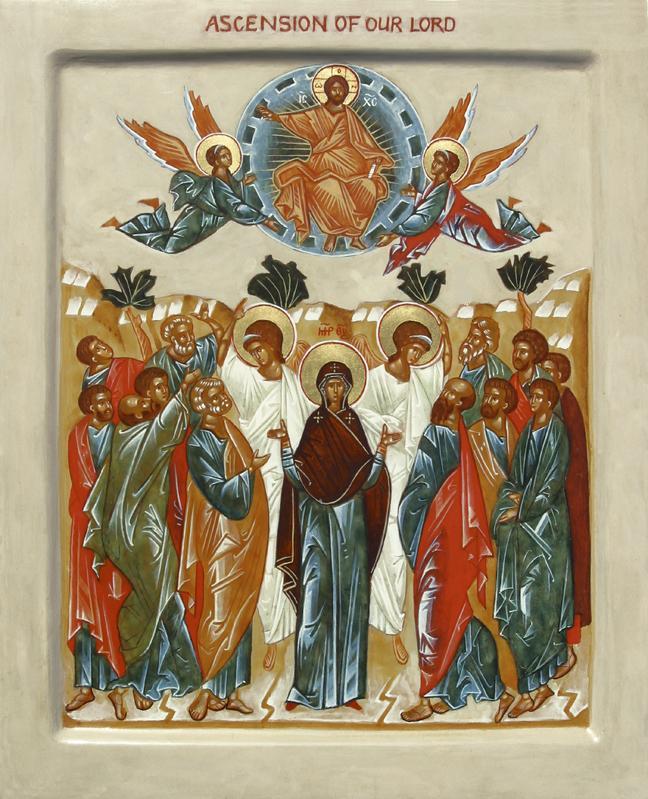
Published in somewhat edited format in the Post and Courier here: http://www.charleston.net/assets/webPages/departmental/news/default_pf.aspx?NEWSID=111776§ion=faithvalues
“Virtually maintenance free.” This is the claim on so many products these days—everything from the newest automobiles—promising “no tune up for 100,000 miles”—to building material for decks and fences. One retailer promises this: “…[N]ow the allure of a wood fence can be attained with virtually no upkeep”. The routine life of caring for everything from cars to clapboard has been reduced perhaps to a once in a lifetime purchase or touch up.
Not long ago, it was common routine to set aside once or twice a year for painting, cleaning, and general maintenance of house and home. The glazing on the window panes would grow old and crack and need replacing. Now many would ask, “What is glazing?” The blinds would get covered in dust and need to be vacuumed. Now they are sandwiched between pieces of glass in doors and windows. Boards on the dock or the deck would age, arch, splinter, and disintegrate. Now they are just as shiny 10 years later as they day they were screwed down.
Is it possible that these advanced technologies have crept into our understanding of the Christian faith? Do I operate on the assumption that no “spiritual tune-up” is ever necessary?
The Christian life is not reduced simply to the moment one is baptized. Yes, the Christian life begins there, but just like that last day of high school or college, it is but a commencement, the ‘first day of the rest of your life’. And this life consists in doing basically one thing: repenting.
Repentance is to love God with all your soul, mind, and strength. How? By turning back to Him. By begging His forgiveness (which He freely offers). By telling Him, “I recognize that I have abandoned you and your ways.” And by asking Him to receive me back (which He quickly does). The most striking biblical portrayal of this is the parable of the Prodigal Son—who wished his father dead, took his inheritance and squandered it in ‘loose and riotous living’ (sound familiar?), could only get a job feeding animals his religion forbade him even to touch, realized he was far from his true home, and returned—repented in both senses of the term (change his mind and reorient himself). His father wasn’t sitting in a chair at home pretending his son wasn’t gone; nor was his welcome one offered with an “I told you so” wagging of the finger. Rather, the son’s return was celebrated with all the joy of discovering that “My son who was dead is alive again. He was lost, and now he is found.” Who among us squanders his inheritance just once in a lifetime? Repentance is the maintenance of the Christian life.
Repentance is to love one’s neighbor as oneself. How? By offering to my neighbor no less than God Himself offers to me. By humbling myself to say, “Forgive me for stealing from you…or lying to you…or slandering you…or gossiping about you.” By correcting the correctible when I have transgressed. Or by doing the right thing even to my enemy—remembering Jesus’ words, “If you love those who love you, what credit is that to you?” This repentance—change of mind—is seen best in the Parable of the Good Samaritan. In this story, a man was beaten and left in the street for dead by robbers. Two of the man’s fellow countrymen—and the most religious—passed by on the other side, apparently too busy or self-interested to assist him. A foreigner, and relative enemy, happened upon the beaten man, saw only a suffering and dying human being, dressed and bound his wounds, and took him to a place of healing. To top it off, he paid for the man’s lodging in advance and promised to return to pay for whatever extra expenses might have arisen. This is an act of extreme humility and return to living the Godly life. Who among us passes by such a suffering person but a single time in 74.5 years? Repentance is the maintenance of the Christian life.
This maintenance takes two forms: confession and amendment of life. According to the Scriptures and the life of the Church, every Christian is obliged to confess his or her sins to another person—and not ‘just to God’. And there is a practical reason in addition to the spiritual ones: naming our darkest sins to another takes the power out of them. It is a movement from darkness to light, from death to life!
Amendment of life is this: Cooperating with the grace of God to turn from the sinful, evil, wicked ways to holy, good, just ways. It is the living out of Jesus’ words to the woman caught in adultery, “Neither do I condemn you; go and sin no more.”
We human beings are not the newest automobiles, nor are we composite building materials. Rather, we are the pinnacle of God’s creation—even though we have squandered our inheritance. To assume that I am ‘maintenance free’ once baptized is to live in darkness and un-confessed sin. To trust that ‘God will forgive me’ without cooperating with God to change my ways is to make a mockery of the Cross. Perhaps our best tactic ought to be to take the time we have saved in not having to paint the house, clean the blinds, and tune the car, and spend it on spiritual maintenance. It is never too late to have a new beginning. As St. Paul says, “Now is the day of salvation.”
Fr. John Parker is priest-in-charge of Holy Ascension Orthodox Church in the I’On community in Mt. Pleasant. He can be reached at frjohn@ocacharleston.org or 881-5010.
Wednesday, October 18, 2006


Sunday, August 13, 2006
True Church Growth
"Church Growth about Change, not bigger numbers"
Originally appeared in Charleston, SC's "Post and Courier
SUNDAY, AUGUST 06, 2006
“Grand opening.” When we see such an advertisement for a store, we think low prices—bargains. More likely than not, we don’t think about the flip-side. When retailers advertise for these and other special events, their eye is almost solely on the bottom line. Let’s get the most people we can in here in order to maximize sales. Every person through the door represents a certain percent chance of a sale, and therefore a certain percentage of today’s income. The math is fairly simple: a product people want plus the people who want it equals growth (profit, then ordering more, then selling more).
This plan works great for capitalism, but it is a disastrous scheme and a horrible ‘model’ for Christianity. The Christian faith is not a commodity, though there is a ruthless effort from within—of all places—to make it so. Models and methods for “explosive church growth” and “true community” are as overstocked as every American diet craze. Here today, gone tomorrow. Self-professed experts, who have little, if any, connection to the ancient church, offer their solutions to propel your church into the 21st century, for a nice price.
Everything is marketed, packaged, niched, and for sale. A now-dated example is the Prayer of Jabez, a ‘prayer’ never ever prayed by Christians in 2000 years, which was all the rage packaged as a book and fiercely marketed with options such as “Jabez Study Bible”, “Jabez Journal”, “Jabez for women”, “Jabez prayer shawl” (yes, really), Jabez pencils, notebooks, bracelets, small group studies, videos, etc. Where is Jabez now?
Nearly every facet of “American Christianity” takes this approach. The “radical” new concept. The book. The study guide. The video. The tie-in bibles, notebooks, bumper stickers, bible covers, key chains, and dvds for men, women, children, teens, many special interest groups. The list has no end. And it is all exported, like any consumable. And then, like the so-called rapture (also not a part of bona fide Christian teaching from the beginning): whoosh! It’s gone, making room for the next one.
Nor, in the history of Christianity, is the Faith about getting massive numbers of people through the doors to make a simple ‘faith commitment’. Yes, it is true, that “thousands” were added to their number in single instances, as recorded, for example, in the Acts of the Apostles. The Orthodox Churches can tell us the names of many of them who went on to be burned, tortured, beheaded, beaten, and otherwise brutalized and put to death for their faith. They are our family members. But trust me, in the first three centuries, few, if any, ‘became a Christian’ because of peer pressure or because it fit in with their particular social scene. Christianity was a life or death decision then, these martyrs choosing temporal death for eternal life.
Church growth always includes increased numbers, but is likewise coupled with a deep, significant spiritual struggle and change. The teachings of the Church expressed in the writings of the New Testament call for a casting off of “the old man” and the putting on of Christ. No more lying, cheating, stealing, fornication, apathy, greed. No more lust, idolatry, personal interpretations of sacred teachings, gluttony, divorce. This is not moralism, by any means. This metanoia—repentance or change of mind—is not so much about certain behaviors (though outwardly that is the case). It is rather conformity to the likeness of God in Jesus Christ. This was the same call in the first century, the fourth century, the fourteenth century, and still is today.
But what happened when the Faith became fashionable (read ‘legal’)? Until the 4th century Christianity was illegal. But with the Edict of Milan, the Emperor Constantine called for an end to the persecution against Christians, and here is what happened: entrance into the Church became more difficult. More difficult. Conversions that seemed to have happened in a moment in the Acts of the Apostles were now lengthened to 3 years. Why so long? So people could learn the teachings of the Church and begin to rearrange their lives and ‘lifestyles’ to conform to Christ and His commandments. This helped to establish bona fide church growth in an age when many had all the comforts of the day. They practiced and showed the members of the church their living commitment to lay down their lives at least figuratively (if not literally like their martyr forbearers) by serving those in every kind of need and in so doing, radiating the holy light of Jesus Christ from the inside of their existence, outward.
And what about today? If the early Christians took growth not only as a long-term process, but one which had to be proven by a visible, concrete, regular, and often significant life-change, why do we treat it as if it is something that can be bought in a video package, and completed in a 40-day or 15 session course? The divorce rate among self-professed Christians already speaks volumes about our commitment to this radical life of faith—not to mention all of the other ways in which contemporary, American Christianity looks no different from American religious-less existence.
On the whole, while there may be more warm bodies in the sanctuary on Sunday morning (or whenever people serve services these days), we must ask ourselves, “Am I presently and at all times laying down my life for the love of God and neighbor?” If the answer is no—and mostly this is the answer—then it is time to repent, again, to start anew, and to lay my life down now. Otherwise, I’m just filling a pew in the church. A warm statistic. But the Lord does not call for quantities and sums of people (though very specifically, according to Ezekiel, He desires the death of no one, but that all should turn and live). He also had some hard words related to lukewarm faith (see Revelation 3:15ff). Rather, He calls us each to repentance and return; He calls for broken hearts and changed lives.
Church growth, ultimately, is about holy lives. We are not made holy in a flash or a moment. The ever present image of the vine and the gardener comes to mind. An acorn does not magically spring from a speck to a great oak overnight. Rather, the soil must be cultivated and fertilized. The seed must be planted. It must be watered and cared for. The new growth must be checked for disease and pruned. This takes time, and it is painful. But it is the only way. In fact, it is The Way, and has been from the beginning. If we truly desire to be Christian, and involved in the growth of the Holy Church, best we return to the writings and ways of those who paved the way. We must avoid at all costs the winds and tides of contemporary schemes and models. Then hopefully, in the end, we each might be welcomed into the fullness of the Kingdom of God with the words, “Well done, my good and faithful servant.”
Fr. John Parker is the Priest-in-charge of Holy Ascension Orthodox Church in I’On. He can be reached at 843-881-5010 or by email at frjohn@ocacharleston.org.
Originally appeared in Charleston, SC's "Post and Courier
SUNDAY, AUGUST 06, 2006
“Grand opening.” When we see such an advertisement for a store, we think low prices—bargains. More likely than not, we don’t think about the flip-side. When retailers advertise for these and other special events, their eye is almost solely on the bottom line. Let’s get the most people we can in here in order to maximize sales. Every person through the door represents a certain percent chance of a sale, and therefore a certain percentage of today’s income. The math is fairly simple: a product people want plus the people who want it equals growth (profit, then ordering more, then selling more).
This plan works great for capitalism, but it is a disastrous scheme and a horrible ‘model’ for Christianity. The Christian faith is not a commodity, though there is a ruthless effort from within—of all places—to make it so. Models and methods for “explosive church growth” and “true community” are as overstocked as every American diet craze. Here today, gone tomorrow. Self-professed experts, who have little, if any, connection to the ancient church, offer their solutions to propel your church into the 21st century, for a nice price.
Everything is marketed, packaged, niched, and for sale. A now-dated example is the Prayer of Jabez, a ‘prayer’ never ever prayed by Christians in 2000 years, which was all the rage packaged as a book and fiercely marketed with options such as “Jabez Study Bible”, “Jabez Journal”, “Jabez for women”, “Jabez prayer shawl” (yes, really), Jabez pencils, notebooks, bracelets, small group studies, videos, etc. Where is Jabez now?
Nearly every facet of “American Christianity” takes this approach. The “radical” new concept. The book. The study guide. The video. The tie-in bibles, notebooks, bumper stickers, bible covers, key chains, and dvds for men, women, children, teens, many special interest groups. The list has no end. And it is all exported, like any consumable. And then, like the so-called rapture (also not a part of bona fide Christian teaching from the beginning): whoosh! It’s gone, making room for the next one.
Nor, in the history of Christianity, is the Faith about getting massive numbers of people through the doors to make a simple ‘faith commitment’. Yes, it is true, that “thousands” were added to their number in single instances, as recorded, for example, in the Acts of the Apostles. The Orthodox Churches can tell us the names of many of them who went on to be burned, tortured, beheaded, beaten, and otherwise brutalized and put to death for their faith. They are our family members. But trust me, in the first three centuries, few, if any, ‘became a Christian’ because of peer pressure or because it fit in with their particular social scene. Christianity was a life or death decision then, these martyrs choosing temporal death for eternal life.
Church growth always includes increased numbers, but is likewise coupled with a deep, significant spiritual struggle and change. The teachings of the Church expressed in the writings of the New Testament call for a casting off of “the old man” and the putting on of Christ. No more lying, cheating, stealing, fornication, apathy, greed. No more lust, idolatry, personal interpretations of sacred teachings, gluttony, divorce. This is not moralism, by any means. This metanoia—repentance or change of mind—is not so much about certain behaviors (though outwardly that is the case). It is rather conformity to the likeness of God in Jesus Christ. This was the same call in the first century, the fourth century, the fourteenth century, and still is today.
But what happened when the Faith became fashionable (read ‘legal’)? Until the 4th century Christianity was illegal. But with the Edict of Milan, the Emperor Constantine called for an end to the persecution against Christians, and here is what happened: entrance into the Church became more difficult. More difficult. Conversions that seemed to have happened in a moment in the Acts of the Apostles were now lengthened to 3 years. Why so long? So people could learn the teachings of the Church and begin to rearrange their lives and ‘lifestyles’ to conform to Christ and His commandments. This helped to establish bona fide church growth in an age when many had all the comforts of the day. They practiced and showed the members of the church their living commitment to lay down their lives at least figuratively (if not literally like their martyr forbearers) by serving those in every kind of need and in so doing, radiating the holy light of Jesus Christ from the inside of their existence, outward.
And what about today? If the early Christians took growth not only as a long-term process, but one which had to be proven by a visible, concrete, regular, and often significant life-change, why do we treat it as if it is something that can be bought in a video package, and completed in a 40-day or 15 session course? The divorce rate among self-professed Christians already speaks volumes about our commitment to this radical life of faith—not to mention all of the other ways in which contemporary, American Christianity looks no different from American religious-less existence.
On the whole, while there may be more warm bodies in the sanctuary on Sunday morning (or whenever people serve services these days), we must ask ourselves, “Am I presently and at all times laying down my life for the love of God and neighbor?” If the answer is no—and mostly this is the answer—then it is time to repent, again, to start anew, and to lay my life down now. Otherwise, I’m just filling a pew in the church. A warm statistic. But the Lord does not call for quantities and sums of people (though very specifically, according to Ezekiel, He desires the death of no one, but that all should turn and live). He also had some hard words related to lukewarm faith (see Revelation 3:15ff). Rather, He calls us each to repentance and return; He calls for broken hearts and changed lives.
Church growth, ultimately, is about holy lives. We are not made holy in a flash or a moment. The ever present image of the vine and the gardener comes to mind. An acorn does not magically spring from a speck to a great oak overnight. Rather, the soil must be cultivated and fertilized. The seed must be planted. It must be watered and cared for. The new growth must be checked for disease and pruned. This takes time, and it is painful. But it is the only way. In fact, it is The Way, and has been from the beginning. If we truly desire to be Christian, and involved in the growth of the Holy Church, best we return to the writings and ways of those who paved the way. We must avoid at all costs the winds and tides of contemporary schemes and models. Then hopefully, in the end, we each might be welcomed into the fullness of the Kingdom of God with the words, “Well done, my good and faithful servant.”
Fr. John Parker is the Priest-in-charge of Holy Ascension Orthodox Church in I’On. He can be reached at 843-881-5010 or by email at frjohn@ocacharleston.org.
Monday, July 10, 2006
Guide for the Cineplexed
visit www.touchstonemag.com
found online at: http://www.touchstonemag.com/archives/print.php?id=19-06-019-v
John Parker on Churches That Give You What You Want, But Not What You Need
With fifteen movies playing at the local multiplex cinema, each playing six times during the day, I have ninety options. One chosen, ticket purchased, I enter the building and am directed to Theater 14, on the right past the concession stand. The concession stand is like a food court; I might as well have arrived an hour earlier and eaten dinner here. Gone are the days when popcorn, soda, and Mike-and-Ikes were about the only options.
Every conceivable genre of movie, every conceivable type of food. Every hour of the day and evening. Who would ever have thought that churches might take this as their model for operation?
I once served at a church that wanted to buy an old theater, positioned perfectly along the main thoroughfare in our town. The rector was a keen student of pop culture. He had read every George Barna book published. He went to conferences on church growth. He even loaded up our staff of nine in a rental van early one weekday morning for a road trip to a distant city for a Barna church growth conference.
The cinema concept was already in place at the church on Sundays: early-morning “traditional” Communion service with no music in the neo-gothic historic chapel, with the celebrant in cassock and surplice; a 9:00 “contemporary” Communion service in the parish hall, complete with praise band and torchiere lighting to set the mood, and the service projected on the wall; a concurrent 9:30 prayer service for children and their families in the old church, with the celebrant only in an alb; an 11:00 traditional Eucharist with full, vested choir in the chapel, with the celebrant in chasuble; and a concurrent free-flowing 11:15 service, which went beyond contemporary, with bands, skits, and so forth, and definitely no vestments. The concept was this: We’ve got something for everyone, and at every standard Sunday morning hour.
So it was a natural conclusion that our parish should pursue buying the old Cineplex. It would give us more space and more options. It would give us more visibility. It would give us a space that “didn’t look like church,” so those who were not comfortable with “organized religion” would feel comfortable coming through the doors.
Add to this picture another local church, which purchased and refurbished a dilapidated old restaurant and opened its doors to the town. This church spent thousands of dollars direct-mailing local residents three or four times. Their most common mailer listed the top ten reasons why someone should attend their church.
Among them were the standard church-growth enticements: You can dress however you want; we won’t ask you for money, because giving is for members, not for visitors; we will treat you like family. Near the top was this surprise: “We serve great coffee at the coffee bar, which opens fifteen minutes before the service. Come a bit early, get a cup o’ joe, find a seat, and enjoy the music and the message.”
No Suitable Place
Consider a third local church. For years, they have worshipped in their gigantic auditorium. It is already a theater, though not a multiplex (though it has multiple local “campuses” where a variety of different demographics—youth, gen-x, etc.—have their services). They pop popcorn in the lobby. This is not surprising, given the genre of church. But the reason is shocking: because studies show that the smell of popcorn pleases people—it puts them in a good mood.
Until now, this church has never had a place “suitable” for “that special day.” Who wants to get married on a stage? In a warehouse? In a theater? So few, if any, that even secular wedding chapels are shaped like neo-gothic churches, only without the hindrances, “baggage,” and “trappings” (like a pastor or priest) of a church. Folks are willing to worship in a big metal building, but for that special day, they want a church.
Thus, this church is building a “traditional wedding chapel” next to their auditorium. It is described in the online video update as having “a center aisle,” “traditional architecture” and seating for 250—“perfect for that special day.” The video update concludes with chamber music and the gonging of church bells, two sounds never heard in the history of that place.
This church also has a Sunday evening service at 5:00, “for families.” Presumably, these folks have soccer, baseball, or football games that preclude Sunday morning attendance. Another local congregation holds a Sunday evening service of Communion marketed towards twenty- and thirty-somethings. One wonders about the reason: Is Sunday “my only day to sleep in”? Or is it that late night partying has taken its toll on the Lord’s morning? Other local churches offer Saturday night services to give their congregants the option of having all of Sunday free.
A Wanting Church
What force is driving these four churches? It is the market. They are market-driven churches. Now, a good pastor must know “the market.” Indeed, St. Paul taught that we should become all things to all people, that by all means we may save some. To the Jews as a Jew in order to save the Jews, to the Gentiles as a Gentile to save the Gentiles, to the Romans as a Roman . . . (cf. 1 Cor. 9:20–22).
But he was speaking of evangelism, not catechism, and certainly not worship. In these churches, Sunday morning has at once a very distinct audience and none at all. The gathered are at once considered faithful and seeker, saved and lost. It is evident in the preaching, and more evident in the growing numbers of churches that invite “anyone who loves God and is drawn to Jesus” to Communion—baptized or not, believer or not.
The marketed church offers just what everyone wants: the music I want (or don’t), the time I want, the length of service I want, the type of language I want, the style of music I want, the amount of intimacy and responsibility I want, and in some cases, even the pastor I want. But is the gospel a message about the satisfaction of wants?
The marketed church confuses Sunday worship and catechism with evangelism and outreach. What is the difference? Mere Christian Sunday worship has always been for the Christian community (the baptized) to offer thanks to God, to sing his praise, and to feed on the Word. Evangelism has been done by conversation in the marketplace, preaching in the public square, but even more, simply by the witness of increasingly holy lives.
In the Orthodox tradition in some parts of the world, even the catechumens preparing to be baptized are still dismissed before the Nicene Creed is said. As it was in the early Church, they are not permitted to be in the church during the Eucharist. This may be seen as extreme today (and is, even within the Orthodox tradition), but it makes clear who is the “audience” of Sunday morning services: God, not the gathered. The baptized faithful come to offer their thanks to him, to be transformed by him, not to be convinced that he is Lord.
The market-driven theater church can ultimately pit Christians against Christians and Christians against seekers. It pits Christians against Christians by dividing the body on Sundays. Rather than worshipping one Lord, in one Faith, by one Baptism at one Table, they choose based on desires: Do I want loud music today or a quiet meditative atmosphere? Do I want to hear pastor A or pastor B preach today? Or they choose according to schedules: What time is the soccer tournament Sunday morning? Am I going golfing or surfing early—or should I attend at eight o’clock so I can hit the beach at 11, nearer to high tide?
Likewise, which group of the many “wins” on a church retreat where there will be just one service? Whose desires get served and whose do not when the reduced summer schedule is introduced? Whenever a decision has to be made, who gets what they want and who doesn’t?
Resentment builds when services are perpetually dumbed down—when many services, even the most common and regular, become like talk shows (“Hey, I’m Pastor Mike and I am going to be your celebrant today!”) or instructional videos (“Now we are going to sing. Please open the blue hymnal and turn to 304”). Every moment of every service every Sunday becomes a repetitive catechism, and it is assumed that no one ever learns.
Sunday Outlet
The Church needs, indeed, to have many outlets, ways, and means to share the saving gospel of Jesus Christ. But the Church universal, until very, very recently in a small section of Western Christianity, has always distinguished between Sunday worship and welcoming newcomers or visitors.
What may have been an innocent, unstudied effort to “bring in more people” has turned into an institution (and market) of its own. “Baptized believers” now make their desires known about what they do and do not want in churches.
The Church from its inception has never been “market driven.” By divine institution, it cannot change according to the whims of society, the drive of the market, the desires of the people. Indeed, it would be spiritually dangerous to do so. The Church is gathered to worship together as a community of faith, and to go forth into the world to present the gospel to all who will hear, that on the last day, we each may enter and be seated at that Great Heavenly Banquet on the Never-Ending Day of his Kingdom.
John Parker is priest-in-charge of Holy Ascension Orthodox Church, a mission parish of the Orthodox Church in America, in Mt. Pleasant, South Carolina. He earned his MDiv (2001) at Trinity Episcopal School for Ministry in Ambridge, Pennsylvania, and his MTh (2004) at St. Vladimir’s Orthodox Theological Seminary in Crestwood, New York. He can be reached at frjohn@ocacharleston.org.
Copyright © 2006 the Fellowship of St. James. All rights reserved.
found online at: http://www.touchstonemag.com/archives/print.php?id=19-06-019-v
John Parker on Churches That Give You What You Want, But Not What You Need
With fifteen movies playing at the local multiplex cinema, each playing six times during the day, I have ninety options. One chosen, ticket purchased, I enter the building and am directed to Theater 14, on the right past the concession stand. The concession stand is like a food court; I might as well have arrived an hour earlier and eaten dinner here. Gone are the days when popcorn, soda, and Mike-and-Ikes were about the only options.
Every conceivable genre of movie, every conceivable type of food. Every hour of the day and evening. Who would ever have thought that churches might take this as their model for operation?
I once served at a church that wanted to buy an old theater, positioned perfectly along the main thoroughfare in our town. The rector was a keen student of pop culture. He had read every George Barna book published. He went to conferences on church growth. He even loaded up our staff of nine in a rental van early one weekday morning for a road trip to a distant city for a Barna church growth conference.
The cinema concept was already in place at the church on Sundays: early-morning “traditional” Communion service with no music in the neo-gothic historic chapel, with the celebrant in cassock and surplice; a 9:00 “contemporary” Communion service in the parish hall, complete with praise band and torchiere lighting to set the mood, and the service projected on the wall; a concurrent 9:30 prayer service for children and their families in the old church, with the celebrant only in an alb; an 11:00 traditional Eucharist with full, vested choir in the chapel, with the celebrant in chasuble; and a concurrent free-flowing 11:15 service, which went beyond contemporary, with bands, skits, and so forth, and definitely no vestments. The concept was this: We’ve got something for everyone, and at every standard Sunday morning hour.
So it was a natural conclusion that our parish should pursue buying the old Cineplex. It would give us more space and more options. It would give us more visibility. It would give us a space that “didn’t look like church,” so those who were not comfortable with “organized religion” would feel comfortable coming through the doors.
Add to this picture another local church, which purchased and refurbished a dilapidated old restaurant and opened its doors to the town. This church spent thousands of dollars direct-mailing local residents three or four times. Their most common mailer listed the top ten reasons why someone should attend their church.
Among them were the standard church-growth enticements: You can dress however you want; we won’t ask you for money, because giving is for members, not for visitors; we will treat you like family. Near the top was this surprise: “We serve great coffee at the coffee bar, which opens fifteen minutes before the service. Come a bit early, get a cup o’ joe, find a seat, and enjoy the music and the message.”
No Suitable Place
Consider a third local church. For years, they have worshipped in their gigantic auditorium. It is already a theater, though not a multiplex (though it has multiple local “campuses” where a variety of different demographics—youth, gen-x, etc.—have their services). They pop popcorn in the lobby. This is not surprising, given the genre of church. But the reason is shocking: because studies show that the smell of popcorn pleases people—it puts them in a good mood.
Until now, this church has never had a place “suitable” for “that special day.” Who wants to get married on a stage? In a warehouse? In a theater? So few, if any, that even secular wedding chapels are shaped like neo-gothic churches, only without the hindrances, “baggage,” and “trappings” (like a pastor or priest) of a church. Folks are willing to worship in a big metal building, but for that special day, they want a church.
Thus, this church is building a “traditional wedding chapel” next to their auditorium. It is described in the online video update as having “a center aisle,” “traditional architecture” and seating for 250—“perfect for that special day.” The video update concludes with chamber music and the gonging of church bells, two sounds never heard in the history of that place.
This church also has a Sunday evening service at 5:00, “for families.” Presumably, these folks have soccer, baseball, or football games that preclude Sunday morning attendance. Another local congregation holds a Sunday evening service of Communion marketed towards twenty- and thirty-somethings. One wonders about the reason: Is Sunday “my only day to sleep in”? Or is it that late night partying has taken its toll on the Lord’s morning? Other local churches offer Saturday night services to give their congregants the option of having all of Sunday free.
A Wanting Church
What force is driving these four churches? It is the market. They are market-driven churches. Now, a good pastor must know “the market.” Indeed, St. Paul taught that we should become all things to all people, that by all means we may save some. To the Jews as a Jew in order to save the Jews, to the Gentiles as a Gentile to save the Gentiles, to the Romans as a Roman . . . (cf. 1 Cor. 9:20–22).
But he was speaking of evangelism, not catechism, and certainly not worship. In these churches, Sunday morning has at once a very distinct audience and none at all. The gathered are at once considered faithful and seeker, saved and lost. It is evident in the preaching, and more evident in the growing numbers of churches that invite “anyone who loves God and is drawn to Jesus” to Communion—baptized or not, believer or not.
The marketed church offers just what everyone wants: the music I want (or don’t), the time I want, the length of service I want, the type of language I want, the style of music I want, the amount of intimacy and responsibility I want, and in some cases, even the pastor I want. But is the gospel a message about the satisfaction of wants?
The marketed church confuses Sunday worship and catechism with evangelism and outreach. What is the difference? Mere Christian Sunday worship has always been for the Christian community (the baptized) to offer thanks to God, to sing his praise, and to feed on the Word. Evangelism has been done by conversation in the marketplace, preaching in the public square, but even more, simply by the witness of increasingly holy lives.
In the Orthodox tradition in some parts of the world, even the catechumens preparing to be baptized are still dismissed before the Nicene Creed is said. As it was in the early Church, they are not permitted to be in the church during the Eucharist. This may be seen as extreme today (and is, even within the Orthodox tradition), but it makes clear who is the “audience” of Sunday morning services: God, not the gathered. The baptized faithful come to offer their thanks to him, to be transformed by him, not to be convinced that he is Lord.
The market-driven theater church can ultimately pit Christians against Christians and Christians against seekers. It pits Christians against Christians by dividing the body on Sundays. Rather than worshipping one Lord, in one Faith, by one Baptism at one Table, they choose based on desires: Do I want loud music today or a quiet meditative atmosphere? Do I want to hear pastor A or pastor B preach today? Or they choose according to schedules: What time is the soccer tournament Sunday morning? Am I going golfing or surfing early—or should I attend at eight o’clock so I can hit the beach at 11, nearer to high tide?
Likewise, which group of the many “wins” on a church retreat where there will be just one service? Whose desires get served and whose do not when the reduced summer schedule is introduced? Whenever a decision has to be made, who gets what they want and who doesn’t?
Resentment builds when services are perpetually dumbed down—when many services, even the most common and regular, become like talk shows (“Hey, I’m Pastor Mike and I am going to be your celebrant today!”) or instructional videos (“Now we are going to sing. Please open the blue hymnal and turn to 304”). Every moment of every service every Sunday becomes a repetitive catechism, and it is assumed that no one ever learns.
Sunday Outlet
The Church needs, indeed, to have many outlets, ways, and means to share the saving gospel of Jesus Christ. But the Church universal, until very, very recently in a small section of Western Christianity, has always distinguished between Sunday worship and welcoming newcomers or visitors.
What may have been an innocent, unstudied effort to “bring in more people” has turned into an institution (and market) of its own. “Baptized believers” now make their desires known about what they do and do not want in churches.
The Church from its inception has never been “market driven.” By divine institution, it cannot change according to the whims of society, the drive of the market, the desires of the people. Indeed, it would be spiritually dangerous to do so. The Church is gathered to worship together as a community of faith, and to go forth into the world to present the gospel to all who will hear, that on the last day, we each may enter and be seated at that Great Heavenly Banquet on the Never-Ending Day of his Kingdom.
John Parker is priest-in-charge of Holy Ascension Orthodox Church, a mission parish of the Orthodox Church in America, in Mt. Pleasant, South Carolina. He earned his MDiv (2001) at Trinity Episcopal School for Ministry in Ambridge, Pennsylvania, and his MTh (2004) at St. Vladimir’s Orthodox Theological Seminary in Crestwood, New York. He can be reached at frjohn@ocacharleston.org.
Copyright © 2006 the Fellowship of St. James. All rights reserved.
Man takes steps to embrace ancient faith
from: http://www.charleston.net/stories/default_pf.aspx?newsID=96684
BY JENNIFER BERRY HAWES
The Post and Courier Staff
"Truly, I say to you, unless one is born anew, he cannot see the kingdom of God." - John 3:3
Thick air forewarns rain as a streak of bicyclists zips through the streets of I'On, that hallmark of Mount Pleasant with its million-dollar takes on Charleston's old carriage houses.
Rock music thumps, a blimp hovers high and a wailing firetruck arrives to help an injured bicyclist. It's Saturday morning in suburbia.
Just inside the neighborhood's main entrance, tucked within a strip of shops on a brick-paved sidewalk, sits a church with a bookstore front. Here at Holy Ascension Orthodox, the flock led by Father John Parker traces its faith back to Christianity's earliest fathers.
Inside the glassfront windows, in front of a few dozen worshippers, Rodney Russ has begun his own personal Easter. The Orthodox Rite of Baptism brings a man to God, to Jesus for new life in the forgiveness of his sins.
Russ turns from the altar, faces west, rejects Satan three times and spits at him. Then he turns to face east, toward the altar, and accepts Christ three times. He does this in jean shorts and Birkenstocks.
Russ, a good union-backing, textile-working guy, is committing to his faith at age 47.
He stands alone. He's not married and has no kids. And he just lost the mother he loved and cared for until her final day on Earth. Russ had put off his baptism, hoping she miraculously would heal and join him.
She didn't heal, not in the flesh anyway. But Russ is sure as he stands before his family in faith that she is, in fact, with him at this moment.
The Lord is with him, and he's sure of that, too. Russ thinks back to all the churches he's been to over the years: Baptist, Methodist, Holiness. But it wasn't until 2004, during a trip to the Ukraine after being laid off his textile job of 17 years, that he stepped foot into an orthodox church.
For the first time, Russ felt the presence of God.
He felt it, too, when he came to Holy Ascension a year and a half ago. So did his mother, a faithful Southern Baptist. As cancer marched her toward death, she asked that Father John Parker preside over her funeral. He did.
The glass bookstore doors open, and the group files out and follows a tall cross. Incense wafts as they walk near the bike race. Father Parker steps ahead in a purple and gold robe that flares out behind him. He leads a small flock, as were the flocks in the earliest days of Christianity, when there were no megachurches, no praise music, no Vacation Bible Schools.
They sing softly as they head toward a pond in I'On. "Blessed is he who comes in the name of the Lord..."
Their chant continues with centuries-old determination past the pounding rock music. They finally reach a wooded area where songbirds rejoice in the promise of rain and the sidewalk gives way to a damp pine needle carpet.
After the woods, they reach a large pond surrounded by homes that look like Charleston's Battery. They stop at a short, wooden boat ramp.
"Blessed is the kingdom, of the father, and of the son, and of the Holy Spirit, now and ever ?" Parker begins.
It's an ancient rite. But whereas Christ was baptized in the Jordan River, Russ stands inches away from Westlake and a sign that warns "Swim At Your Own Risk." A C-17 cargo jet roars overhead. Across the pond, a row of SUVs and minivans await their next trip.
A man dressed in slacks, a dress shirt and tie, stands beside Russ holding a white towel. The heat builds as Father Parker dips the cross into the blessed water.
"Show this water to be water of redemption," he prays.
A goose honks loudly. A man jogs by, his feet crunching on the gravel. Zhwisk, zhwisk. Zhwisk. A woman in a straw hat stops to watch from a discreet distance.
Russ' face grows flushed with the heat and the attention.
Father Parker turns and rubs oil onto Russ' forehead, onto his hands and feet tucked into sandals as, perhaps, were Jesus Christ's himself.
Russ stands quiet, eyes cast down, hands folded humbly in front of him. He and Chuck Bates, the church's parish council president and the man in the suit, walk to the water's edge. They wade down a boat ramp into dark but clear water.
He breathes deep, ready. The chill laps against Russ' legs, his knees, his waist.
But the ramp, he realizes, is slick with muck. He must yank up his sandals with each sloshy step. He turns worried.
I'm going to slip.
Russ and Bates turn to face Father Parker standing above them.
"The servant of God, Rodney Russ, is baptized in the name of the Father ?" Parker says.
Russ dunks his head once, twice, three times. But he is 6 feet tall, and he's in water only up to his waist. He must lean way over to submerge his head. His feet slide in the sediment. He wobbles.
I'm going to slip in front of God and everyone.
Russ pops up, shaky and disoriented. Bates grabs hold of him and helps him trudge back up the slimy ramp. Back on ground, Russ regains his balance, smiles big, stands straight and looks around for a moment.
This time, Russ will lead the procession back. Soaking wet, he holds his head high and strides back along the path, feeling his mother's love and the presence of God guiding the way.
"Therefore if any one is in Christ, he is a new creation; the old has passed away, behold, the new has come." - II Corinthians 5:17
BY JENNIFER BERRY HAWES
The Post and Courier Staff
"Truly, I say to you, unless one is born anew, he cannot see the kingdom of God." - John 3:3
Thick air forewarns rain as a streak of bicyclists zips through the streets of I'On, that hallmark of Mount Pleasant with its million-dollar takes on Charleston's old carriage houses.
Rock music thumps, a blimp hovers high and a wailing firetruck arrives to help an injured bicyclist. It's Saturday morning in suburbia.
Just inside the neighborhood's main entrance, tucked within a strip of shops on a brick-paved sidewalk, sits a church with a bookstore front. Here at Holy Ascension Orthodox, the flock led by Father John Parker traces its faith back to Christianity's earliest fathers.
Inside the glassfront windows, in front of a few dozen worshippers, Rodney Russ has begun his own personal Easter. The Orthodox Rite of Baptism brings a man to God, to Jesus for new life in the forgiveness of his sins.
Russ turns from the altar, faces west, rejects Satan three times and spits at him. Then he turns to face east, toward the altar, and accepts Christ three times. He does this in jean shorts and Birkenstocks.
Russ, a good union-backing, textile-working guy, is committing to his faith at age 47.
He stands alone. He's not married and has no kids. And he just lost the mother he loved and cared for until her final day on Earth. Russ had put off his baptism, hoping she miraculously would heal and join him.
She didn't heal, not in the flesh anyway. But Russ is sure as he stands before his family in faith that she is, in fact, with him at this moment.
The Lord is with him, and he's sure of that, too. Russ thinks back to all the churches he's been to over the years: Baptist, Methodist, Holiness. But it wasn't until 2004, during a trip to the Ukraine after being laid off his textile job of 17 years, that he stepped foot into an orthodox church.
For the first time, Russ felt the presence of God.
He felt it, too, when he came to Holy Ascension a year and a half ago. So did his mother, a faithful Southern Baptist. As cancer marched her toward death, she asked that Father John Parker preside over her funeral. He did.
The glass bookstore doors open, and the group files out and follows a tall cross. Incense wafts as they walk near the bike race. Father Parker steps ahead in a purple and gold robe that flares out behind him. He leads a small flock, as were the flocks in the earliest days of Christianity, when there were no megachurches, no praise music, no Vacation Bible Schools.
They sing softly as they head toward a pond in I'On. "Blessed is he who comes in the name of the Lord..."
Their chant continues with centuries-old determination past the pounding rock music. They finally reach a wooded area where songbirds rejoice in the promise of rain and the sidewalk gives way to a damp pine needle carpet.
After the woods, they reach a large pond surrounded by homes that look like Charleston's Battery. They stop at a short, wooden boat ramp.
"Blessed is the kingdom, of the father, and of the son, and of the Holy Spirit, now and ever ?" Parker begins.
It's an ancient rite. But whereas Christ was baptized in the Jordan River, Russ stands inches away from Westlake and a sign that warns "Swim At Your Own Risk." A C-17 cargo jet roars overhead. Across the pond, a row of SUVs and minivans await their next trip.
A man dressed in slacks, a dress shirt and tie, stands beside Russ holding a white towel. The heat builds as Father Parker dips the cross into the blessed water.
"Show this water to be water of redemption," he prays.
A goose honks loudly. A man jogs by, his feet crunching on the gravel. Zhwisk, zhwisk. Zhwisk. A woman in a straw hat stops to watch from a discreet distance.
Russ' face grows flushed with the heat and the attention.
Father Parker turns and rubs oil onto Russ' forehead, onto his hands and feet tucked into sandals as, perhaps, were Jesus Christ's himself.
Russ stands quiet, eyes cast down, hands folded humbly in front of him. He and Chuck Bates, the church's parish council president and the man in the suit, walk to the water's edge. They wade down a boat ramp into dark but clear water.
He breathes deep, ready. The chill laps against Russ' legs, his knees, his waist.
But the ramp, he realizes, is slick with muck. He must yank up his sandals with each sloshy step. He turns worried.
I'm going to slip.
Russ and Bates turn to face Father Parker standing above them.
"The servant of God, Rodney Russ, is baptized in the name of the Father ?" Parker says.
Russ dunks his head once, twice, three times. But he is 6 feet tall, and he's in water only up to his waist. He must lean way over to submerge his head. His feet slide in the sediment. He wobbles.
I'm going to slip in front of God and everyone.
Russ pops up, shaky and disoriented. Bates grabs hold of him and helps him trudge back up the slimy ramp. Back on ground, Russ regains his balance, smiles big, stands straight and looks around for a moment.
This time, Russ will lead the procession back. Soaking wet, he holds his head high and strides back along the path, feeling his mother's love and the presence of God guiding the way.
"Therefore if any one is in Christ, he is a new creation; the old has passed away, behold, the new has come." - II Corinthians 5:17
Is Charleston really the Holy City?
from: http://www.charleston.net/stories/default_pf.aspx?newsID=96691
By Fr. John Parker
Editor's Note: Last week Faith & Values wrote about different theories for why Charleston has the nickname "The Holy City."
An airplane tour is not necessary to notice the multitudes of churches on the Charleston peninsula. From the tip of Sullivan's Island, one can see the steeples of many, including St. Philip's (the oldest), St. Matthew's and others. Some report "more than 60 religious institutions" on the peninsula - others "over a hundred houses of worship."
No matter how one counts, Charleston has come to be known as the "Holy City" predominantly as a result of the tourism of recent times, specifically connected to the number of spiritual edifices (how is that for PC?) located within the bounds of the city.
But the quantity of churches in a place no more makes it automatically holy than a gathering of 10 random people on asphalt instantly makes a basketball game.
We might even make the argument that the so-called diversity of churches on the peninsula contributes to the opposite of holiness, witnessing to fractured Western Christianity with its increasing "believe whatever you want" spirituality.
It is likely that we will see even more of this "diversity" - possibly as soon as this summer - as a number of national church bodies attempt to change the Christian teachings on who is ordained to oversee his earthly work.
This point is made all the more clear by the existence of two proverbial churches: the church I attend and the one I don't.
What is it that would truly make Charleston "the Holy City"? Well, according to the Scriptures, holiness is directly related to loving God and keeping his Commandments. Holiness is a manifestation of the grace of God in the life of those who most cooperate with this gift. Holiness is living life as God intended it - as he has revealed it to us, supremely through the life and witness of his only-begotten son, Jesus Christ. Holiness is the result of becoming, by grace, what God is by nature.
Holiness requires an ascetical struggle. Ascesis is a fancy Greek word meaning "training" or "practice," as for a contest. The New Testament is filled with examples of the pursuit of holiness described in terms of completing a race. No runner wins a marathon without first running short distances, and then increasing endurance. The runner also needs to train in the heat and the cold, on hills and in valleys, well-nourished as well as thirsty. By this training, there are no surprises or insurmountable obstacles in the race.
The same is true in the spiritual life. No one becomes a saint simply by reading a book or by accepting a dogma. Rather, once baptized, one must learn to fast as well as to feast. In addition to knowing the Scriptures and living the sacraments, one must practice patience and endurance, periods of silence and long periods of various forms of self- denial, all with the aim of accepting God's will as his own.
Holiness can be attributed to a city when, of one mind, its inhabitants share this struggle in a sincere desire to love God and neighbor. A city becomes holy when its churches do not compete with one another for "warm bodies" by clever marketing, brand awareness, or worse - by catering to the temporal desires rather then the spiritual needs of the people. Charleston lives into a name such as "the Holy City" when it seeks, above all else, to honor Christ in every facet of its life: its tourism, its government, its social life, etc. In addition to true worship, this is most excellently demonstrated, as Jesus himself indicated, in the caring for the poor, the needy, the sick, the imprisoned - those whom Christ called "the least of these my brethren."
Charleston becomes the Holy City when its attitude is that of Abba Sisoes, a fourth-century desert-dwelling monk. Considered to be a very holy and venerable man himself, many drew near to Abba Sisoes while he was on his death bed. In his last moments, he saw choirs of angels and archangels, not to mention prophets, Apostles and saints. Wondering what was going on, those gathered around him asked, "With whom are you speaking, Abba?"
"With the angels," he replied, and indicated that he was seeking to do penance before he left this life for the next. Knowing his holiness, one friend said to him, "You have no need for penance, Father." Abba Sisoes replied, "I have not yet begun to repent." When in our city we realize our spiritual state (regardless of how far we think we have progressed), and can say with true humility, "we have not yet begun to repent," then Charleston will have made a beginning toward becoming the Holy City.
Fr. John Parker is priest-in-charge of Holy Ascension Orthodox Church in I'On. He can be reached at 881-5010 or frjohn@ocacharleston.org.
By Fr. John Parker
Editor's Note: Last week Faith & Values wrote about different theories for why Charleston has the nickname "The Holy City."
An airplane tour is not necessary to notice the multitudes of churches on the Charleston peninsula. From the tip of Sullivan's Island, one can see the steeples of many, including St. Philip's (the oldest), St. Matthew's and others. Some report "more than 60 religious institutions" on the peninsula - others "over a hundred houses of worship."
No matter how one counts, Charleston has come to be known as the "Holy City" predominantly as a result of the tourism of recent times, specifically connected to the number of spiritual edifices (how is that for PC?) located within the bounds of the city.
But the quantity of churches in a place no more makes it automatically holy than a gathering of 10 random people on asphalt instantly makes a basketball game.
We might even make the argument that the so-called diversity of churches on the peninsula contributes to the opposite of holiness, witnessing to fractured Western Christianity with its increasing "believe whatever you want" spirituality.
It is likely that we will see even more of this "diversity" - possibly as soon as this summer - as a number of national church bodies attempt to change the Christian teachings on who is ordained to oversee his earthly work.
This point is made all the more clear by the existence of two proverbial churches: the church I attend and the one I don't.
What is it that would truly make Charleston "the Holy City"? Well, according to the Scriptures, holiness is directly related to loving God and keeping his Commandments. Holiness is a manifestation of the grace of God in the life of those who most cooperate with this gift. Holiness is living life as God intended it - as he has revealed it to us, supremely through the life and witness of his only-begotten son, Jesus Christ. Holiness is the result of becoming, by grace, what God is by nature.
Holiness requires an ascetical struggle. Ascesis is a fancy Greek word meaning "training" or "practice," as for a contest. The New Testament is filled with examples of the pursuit of holiness described in terms of completing a race. No runner wins a marathon without first running short distances, and then increasing endurance. The runner also needs to train in the heat and the cold, on hills and in valleys, well-nourished as well as thirsty. By this training, there are no surprises or insurmountable obstacles in the race.
The same is true in the spiritual life. No one becomes a saint simply by reading a book or by accepting a dogma. Rather, once baptized, one must learn to fast as well as to feast. In addition to knowing the Scriptures and living the sacraments, one must practice patience and endurance, periods of silence and long periods of various forms of self- denial, all with the aim of accepting God's will as his own.
Holiness can be attributed to a city when, of one mind, its inhabitants share this struggle in a sincere desire to love God and neighbor. A city becomes holy when its churches do not compete with one another for "warm bodies" by clever marketing, brand awareness, or worse - by catering to the temporal desires rather then the spiritual needs of the people. Charleston lives into a name such as "the Holy City" when it seeks, above all else, to honor Christ in every facet of its life: its tourism, its government, its social life, etc. In addition to true worship, this is most excellently demonstrated, as Jesus himself indicated, in the caring for the poor, the needy, the sick, the imprisoned - those whom Christ called "the least of these my brethren."
Charleston becomes the Holy City when its attitude is that of Abba Sisoes, a fourth-century desert-dwelling monk. Considered to be a very holy and venerable man himself, many drew near to Abba Sisoes while he was on his death bed. In his last moments, he saw choirs of angels and archangels, not to mention prophets, Apostles and saints. Wondering what was going on, those gathered around him asked, "With whom are you speaking, Abba?"
"With the angels," he replied, and indicated that he was seeking to do penance before he left this life for the next. Knowing his holiness, one friend said to him, "You have no need for penance, Father." Abba Sisoes replied, "I have not yet begun to repent." When in our city we realize our spiritual state (regardless of how far we think we have progressed), and can say with true humility, "we have not yet begun to repent," then Charleston will have made a beginning toward becoming the Holy City.
Fr. John Parker is priest-in-charge of Holy Ascension Orthodox Church in I'On. He can be reached at 881-5010 or frjohn@ocacharleston.org.
Tuesday, May 30, 2006
Christianity from the Beginning
Christianity from the beginning
By Fr. John Parker
"Let's start at the very beginning, a very good place to start; when you read you begin with A-B-C; when you sing you begin with DO-RE-MI ..."
Thus sang Julie Andrews, introducing us to one of the most memorable show tunes of all time. It is not often, I am sure, that this song is offered as a theological lesson; but if we do not "start at the very beginning," if we have no living, active, organic connection to the very beginning, we are guaranteed to be missing something. Any time we are trying to discover what Christians have always believed and why, we must start at the very beginning.
Of course, this is also the case when we are faced in modern times with the resurgence of ancient heresies such as Gnosticism, a religion of secret knowledge found in the so-called Gospel of Judas, in pop culture with a lethal dose of religion, as in "The Da Vinci Code," or a mix of these in postmodernism, summarized beautifully by Tom Hanks' character, "The only thing that matters is what you believe."
Pass it on
In the beginning, in the first decades after Jesus' death and resurrection, the truth about Christ was taught essentially by word of mouth.
Primarily Christ was preached by those eyewitnesses to his resurrection, and then by those who were taught by those same eyewitnesses. The teacher-disciple relationship was not new with Christianity, and this form of oral teaching is not questioned in other venues.
At some point, with the advent of false teachings from without and sin from within, St. Paul and others began to write letters and accounts of what they had seen, heard and been taught. The Epistles (Letters) were, for the most part, written first, and the Gospels later.
By Fr. John Parker
"Let's start at the very beginning, a very good place to start; when you read you begin with A-B-C; when you sing you begin with DO-RE-MI ..."
Thus sang Julie Andrews, introducing us to one of the most memorable show tunes of all time. It is not often, I am sure, that this song is offered as a theological lesson; but if we do not "start at the very beginning," if we have no living, active, organic connection to the very beginning, we are guaranteed to be missing something. Any time we are trying to discover what Christians have always believed and why, we must start at the very beginning.
Of course, this is also the case when we are faced in modern times with the resurgence of ancient heresies such as Gnosticism, a religion of secret knowledge found in the so-called Gospel of Judas, in pop culture with a lethal dose of religion, as in "The Da Vinci Code," or a mix of these in postmodernism, summarized beautifully by Tom Hanks' character, "The only thing that matters is what you believe."
Pass it on
In the beginning, in the first decades after Jesus' death and resurrection, the truth about Christ was taught essentially by word of mouth.
Primarily Christ was preached by those eyewitnesses to his resurrection, and then by those who were taught by those same eyewitnesses. The teacher-disciple relationship was not new with Christianity, and this form of oral teaching is not questioned in other venues.
At some point, with the advent of false teachings from without and sin from within, St. Paul and others began to write letters and accounts of what they had seen, heard and been taught. The Epistles (Letters) were, for the most part, written first, and the Gospels later.
What was the task of these writings, which we now know as the New Testament?
They served at least a three-fold purpose:
--To interpret the Old Testament through the lens of Christ crucified and resurrected.
--To correct false teaching
--To pass along (tradition) "that which was from the beginning."
It is this final purpose about which we all need some education, especially to sort through the present Hollywood and News Magazine-hyped muck.
There are two excellent New Testament examples that highlight this purpose, one from the Gospel according to St. Luke, and the other from St. Paul's writings to the Thessalonians.
St. Paul records the following: "So then, brethren, stand firm and hold to the traditions which you were taught by us, either by word of mouth or by letter." (2 Thess. 2:15).
St. Luke reports in the first verses of his Gospel, "Inasmuch as many have undertaken to compile a narrative of the things which have been accomplished among us, just as they were delivered to us by those who from the beginning were eyewitnesses and ministers of the word, it seemed good to me also, having followed all things closely for some time past, to write an orderly account for you, most excellent Theophilus, that you may know the truth concerning the things of which you have been informed."
In these two examples, there are three words that are of critical importance: tradition, eyewitness and beginning.
A witness to the gospel
The Christian Gospel is "from the beginning;" that is, since the advent of Jesus Christ.
St. John demonstrates this important feature in his first epistle, "That which was from the beginning, which we have heard, which we have seen with our eyes, which we have looked upon and touched with our hands, concerning the word of life ? we proclaim also to you. ?"
Nothing is added. Nothing is subtracted.
John was among the first disciples called by Jesus Christ. Of the 12, he was in the "top three" and was allowed to witness the most miraculous events. Together with Peter and James, he was present on Mount Tabor when Christ was transfigured. The same three were taken into the room wherein Jesus brought a little girl back from the dead. This same John was at the foot of the cross as Jesus was dying, and, while there, was directed by Jesus to care for his own holy mother, Mary. John knew the beginning because he was there from the beginning!
The next important point is that John and many others were eyewitnesses to Jesus' life, death, resurrection and ascension. Take Peter for example, who wrote the following in his second epistle:
"For we did not follow cleverly devised myths when we made known to you the power and coming of our Lord Jesus Christ, but we were eyewitnesses of his majesty. For when he received honor and glory from God the Father and the voice was borne to him by the majestic glory, 'This is my beloved Son, with whom I am well pleased,' we heard this voice borne from heaven, for we were with him on the holy mountain."
He is talking about the Transfiguration. They were there. They did not invent what they wrote. They saw it. They were eyewitnesses.
Delivering the 'package'
Finally, we must understand "tradition." Tradition means "to hand down, to deliver." Luke makes it clear that this truth has been "traditioned," that is, "delivered to us."
St. Paul instructs the church in Thessalonica in the same fashion. It is to hold, believe and pass on "the traditions," which in this case were taught in writing and by word of mouth. Its task was to take what was given and pass it along intact. As I have written before, this process can be compared to a FedEx delivery. The teachings of the eyewitnesses are put in the "package" (the Gospel), sealed (by their authority as eyewitnesses) and delivered ("traditioned") to the next generation of Christians.
Neither the FedEx man nor the recipient may add to or take from the package. The task is intact delivery! The package is not the package without its contents. And the tracking of the pack-age allows us to either: 1) trust its successful arrival or 2) know who made changes, where and when.
The early Christians, who learned directly from Jesus Christ, taught those who followed them. Here is a perfect first-century example. John, who wrote one Gospel, three epistles, and the Revelation, taught a man whom history knows as Polycarp. Today, we can read the very moving account of his martyrdom.
Polycarp "traditioned" what he was taught "by word of mouth and epistle" to Irenaeus, who lived and ministered in Lyons, modern-day France. It is this Irenaeus who already condemned the so-called Gospel of Judas. How did Irenaeus and these others know this so-called gospel was bogus? Because his "grandfather" in the Christian faith was the very "beloved disciple" John, who put his head on Jesus' breast at the Last Supper. He was there!
By this time in history, many such false gospels were disseminated. They were quickly squashed and condemned precisely because no one had ever "seen," "heard" or "touched" anything remotely related to these writings "from the beginning."
They didn't match the teachings of the "grandparents" in the faith. And the way that the Gospel was further maintained was by keeping careful record of who learned from whom, which we call "apostolic succession." This is the "tracking" I refer to in my example above.
Line of succession
Irenaeus carefully illustrates one such line, the succession of bishops of Rome. Eusebius compiled the first bona fide "church history" of the early centuries in writing at the turn of the fourth century. He made a careful list of all the bishops of Jerusalem, starting with James in Acts 15.
To be considered Christian, the teaching, as well as the source of the teaching, had to be traced to the beginning. The teachings of the Gnostics and other heretics simply didn't match up to "that which was from the beginning." And they still don't.
Curiously, "sola scriptura," the Bible alone as authoritative, was already a troubling factor at this time, even though the Bible as we know it today was not yet "published."
The Gnostics and other heretics used the same writings the Christians were using to defend their teachings. But here, Irenaeus offers a brilliant word painting to describe their efforts.
"Their manner of (teaching) is just as if one, when a beautiful image of a king has been constructed by some skilful artist out of precious jewels, should then take this likeness of the man all to pieces, should rearrange the gems, and so fit them together as to make them into the form of a dog or of a fox, and even that but poorly executed; and should then maintain and declare that this was the beautiful image of the king which the skilful artist constructed ? and by thus exhibiting the jewels, should deceive the ignorant who had no conception what a king's form was like, and persuade them that that miserable likeness of the fox was, in fact, the beautiful image of the king." (Adversus Haereses I:8:I).
No writings were authoritative in and of themselves. Critical are the author, content and link to the first Christians.
Also, a trustworthy interpretation was always required, and only those who had seen Jesus personally, or whose spiritual lineage was "from the beginning," could be trusted for such a holy task. And this is still true today.
All of this is the context for this simple position: The great and present frenzy, with reference to the "newly discovered" Gnostic texts, such as the so-called Gospel of Judas, and the release of the controversial "Da Vinci Code," don't really shake the boat of orthodox Christianity.
Generally speaking, we won't have sermons devoted to these sideshows. It is not the place for such an effort. We won't have seminars analyzing it all. We won't write books disputing them. Why? Because these battles have already been fought and won. The books are already written. And we assume that if there is a question, we'll look to what has already been said.
The Preacher said it best: "There is nothing new under the sun." (Ecclesiastes 1:9).
In the end, "those ignorant of history are doomed to repeat it." But those who know and live "from the beginning" Christianity are not easily moved by tides of heresy and madness, whether ancient or modern.
The truth is that which is from the beginning, which has been delivered to us by those who saw Jesus with their own eyes, heard him with their own ears, touched him with their own hands ? believe it or not.
Fr. John Parker is priest-in-charge of Holy Ascension Orthodox Church in the I'On community. He can be reached at frjohn@ocacharleston.org or by phone at 881-5010.
Monday, April 17, 2006
4th-century homily best exemplifies Pascha
http://www.charleston.net/stories/default_pf.aspx?newsID=81539
SUNDAY, APRIL 16, 2006 12:00 AM
4th-century homily best exemplifies Pascha
BY FR. JOHN PARKER
EDITOR'S NOTE: This is the last of four columns by Fr. John Parker leading up to Easter.
At first, all is quiet, dark. The church is lighted nearly entirely by candlelight. Stillness and solemnity fill the air. The faithful gather for peaceful prayers and hymns, which mount with joy. Robed in his brightest vestments, the priest enters into the midst of the congregation and chants boldly and beautifully, "Thy resurrection, O Christ our Savior, the angels in heaven sing. Enable us on Earth, to glorify Thee in purity of heart!" All then go in procession around the church, singing the same all the while.
It is now nearly midnight - Holy Saturday is turning into Pascha Sunday. We announce the resurrection of Jesus Christ from the dead with joyful and fervent singing, "Christ is risen from the dead, trampling down death by death, and upon those in the tombs bestowing life!"
The celebrant opens the doors of the church, and all enter into the brightness of the paschal celebration. The lights are all on. Bells are ringing. Once sleepy children have come back to life and sing along with youthful gladness.
We then celebrate the morning service followed immediately by the Divine Liturgy (Holy Communion). The services are quick, but not rushed. They are voluminous, but not loud. The wonder of the feast is upon us. Christ is risen! Truly he is risen!
And we don't wait until Sunday afternoon for our parties. Immediately after the service, the priest blesses dozens of baskets, each of which is filled with the rich foods from which we have fasted for the past 40 days: meats and cheeses from around the world. Breads that are artfully made. Ruby-red eggs.
And with the blessing, we then feast well into the night, going home at 2:30 or 3 a.m. to get a few hours sleep before our next service, which is at noon Sunday. This is Pascha (this year on April 22/23) in the Orthodox Church.
If the reader has been keeping up with these columns, he'll remember that this marvel follows a full eight days of daily and more-than-daily services in preparation. We have walked with Christ into Jerusalem and up onto Golgotha, and now we are celebrating his empty tomb.
The main question pastors ask themselves at this holy juncture is, "What do I preach?" This is the easiest question in the world for Orthodox priests on this day, because we all offer the same homily every year, decade after decade, century after century. It was preached best in the fourth century, and so St. John Chrysostom's homily has become the sermon in every Orthodox Church in the world on Pascha.
With the joy of the feast, I offer it here to you today, greeting you with the Paschal greeting, Christ is risen!
Paschal Homily of St. John Chrysostom (circa 400):
"Is there anyone who is a devout lover of God? Let them enjoy this beautiful bright festival! Is there anyone who is a grateful servant? Let them rejoice and enter into the joy of their Lord! Are there any weary with fasting? Let them now receive their wages!
"If any have toiled from the first hour, let them receive their due reward. If any have come after the third hour, let him with gratitude join in the Feast! And he that arrived after the sixth hour, let him not doubt; for he too shall sustain no loss. And if any delayed until the ninth hour, let him not hesitate; but let him come too. And he who arrived only at the eleventh hour, let him not be afraid by reason of his delay. For the Lord is gracious and receives the last even as the first. He gives rest to him that comes at the eleventh hour, as well as to him that toiled from the first. To this one He gives, and upon another He bestows. He accepts the works as He greets the endeavor. The deed He honors and the intention He commends.
"Let us all enter into the joy of the Lord! First and last alike receive your reward; rich and poor, rejoice together! Sober and slothful, celebrate the day! You that have kept the fast, and you that have not, rejoice today for the Table is richly laden! Feast royally on it, the calf is a fatted one. Let no one go away hungry. Partake, all, of the cup of faith. Enjoy all the riches of His goodness! Let no one grieve at his poverty, for the universal kingdom has been revealed. Let no one mourn that he has fallen again and again; for forgiveness has risen from the grave. Let no one fear death, for the Death of our Savior has set us free. He has destroyed it by enduring it. He destroyed Hades when He descended into it. He put it into an uproar even as it tasted of His flesh.
"Isaiah foretold this when he said, 'You, O Hell, have been troubled by encountering Him below.' Hell was in an uproar because it was done away with. It was in an uproar because it is mocked. It was in an uproar, for it is destroyed. It is in an uproar, for it is annihilated. It is in an uproar, for it is now made captive.
"Hell took a body, and discovered God. It took Earth, and encountered Heaven. It took what it saw, and was overcome by what it did not see. O death, where is thy sting? O Hades, where is thy victory? Christ is risen, and you, O death, are annihilated! Christ is Risen, and the evil ones are cast down! Christ is risen, and the angels rejoice! Christ is risen, and life is liberated! Christ is risen, and the tomb is emptied of its dead; for Christ having risen from the dead, is become the first-fruits of those who have fallen asleep. To Him be Glory and Dominion unto ages of ages. Amen!
Fr. John Parker is priest-in-charge of Holy Ascension Orthodox Church in I'On. He can be reached by e-mail at frjohn@ocacharleston.org or by phone at 881-5010.
This article was printed via the web on 4/16/2006 9:37:29 PM . This articleappeared in The Post and Courier and updated online at Charleston.net on Sunday, April 16, 2006.
Fr. John ParkerPriest-in-ChargeHoly Ascension Orthodox Churchwww.ocacharleston.org843-881-5010 parish and fax843-810-9350 cell
SUNDAY, APRIL 16, 2006 12:00 AM
4th-century homily best exemplifies Pascha
BY FR. JOHN PARKER
EDITOR'S NOTE: This is the last of four columns by Fr. John Parker leading up to Easter.
At first, all is quiet, dark. The church is lighted nearly entirely by candlelight. Stillness and solemnity fill the air. The faithful gather for peaceful prayers and hymns, which mount with joy. Robed in his brightest vestments, the priest enters into the midst of the congregation and chants boldly and beautifully, "Thy resurrection, O Christ our Savior, the angels in heaven sing. Enable us on Earth, to glorify Thee in purity of heart!" All then go in procession around the church, singing the same all the while.
It is now nearly midnight - Holy Saturday is turning into Pascha Sunday. We announce the resurrection of Jesus Christ from the dead with joyful and fervent singing, "Christ is risen from the dead, trampling down death by death, and upon those in the tombs bestowing life!"
The celebrant opens the doors of the church, and all enter into the brightness of the paschal celebration. The lights are all on. Bells are ringing. Once sleepy children have come back to life and sing along with youthful gladness.
We then celebrate the morning service followed immediately by the Divine Liturgy (Holy Communion). The services are quick, but not rushed. They are voluminous, but not loud. The wonder of the feast is upon us. Christ is risen! Truly he is risen!
And we don't wait until Sunday afternoon for our parties. Immediately after the service, the priest blesses dozens of baskets, each of which is filled with the rich foods from which we have fasted for the past 40 days: meats and cheeses from around the world. Breads that are artfully made. Ruby-red eggs.
And with the blessing, we then feast well into the night, going home at 2:30 or 3 a.m. to get a few hours sleep before our next service, which is at noon Sunday. This is Pascha (this year on April 22/23) in the Orthodox Church.
If the reader has been keeping up with these columns, he'll remember that this marvel follows a full eight days of daily and more-than-daily services in preparation. We have walked with Christ into Jerusalem and up onto Golgotha, and now we are celebrating his empty tomb.
The main question pastors ask themselves at this holy juncture is, "What do I preach?" This is the easiest question in the world for Orthodox priests on this day, because we all offer the same homily every year, decade after decade, century after century. It was preached best in the fourth century, and so St. John Chrysostom's homily has become the sermon in every Orthodox Church in the world on Pascha.
With the joy of the feast, I offer it here to you today, greeting you with the Paschal greeting, Christ is risen!
Paschal Homily of St. John Chrysostom (circa 400):
"Is there anyone who is a devout lover of God? Let them enjoy this beautiful bright festival! Is there anyone who is a grateful servant? Let them rejoice and enter into the joy of their Lord! Are there any weary with fasting? Let them now receive their wages!
"If any have toiled from the first hour, let them receive their due reward. If any have come after the third hour, let him with gratitude join in the Feast! And he that arrived after the sixth hour, let him not doubt; for he too shall sustain no loss. And if any delayed until the ninth hour, let him not hesitate; but let him come too. And he who arrived only at the eleventh hour, let him not be afraid by reason of his delay. For the Lord is gracious and receives the last even as the first. He gives rest to him that comes at the eleventh hour, as well as to him that toiled from the first. To this one He gives, and upon another He bestows. He accepts the works as He greets the endeavor. The deed He honors and the intention He commends.
"Let us all enter into the joy of the Lord! First and last alike receive your reward; rich and poor, rejoice together! Sober and slothful, celebrate the day! You that have kept the fast, and you that have not, rejoice today for the Table is richly laden! Feast royally on it, the calf is a fatted one. Let no one go away hungry. Partake, all, of the cup of faith. Enjoy all the riches of His goodness! Let no one grieve at his poverty, for the universal kingdom has been revealed. Let no one mourn that he has fallen again and again; for forgiveness has risen from the grave. Let no one fear death, for the Death of our Savior has set us free. He has destroyed it by enduring it. He destroyed Hades when He descended into it. He put it into an uproar even as it tasted of His flesh.
"Isaiah foretold this when he said, 'You, O Hell, have been troubled by encountering Him below.' Hell was in an uproar because it was done away with. It was in an uproar because it is mocked. It was in an uproar, for it is destroyed. It is in an uproar, for it is annihilated. It is in an uproar, for it is now made captive.
"Hell took a body, and discovered God. It took Earth, and encountered Heaven. It took what it saw, and was overcome by what it did not see. O death, where is thy sting? O Hades, where is thy victory? Christ is risen, and you, O death, are annihilated! Christ is Risen, and the evil ones are cast down! Christ is risen, and the angels rejoice! Christ is risen, and life is liberated! Christ is risen, and the tomb is emptied of its dead; for Christ having risen from the dead, is become the first-fruits of those who have fallen asleep. To Him be Glory and Dominion unto ages of ages. Amen!
Fr. John Parker is priest-in-charge of Holy Ascension Orthodox Church in I'On. He can be reached by e-mail at frjohn@ocacharleston.org or by phone at 881-5010.
This article was printed via the web on 4/16/2006 9:37:29 PM . This articleappeared in The Post and Courier and updated online at Charleston.net on Sunday, April 16, 2006.
Fr. John ParkerPriest-in-ChargeHoly Ascension Orthodox Churchwww.ocacharleston.org843-881-5010 parish and fax843-810-9350 cell
Monday, April 10, 2006
Time for only one thing during Holy Week
http://www.charleston.net/stories/default_pf.aspx?newsID=80304
BY FR. JOHN PARKER
Editor's Note: This is the third in a series of columns leading up to Easter.
There is no experience like Holy Week in an Orthodox Church (this year April 15-22). The ancient hymns are deep and rich. The atmosphere of the church changes with the day's commemorations: joy in the air, in the decor, in the incense, in the singing for Lazarus Saturday and Palm Sunday.
Warning and sobriety early in the week during the services of Bridegroom Matins. Amazement at the betrayal on Wednesday. Divine nourishment with the Last Supper on Thursday. Fasting, exhaustion and sadness with Christ's crucifixion and entombment on Holy Friday. Eager expectation for a not-yet-risen Christ on the morning of Holy Saturday, along with the marvel of baptism following the most ancient practice. Sheer splendor, joy, brightness, wonder and feasting with the first proclamation, "Christ is Risen!" as the clock turns from Saturday to Sunday.
Because we human beings are not simply brains attached to a slavish body, the sights, the sounds, the tastes, the emotions, the exhaustion, the joy, the fasting and the feasting are all integral parts of the full march with Christ from Lazarus' stench-filled grave, through the streets of Jerusalem, into the upper room, up onto Golgotha, and finally to Jesus' empty tomb. God created us to experience him in this plentiful way. To treat Holy Week and Pascha (Easter) any other way would be, at many levels, to deny our humanity and our relationship to God, as well as to miss the full power of the cross and resurrection of Jesus Christ.
Many of us were raised to "go to church" especially on Sundays and other important days such as Palm Sunday, Easter and Christmas. This is good Christian discipline. But scores of us fall out of that practice because worship is seen as "a thing to do" like any other appointment. As we permit the busyness of life to increase, gradually "going to church" gets squeezed out, especially since these special days are simply "remembered" as some events a long time ago. In fact, this is contrary to our nature, since we were designed to worship God. Worship for human beings is not simply a task such as shopping or going to the post office. Rather, it is a way of life, in this age and the next. This way is fully experienced during Holy Week, especially in the Orthodox Church, for those who commit themselves to the entire cycle of services.
When we change our existence from "human doing" back to "human being," we see and experience time differently. When we celebrate Palm Sunday, for example, we don't sing about "back then." We literally sing: "Today the Savior comes to Jerusalem, fulfilling the Scriptures ." The first three nights of Holy Week we sing, "Behold the Bridegroom comes at midnight ." Later in the week we chant, "Today, the curtain of the temple is torn in two ..."
For us, the feast is now. Today. This midnight. The experience of Holy Week is an entering into ancient time in the present. It is not a dusty memory but rather a living moment. It may be even better put like this: We exit time and in our worship enter into the timeless existence of God. This is true on every Sunday and at every service, as it is also true during this sacred week.
To be sure, Holy Week means commitment. Schedules have to be changed. Soccer games are missed. TV programs are skipped. Time is rearranged, literally and theologically. In fact, we say "time is turned upside down," and we wind up serving the morning services in the evening and the evening services in the morning!
To quantify it, the faithful are in church for four separate services on Palm Sunday weekend (six total hours), Monday-Wednesday night 1 1/2 hours each, Thursday for two services, totaling 3 1/2 hours, Friday twice totaling 3 1/2 hours, 9 a.m.-1 p.m. Saturday morning, and 10:30 p.m.-1:30 a.m. Saturday night/Sunday morning. There is no time for anything else! But should there be? This is the holiest time of the year for Christians, and has been since Jesus actually hung on the cross.
This is not madness or overkill; rather this is what we were created for! There is no golf or boating in the life to come; in the Kingdom, there is worship of the One True God. If immersion is the best way to learn a language, it is surely the best way to worship God in spirit and in truth, and once again especially at this holy time.
A popular bumper-sticker slogan reads, "God gives you the week, give Him the hour." From an Orthodox perspective, this is a minimalist view and clearly compartmental thinking. We are not very good with bumper stickers, since so little can be fit on them, but we might say it this way, "Jesus gave His life up for you, give yours up for Him."
Fr. John Parker is priest-in-charge of Holy Ascension Orthodox Church in I'On. E-mail him at frjohn@ocacharleston.org or by phone at 881-5010.
This article was printed via the web on 4/10/2006 8:50:25 AM . This articleappeared in The Post and Courier and updated online at Charleston.net on Sunday, April 09, 2006.
BY FR. JOHN PARKER
Editor's Note: This is the third in a series of columns leading up to Easter.
There is no experience like Holy Week in an Orthodox Church (this year April 15-22). The ancient hymns are deep and rich. The atmosphere of the church changes with the day's commemorations: joy in the air, in the decor, in the incense, in the singing for Lazarus Saturday and Palm Sunday.
Warning and sobriety early in the week during the services of Bridegroom Matins. Amazement at the betrayal on Wednesday. Divine nourishment with the Last Supper on Thursday. Fasting, exhaustion and sadness with Christ's crucifixion and entombment on Holy Friday. Eager expectation for a not-yet-risen Christ on the morning of Holy Saturday, along with the marvel of baptism following the most ancient practice. Sheer splendor, joy, brightness, wonder and feasting with the first proclamation, "Christ is Risen!" as the clock turns from Saturday to Sunday.
Because we human beings are not simply brains attached to a slavish body, the sights, the sounds, the tastes, the emotions, the exhaustion, the joy, the fasting and the feasting are all integral parts of the full march with Christ from Lazarus' stench-filled grave, through the streets of Jerusalem, into the upper room, up onto Golgotha, and finally to Jesus' empty tomb. God created us to experience him in this plentiful way. To treat Holy Week and Pascha (Easter) any other way would be, at many levels, to deny our humanity and our relationship to God, as well as to miss the full power of the cross and resurrection of Jesus Christ.
Many of us were raised to "go to church" especially on Sundays and other important days such as Palm Sunday, Easter and Christmas. This is good Christian discipline. But scores of us fall out of that practice because worship is seen as "a thing to do" like any other appointment. As we permit the busyness of life to increase, gradually "going to church" gets squeezed out, especially since these special days are simply "remembered" as some events a long time ago. In fact, this is contrary to our nature, since we were designed to worship God. Worship for human beings is not simply a task such as shopping or going to the post office. Rather, it is a way of life, in this age and the next. This way is fully experienced during Holy Week, especially in the Orthodox Church, for those who commit themselves to the entire cycle of services.
When we change our existence from "human doing" back to "human being," we see and experience time differently. When we celebrate Palm Sunday, for example, we don't sing about "back then." We literally sing: "Today the Savior comes to Jerusalem, fulfilling the Scriptures ." The first three nights of Holy Week we sing, "Behold the Bridegroom comes at midnight ." Later in the week we chant, "Today, the curtain of the temple is torn in two ..."
For us, the feast is now. Today. This midnight. The experience of Holy Week is an entering into ancient time in the present. It is not a dusty memory but rather a living moment. It may be even better put like this: We exit time and in our worship enter into the timeless existence of God. This is true on every Sunday and at every service, as it is also true during this sacred week.
To be sure, Holy Week means commitment. Schedules have to be changed. Soccer games are missed. TV programs are skipped. Time is rearranged, literally and theologically. In fact, we say "time is turned upside down," and we wind up serving the morning services in the evening and the evening services in the morning!
To quantify it, the faithful are in church for four separate services on Palm Sunday weekend (six total hours), Monday-Wednesday night 1 1/2 hours each, Thursday for two services, totaling 3 1/2 hours, Friday twice totaling 3 1/2 hours, 9 a.m.-1 p.m. Saturday morning, and 10:30 p.m.-1:30 a.m. Saturday night/Sunday morning. There is no time for anything else! But should there be? This is the holiest time of the year for Christians, and has been since Jesus actually hung on the cross.
This is not madness or overkill; rather this is what we were created for! There is no golf or boating in the life to come; in the Kingdom, there is worship of the One True God. If immersion is the best way to learn a language, it is surely the best way to worship God in spirit and in truth, and once again especially at this holy time.
A popular bumper-sticker slogan reads, "God gives you the week, give Him the hour." From an Orthodox perspective, this is a minimalist view and clearly compartmental thinking. We are not very good with bumper stickers, since so little can be fit on them, but we might say it this way, "Jesus gave His life up for you, give yours up for Him."
Fr. John Parker is priest-in-charge of Holy Ascension Orthodox Church in I'On. E-mail him at frjohn@ocacharleston.org or by phone at 881-5010.
This article was printed via the web on 4/10/2006 8:50:25 AM . This articleappeared in The Post and Courier and updated online at Charleston.net on Sunday, April 09, 2006.
Tuesday, April 04, 2006
Intimate link between Attendance and Communion
The canons of the Orthodox Church declare that one who “has no very grave necessity nor difficult business so as to keep him from church for a very long time, but being in town does not go to church on three consecutive Sundays—three weeks,” he “should be repelled from communion”. “If he is a cleric (clergy) let him be deposed, but if a layman, let him be cut off”. What are we to make of this?
The canons are not missiles which we hurl at one another, but rather exist for the good order of the church. It is also important to note that the canons are typically given not as preventative measures, but because there is some abuse of Christian living being acted out.
The regular life of a regular Christian should be regular! It is assumed that the baptized love God and would do anything for him, mainly ‘keep his commandments’. Of the two which Jesus summarized as the greatest, “Love God with all your heart, soul, strength, and mind” comes first, and this is what we do together, in worship. It is true that we are to love God at all times and in every place, but we do have a specific way of loving him and thanking him with reference to his Holy Resurrection, and that is Sunday worship.
In the old days—when these canons were penned—“difficult business” surely included days of travel by foot, on an animal, or by boat, and possibly to areas where there was no church. Today, there is very little excuse. In Charleston, most of us are within 25 minutes of the church. And even if I travel regularly on the weekends for business, every major city and many good-sized towns have an Orthodox Church, even in North America.
Difficult business did not mean, “I work too much.” or “I am tired”. Working too much is a personal/spiritual problem, perhaps an addiction. And if I am tired, let me hear the words of our Savior, “Come to me, all who labor and are heavy laden, and I will give you rest. Take my yoke upon you, and learn from me; for I am gentle and lowly in heart, and you will find rest for your souls.”
Surely “very grave necessity” included sickness and disease. Then and now, there are those to whom the church goes since they are unable to come to church. In fact, this was one of the tasks of the first deacons.
The question remains, “Do I love God?” If the answer is yes, what will I do to be in church and on time? As I mentioned in church two weeks ago, we may not know the day and the hour of Christ’s second coming, but the day and the hour of our services are always the same, and written in every publication of our parish! Everyone misses church for some reason sometimes. But regular tardiness and regular absence require attention. Reading the canons, apparently this problem is centuries old. Now as then, returning to communion in these cases requires repentance and confession, since it is by our own will that we keep ourselves from God.
The canons are not missiles which we hurl at one another, but rather exist for the good order of the church. It is also important to note that the canons are typically given not as preventative measures, but because there is some abuse of Christian living being acted out.
The regular life of a regular Christian should be regular! It is assumed that the baptized love God and would do anything for him, mainly ‘keep his commandments’. Of the two which Jesus summarized as the greatest, “Love God with all your heart, soul, strength, and mind” comes first, and this is what we do together, in worship. It is true that we are to love God at all times and in every place, but we do have a specific way of loving him and thanking him with reference to his Holy Resurrection, and that is Sunday worship.
In the old days—when these canons were penned—“difficult business” surely included days of travel by foot, on an animal, or by boat, and possibly to areas where there was no church. Today, there is very little excuse. In Charleston, most of us are within 25 minutes of the church. And even if I travel regularly on the weekends for business, every major city and many good-sized towns have an Orthodox Church, even in North America.
Difficult business did not mean, “I work too much.” or “I am tired”. Working too much is a personal/spiritual problem, perhaps an addiction. And if I am tired, let me hear the words of our Savior, “Come to me, all who labor and are heavy laden, and I will give you rest. Take my yoke upon you, and learn from me; for I am gentle and lowly in heart, and you will find rest for your souls.”
Surely “very grave necessity” included sickness and disease. Then and now, there are those to whom the church goes since they are unable to come to church. In fact, this was one of the tasks of the first deacons.
The question remains, “Do I love God?” If the answer is yes, what will I do to be in church and on time? As I mentioned in church two weeks ago, we may not know the day and the hour of Christ’s second coming, but the day and the hour of our services are always the same, and written in every publication of our parish! Everyone misses church for some reason sometimes. But regular tardiness and regular absence require attention. Reading the canons, apparently this problem is centuries old. Now as then, returning to communion in these cases requires repentance and confession, since it is by our own will that we keep ourselves from God.
Homo Adorans
Jesus Christ is the sum total of our existence. We live and move and have our being by His grace (Acts 17:28). Every thing we have belongs to Him (1 Chronicles 29:14). Every power or strength we have is given to us by Him (John 19:11). We are created, as Fr. John Breck shared with us on Sunday night, “homo adorans”, that is a worshipping people, a praying people. Our two main tasks in life are to love God with all our heart, soul, strength, and mind and to love our neighbor as ourselves. After summarizing the whole law into these two “Great commandments”, Jesus also went one step again and said, “Love one another as I have loved you.”
So, every single facet of our lives is to be marinated in this love of and for God, and by extension to the neighbor. Consider how this plays out in everyday life. Why not ask ourselves these questions:
With boyfriend/girlfriend/fiancé/spouse/ex: What words do we use when speaking? Are they words which build up or tear down? Are we speaking as if to Christ Himself?
With children: What example are we setting? Do we treat them with dignity and respect? Are we acting as if to Christ Himself?
With neighbors: Are we kind and loving? Do we help them as if helping Christ Himself?
With money: Are we generous? Do we give and spend with Christ in mind? Do we offer our first and best to Him and take care not to spend frivolously and selfishly?
With possessions: Do we treat our things as if they belonged to God Himself (since they do!)? Do we share them with those in need without possessiveness?
With punctuality: Do we arrive on time for church services? Do we treat business appointments, soccer games, music lessons, or movies with more care than appointments with God who gives us life?
With animals, plants, and the environment: Do we take care to see that all of creation is God’s and to treat it as such?
Great Lent is a time to re-orient (literally, ‘to face east again’!) ourselves to God. Yesterday is gone. Tomorrow is not yet here. God grant us today to love him and our neighbor, and at the last, God grant us His Kingdom!
So, every single facet of our lives is to be marinated in this love of and for God, and by extension to the neighbor. Consider how this plays out in everyday life. Why not ask ourselves these questions:
With boyfriend/girlfriend/fiancé/spouse/ex: What words do we use when speaking? Are they words which build up or tear down? Are we speaking as if to Christ Himself?
With children: What example are we setting? Do we treat them with dignity and respect? Are we acting as if to Christ Himself?
With neighbors: Are we kind and loving? Do we help them as if helping Christ Himself?
With money: Are we generous? Do we give and spend with Christ in mind? Do we offer our first and best to Him and take care not to spend frivolously and selfishly?
With possessions: Do we treat our things as if they belonged to God Himself (since they do!)? Do we share them with those in need without possessiveness?
With punctuality: Do we arrive on time for church services? Do we treat business appointments, soccer games, music lessons, or movies with more care than appointments with God who gives us life?
With animals, plants, and the environment: Do we take care to see that all of creation is God’s and to treat it as such?
Great Lent is a time to re-orient (literally, ‘to face east again’!) ourselves to God. Yesterday is gone. Tomorrow is not yet here. God grant us today to love him and our neighbor, and at the last, God grant us His Kingdom!
Science and faith meet on the date of Easter
found online at http://www.charleston.net/stories/default_pf.aspx?newsID=78924
printer friendly format sponsored by:The New Media Department of The Post and Courier
SUNDAY, APRIL 02, 2006 12:00 AM
BY FR. JOHN PARKER
Editor's Note: This is the second in a series of columns leading up to Easter.
Science and faith so often are pitted against one another. The polarization does not come from one direction or the other alone, but rather often from both sides.
Many scientists claim that faith is simply a blind exercise in futility in which the "believer" seeks to impose some unintended meaning on his life, or to console herself with unprovable prayer. Most of these folks fail to recognize that science can never quantify or prove "love," for example.
On the other hand, numbers of "faithful" claim that science is a sham, especially with regard to the heated debates about creation.
Most of these folks fail to understand, for example, that Genesis 1-11 is neither textbook science nor textbook history, and therefore have very little, if anything, to do with the number of "actual" days God took to make the Earth and everything in it.
The Christian faith has to do with the truth, and we Christians believe first and foremost that Jesus Christ is the truth. He said, "I am the Way, and the Truth, and the Life" (John 14:6). For us, then, the truth is the most important quest, and facts, when we have them, contribute to that knowledge and understanding, and in and of themselves expose further the majesty of God, who is way beyond our grasp and comprehension.
But science and the Christian faith always have been related. At least in the West, science has been an incredible effort to find out how God's creation works and is ordered. With respect to the feast near at hand, most people, I think it is safe to say, are unaware that Pascha (Easter) is dated at least partially according to science - astronomy, to be more precise. When asked, "How do we know the date of Pascha?", some might even reply, "We ask Hallmark!"
In fact, Pascha is dated for scientific reasons, which tell theological truth. In the early days of Christianity, the Resurrection was celebrated in two differing ways. The first was the way of the Quartodecimans (a term which means "14-ers"). This group commemorated the resurrection of Christ on the day of the Jewish Passover, regardless of what day of the week that was. The Passover was celebrated on 14 Nisan, a date according to the Jewish calendar, established with Moses (see Exodus 12). Since Christians believe that Jesus is the fulfillment of the Passover, this feast was "Christianized" in this way. The second group celebrated Pascha on the first Sunday after the Passover, since Jesus rose from the dead on a Sunday. So in this view, Sunday is the new Lord's day, on which Jesus conquered death. These two varying celebrations lasted until the fourth century, at least officially.
By the year 325, Emperor Constantine saw the church bombarded by various heresies, and the lack of a unified celebration of Pascha was a poor witness to the pagan world. So, at the First Ecumenical Council, a decisive meeting of all the bishops of the church, the universal dating of Pascha was established to be the first Sunday after the first full moon after the vernal equinox -"Sunday," with reference to the Resurrection and Lord's day, and "full moon after the vernal equinox" because this was the "Passover" moon. (The Jewish calendar was lunar; our present calendar is solar.) To this day, Pascha is calculated according to this reckoning.
Besides the scientific data used to calculate Easter, which are directly related to the biblical dating of the Passover, astronomy teaches very important theological truths, which are made evident in the Gospel reading for Pascha in every Orthodox church in the world on this feast of feasts: John 1:1-17.
This Gospel lesson is read at Christ's resurrection with special reference to Jesus' eternal existence with the father and his being "the light."
"The true light that enlightens every man was coming into the world" (Verse 9), and, "The light shines in the darkness, and the darkness has not overcome it" (Verse 5).
At Christmas, astronomically speaking, the "true light ... was coming into the world" as we celebrate the nativity of Christ just after the winter solstice, the shortest day of the year. Thereafter, light literally increases with each passing day, pointing to Christ, now increasing on the Earth from infant to man.
At Pascha, the darkness no longer overcomes the light. At the vernal equinox, day and night are the same length, and thereafter, each passing day contains more light than darkness. Consider the passage again in that light: "The light shines in the darkness, and the darkness has not overcome it."
As we celebrate the resurrection of Jesus Christ, let us remember always how great God is! Indeed, the Scriptures show us the Word written, and "the heavens are telling the glory of God; and the firmament proclaims his handiwork" (Psalm 19:1).
Fr. John Parker is priest-in-charge of Holy Ascension Orthodox Church in I'On. E-mail him at frjohn@ocacharleston.org or at 881-5010.
This article was printed via the web on 4/3/2006 2:48:11 PM . This articleappeared in The Post and Courier and updated online at Charleston.net on Sunday, April 02, 2006.
printer friendly format sponsored by:The New Media Department of The Post and Courier
SUNDAY, APRIL 02, 2006 12:00 AM
BY FR. JOHN PARKER
Editor's Note: This is the second in a series of columns leading up to Easter.
Science and faith so often are pitted against one another. The polarization does not come from one direction or the other alone, but rather often from both sides.
Many scientists claim that faith is simply a blind exercise in futility in which the "believer" seeks to impose some unintended meaning on his life, or to console herself with unprovable prayer. Most of these folks fail to recognize that science can never quantify or prove "love," for example.
On the other hand, numbers of "faithful" claim that science is a sham, especially with regard to the heated debates about creation.
Most of these folks fail to understand, for example, that Genesis 1-11 is neither textbook science nor textbook history, and therefore have very little, if anything, to do with the number of "actual" days God took to make the Earth and everything in it.
The Christian faith has to do with the truth, and we Christians believe first and foremost that Jesus Christ is the truth. He said, "I am the Way, and the Truth, and the Life" (John 14:6). For us, then, the truth is the most important quest, and facts, when we have them, contribute to that knowledge and understanding, and in and of themselves expose further the majesty of God, who is way beyond our grasp and comprehension.
But science and the Christian faith always have been related. At least in the West, science has been an incredible effort to find out how God's creation works and is ordered. With respect to the feast near at hand, most people, I think it is safe to say, are unaware that Pascha (Easter) is dated at least partially according to science - astronomy, to be more precise. When asked, "How do we know the date of Pascha?", some might even reply, "We ask Hallmark!"
In fact, Pascha is dated for scientific reasons, which tell theological truth. In the early days of Christianity, the Resurrection was celebrated in two differing ways. The first was the way of the Quartodecimans (a term which means "14-ers"). This group commemorated the resurrection of Christ on the day of the Jewish Passover, regardless of what day of the week that was. The Passover was celebrated on 14 Nisan, a date according to the Jewish calendar, established with Moses (see Exodus 12). Since Christians believe that Jesus is the fulfillment of the Passover, this feast was "Christianized" in this way. The second group celebrated Pascha on the first Sunday after the Passover, since Jesus rose from the dead on a Sunday. So in this view, Sunday is the new Lord's day, on which Jesus conquered death. These two varying celebrations lasted until the fourth century, at least officially.
By the year 325, Emperor Constantine saw the church bombarded by various heresies, and the lack of a unified celebration of Pascha was a poor witness to the pagan world. So, at the First Ecumenical Council, a decisive meeting of all the bishops of the church, the universal dating of Pascha was established to be the first Sunday after the first full moon after the vernal equinox -"Sunday," with reference to the Resurrection and Lord's day, and "full moon after the vernal equinox" because this was the "Passover" moon. (The Jewish calendar was lunar; our present calendar is solar.) To this day, Pascha is calculated according to this reckoning.
Besides the scientific data used to calculate Easter, which are directly related to the biblical dating of the Passover, astronomy teaches very important theological truths, which are made evident in the Gospel reading for Pascha in every Orthodox church in the world on this feast of feasts: John 1:1-17.
This Gospel lesson is read at Christ's resurrection with special reference to Jesus' eternal existence with the father and his being "the light."
"The true light that enlightens every man was coming into the world" (Verse 9), and, "The light shines in the darkness, and the darkness has not overcome it" (Verse 5).
At Christmas, astronomically speaking, the "true light ... was coming into the world" as we celebrate the nativity of Christ just after the winter solstice, the shortest day of the year. Thereafter, light literally increases with each passing day, pointing to Christ, now increasing on the Earth from infant to man.
At Pascha, the darkness no longer overcomes the light. At the vernal equinox, day and night are the same length, and thereafter, each passing day contains more light than darkness. Consider the passage again in that light: "The light shines in the darkness, and the darkness has not overcome it."
As we celebrate the resurrection of Jesus Christ, let us remember always how great God is! Indeed, the Scriptures show us the Word written, and "the heavens are telling the glory of God; and the firmament proclaims his handiwork" (Psalm 19:1).
Fr. John Parker is priest-in-charge of Holy Ascension Orthodox Church in I'On. E-mail him at frjohn@ocacharleston.org or at 881-5010.
This article was printed via the web on 4/3/2006 2:48:11 PM . This articleappeared in The Post and Courier and updated online at Charleston.net on Sunday, April 02, 2006.
Saint a symbol of penitence
found online at http://www.charleston.net/stories/default_pf.aspx?newsID=77694
By Fr. John Parker
Editors' Note: This is the first in a series of guest columns leading up to Easter.
A prostitute she was not, since she didn't accept payment for her sexual services. She chose to seduce and please her men at no cost for two apparent reasons: the hunt and the pleasure. She rejected payment not on any moral ground (what morality?) nor because she was rich (in fact she lived by begging). She "contrived this so that [she] could seduce many more men, thus turning [her] lust into a free gift."
Her "greatest" exploit was also to become her downfall - or rather her salvation. One summer day, she witnessed a crowd of men running toward the port, where they were to board a ship heading on a pilgrimage, of all places, to Jerusalem to celebrate the feast of the Exaltation of the Holy Cross. This feast - still celebrated around the world to this day - is second in solemnity only to Good Friday and is the commemoration of when St. Helena, in the fourth century, found the cross on which Jesus was crucified at Golgotha.
Our protagonist saw this trip not as an opportunity for a holy moment, but as a chance to wallow further in filth and uncontrollable lust. She was able to board the ship, though she mostly was rejected in her efforts once aboard. She made up for missed opportunity when they reached Jerusalem, though. In her own words, "... During the days that I stayed in the city before the feast, I engaged in the same practices or even worse. For I was not contented with the young men who were at my service at sea and on the road, but I also corrupted many other men, both citizens and foreigners, whom I picked up for this purpose."
Something miraculous then happened to her. Picture it! As she joined the crowds in an effort to enter the church for the festal celebration, some divine power, as she describes it, repelled her from entering. She made many attempts to cross the threshold of the door, and four times she was met with the same force resisting her entrance. As she stood in the courtyard trying to make sense of it all, she was struck to the core with the realization that she was not able to enter and to gaze upon the true cross because of her licentious behavior and the filth of her existence.
Just then, she noticed an icon of the mother of God and was reduced to sobs, wailing and deep conviction of sin by Mary's most pure example. After a conversation and confession of sorts, our traveler was able to gain entrance into the church. Once inside, she gazed upon the life-giving cross, fell to the floor in worship and kissed the holy ground. Thus St. Mary of Egypt, as she is known, repented and devoted her life entirely to renunciation of "this world," exchanging her former life for one of ongoing prayer, repentance and union with God.
On that day, St. Mary moved to the desert, where she battled against her sins. Despite her magnificent conversion, her trials were far from over, as is the case also for us today.
One account says: "For forty-eight years she dwelt in the desert beyond the Jordan, and when temptations befell her and memories of her former sinful life ... beckoned her to leave her voluntary sojourn in the desert, she lay on the ground, cried to God for help and did not get up until her heart was humbled. The first years were hard; she sometimes had to lie this way for many days; but after seventeen years came the time of rest."
Seventeen years! St. Mary learned what many of us miss: that true return to Christ can take a long time. More often than not, repentance doesn't end simply with "naming it" and moving on. Often the full return takes longer than it took to make the sinful mess in the first place. Temptations, memories of impassioned failures and fatigue from the battle against sin fill our minds and souls constantly as the devil attempts to lure us away from the only One in whom there is salvation. Sometimes we, like St. Mary, will need to lie face down on the ground for days at a time to fight the temptation to return to our former delusion.
But St. Mary realized the promise of God: salvation. He gave her the strength to find him and to be healed. What can we learn from her? At least we can see what she gleaned from Ezekiel 18:32: God has "no pleasure in the death of any one ... so turn, and live." Like Moses the murderer, Saul (later Paul) the chief persecutor of Christians, like the repentant thief on the cross who said, "Remember me ... ," like St. Mary of Egypt, the repentant prostitute, like you and I: No one is beyond redemption.
St. Mary of Egypt is commemorated on the fifth Sunday of Great Lent in the Orthodox churches for her supreme example of true repentance.
Fr. John Parker is the priest-in-charge of Holy Ascension Orthodox Church in I'On. He can be reached at 881-5010 or by e-mail at frjohn@ocacharleston.org.
This article was printed via the web on 3/26/2006 5:15:35 PM . This articleappeared in The Post and Courier and updated online at Charleston.net on Sunday, March 26, 2006.
By Fr. John Parker
Editors' Note: This is the first in a series of guest columns leading up to Easter.
A prostitute she was not, since she didn't accept payment for her sexual services. She chose to seduce and please her men at no cost for two apparent reasons: the hunt and the pleasure. She rejected payment not on any moral ground (what morality?) nor because she was rich (in fact she lived by begging). She "contrived this so that [she] could seduce many more men, thus turning [her] lust into a free gift."
Her "greatest" exploit was also to become her downfall - or rather her salvation. One summer day, she witnessed a crowd of men running toward the port, where they were to board a ship heading on a pilgrimage, of all places, to Jerusalem to celebrate the feast of the Exaltation of the Holy Cross. This feast - still celebrated around the world to this day - is second in solemnity only to Good Friday and is the commemoration of when St. Helena, in the fourth century, found the cross on which Jesus was crucified at Golgotha.
Our protagonist saw this trip not as an opportunity for a holy moment, but as a chance to wallow further in filth and uncontrollable lust. She was able to board the ship, though she mostly was rejected in her efforts once aboard. She made up for missed opportunity when they reached Jerusalem, though. In her own words, "... During the days that I stayed in the city before the feast, I engaged in the same practices or even worse. For I was not contented with the young men who were at my service at sea and on the road, but I also corrupted many other men, both citizens and foreigners, whom I picked up for this purpose."
Something miraculous then happened to her. Picture it! As she joined the crowds in an effort to enter the church for the festal celebration, some divine power, as she describes it, repelled her from entering. She made many attempts to cross the threshold of the door, and four times she was met with the same force resisting her entrance. As she stood in the courtyard trying to make sense of it all, she was struck to the core with the realization that she was not able to enter and to gaze upon the true cross because of her licentious behavior and the filth of her existence.
Just then, she noticed an icon of the mother of God and was reduced to sobs, wailing and deep conviction of sin by Mary's most pure example. After a conversation and confession of sorts, our traveler was able to gain entrance into the church. Once inside, she gazed upon the life-giving cross, fell to the floor in worship and kissed the holy ground. Thus St. Mary of Egypt, as she is known, repented and devoted her life entirely to renunciation of "this world," exchanging her former life for one of ongoing prayer, repentance and union with God.
On that day, St. Mary moved to the desert, where she battled against her sins. Despite her magnificent conversion, her trials were far from over, as is the case also for us today.
One account says: "For forty-eight years she dwelt in the desert beyond the Jordan, and when temptations befell her and memories of her former sinful life ... beckoned her to leave her voluntary sojourn in the desert, she lay on the ground, cried to God for help and did not get up until her heart was humbled. The first years were hard; she sometimes had to lie this way for many days; but after seventeen years came the time of rest."
Seventeen years! St. Mary learned what many of us miss: that true return to Christ can take a long time. More often than not, repentance doesn't end simply with "naming it" and moving on. Often the full return takes longer than it took to make the sinful mess in the first place. Temptations, memories of impassioned failures and fatigue from the battle against sin fill our minds and souls constantly as the devil attempts to lure us away from the only One in whom there is salvation. Sometimes we, like St. Mary, will need to lie face down on the ground for days at a time to fight the temptation to return to our former delusion.
But St. Mary realized the promise of God: salvation. He gave her the strength to find him and to be healed. What can we learn from her? At least we can see what she gleaned from Ezekiel 18:32: God has "no pleasure in the death of any one ... so turn, and live." Like Moses the murderer, Saul (later Paul) the chief persecutor of Christians, like the repentant thief on the cross who said, "Remember me ... ," like St. Mary of Egypt, the repentant prostitute, like you and I: No one is beyond redemption.
St. Mary of Egypt is commemorated on the fifth Sunday of Great Lent in the Orthodox churches for her supreme example of true repentance.
Fr. John Parker is the priest-in-charge of Holy Ascension Orthodox Church in I'On. He can be reached at 881-5010 or by e-mail at frjohn@ocacharleston.org.
This article was printed via the web on 3/26/2006 5:15:35 PM . This articleappeared in The Post and Courier and updated online at Charleston.net on Sunday, March 26, 2006.
Monday, March 06, 2006
Holy Season 40 Days with a Purpose
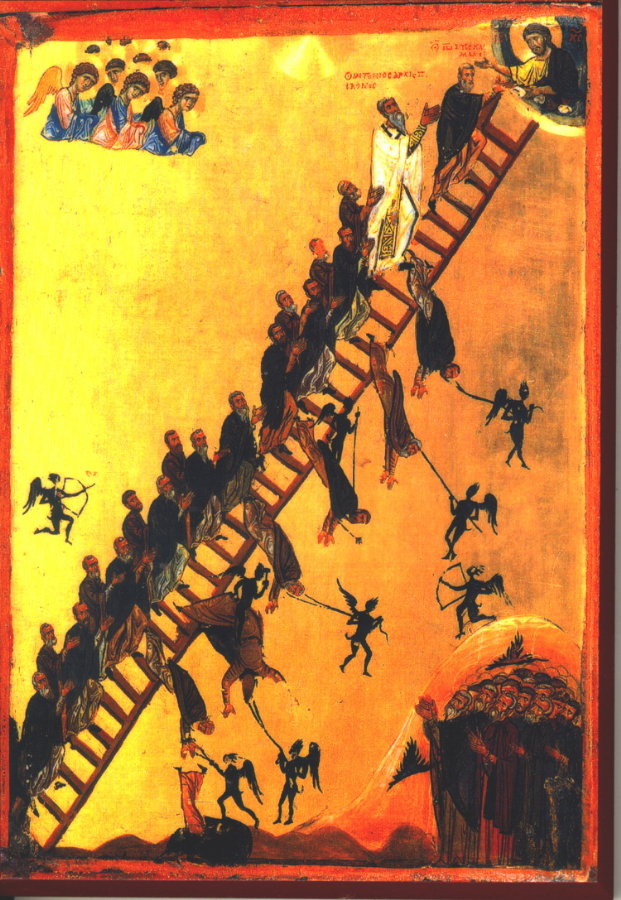
BY FR. JOHN PARKER
Revelers. Drunken stupors. Fuzzy memories. Gratuitous nudity. Dangerous liaisons. This is Mardi Gras (French for "fat Tuesday"), at least as it is celebrated in the streets of places such as New Orleans, Rio and other major cities around the world.
What is the purpose of such a day? According to mardigrasneworleans.com/history.shtml, "Human nature being what it is, people are inclined to go on a bender immediately before a period of deprivation, prayer, and fasting. Hence: Fat Tuesday."
With the landfall of Hurricane Katrina, many wondered if New Orleans would host this year's party. As it turns out, the show will go on, aided by generous neighbor Mobile, Alabama. Parties, bands, costumes, floats, one-night stands and free-flowing alcohol: this is the cultural celebration of Mardi Gras, bearing little resemblance to its Christian heritage.
Shrove Tuesday
Mardi Gras is the day before Ash Wednesday, the beginning of Lent in the Western Christian Church. Remnants of the true nature of Fat Tuesday still are visible in many churches, even locally. More often called "Shrove Tuesday" (from "to shrive," to hear the confession of and to absolve a penitent of sins), this is the day on which folks empty out their cabinets of fats - meat, cheese, butter, etc. - items from which Christians traditionally have fasted during the 40 days prior to Pascha (Easter).
In many Western Christian churches, Ash Wednesday still is kept as some sort of fast, and portions of the more ancient practice are evident on Fridays in Lent in the Roman Catholic Church, where meat is not eaten in remembrance of Christ's death on the cross on Holy Friday.
Orthodox Christians enter Great Lent differently, still following the most ancient pattern of prayer and fasting. Rather than a single day of pantry-emptying, the Orthodox first abandon meat on Meatfare Sunday, and then dairy, wine and olive oil on the following, so-called "Cheesefare," Sunday, which happens to be today, allowing for a gradual entrance into what we call the Great Fast. In the Orthodox tradition, this fast is kept daily during all 40 days, with a few festal exceptions. Prayer, fasting and almsgiving, along with confession of our sins, remain the central focuses of Lent, as we prepare for the most glorious Christian feast of the year: Pascha, the resurrection of Jesus Christ from the dead.
A feast of forgiving
The Great Fast, as the Orthodox also call it, begins not with parties, suppers or benders, but with one of the most moving services in all of Christianity. In the evening of Cheesefare Sunday, the church serves Forgiveness Vespers. At the tail end of this sung service of evening prayers, every individual in the parish, beginning with the priest, asks of and offers forgiveness to every other individual present. During this solemn and often deeply emotional portion of the service, the choir sings the bright, joyous hymns of Pascha, a foreshadowing of the glory to come.
Even still, it is easy to see, from a popular cultural perspective, why many, even Christians, see Lent as "deprivation" or some sort of dark period marked in ancient days by hair shirts, and even today by intentional discomfort, sadness, guilt and gloom. The switch from having what we want on a moment's notice all the time to living merely with what we need, and in measured portions, comes as a shock to our bodies, wills and lifestyles.
But Great Lent is the opposite of doom and guilt. It is our return from exile. It is the joy of forgiveness, which is our release from true guilt in repentance. It is our return from what has become a regular life of loose or riotous living in a far-off land, as it is described in the Parable of the Prodigal Son in Luke 15. If New Orleans' famous Mardi Gras has any relation to the Christian Shrove Tuesday and the ensuing fast of Great Lent, it is this: It is a prime-time, public, regular and celebrated example of the way we live our day-to-day life: drunk, stuffed, self-interested, careless and promiscuous.
From a Christian perspective, this is true actually as much as figuratively, if statistics are even remotely accurate with respect to alcoholism, obesity, divorce, crime and the like. Sadly and embarrassingly, the Christian statistics are the same as or worse than the secular culture in many of these areas.
What we should be
So following the example of our Lord, who entered the wilderness to pray and fast and to face the devil, we, too, do the same for 40 days. Our task is twofold: first, to see who we have become when left to our own devices: sinners who have distorted God's creation, beginning with ourselves; and second, to become who we are called to be by the grace of God: merciful saints as we see in Matthew 5:48 and Luke 6:36.
We fast from certain foods and drinks because by our sin, we abuse these in gluttony and drunkenness, not because food and drink are inherently bad. In the fourth century, St. John Chrysostom went so far as to say that the food in our pantry (paraphrased) is to our damnation since it belongs to the poor and hungry who have no daily food. Our fasting is not for God, like some cosmic payoff scheme ("I've been bad, so I'll be good for sometime; please don't punish me!"). Rather, it is for us to see that food and drink are merely fuel that keeps our bodies running so that we can live godly lives in the short time we have on this Earth. Along with our fasting, we put on moderation and sharing.
We fast from entertainment in order to see the world as it truly is, not how Hollywood portrays it. How horribly are our eyes tainted by television and movies! In our daily lives, we have come to accept murder and violence as forms of diversion. Gross language, perversion, adultery, lying, betrayal and lust are seen as normal and normative. By abstaining from watching shows and movies that flaunt such behavior while at the same time engaging ourselves in real life with real people, we can see more clearly how such living is actually vacant and damaging to all involved, not to mention far from the life Jesus Christ demonstrated for us. Along with our fasting, we put on mercy and compassion.
During the Great Fast, married couples are challenged to fast, by mutual consent, from nuptial relations following 1 Corinthians 7:5ff. (It is assumed that this is the daily practice at all times for all Christians who are not married.) Once again, this is not because sex is bad - au contraire! But even in marriage, we fall into the sin of treating one another as objects, and such an "agreement for a season" is to re-establish our godly love for one another. Along with our fasting, we put on abstinence and self-control.
Great Lent is a return to spiritual, emotional and physiological training. It is an intense time reorienting ourselves to the life God has established for us.
One significant facet to this season of prayer, fasting and almsgiving is lifted right out of the Old Testament prophecy of Isaiah: "Is not this the fast that I choose: to loose the bonds of wickedness, to undo the thongs of the yoke, to let the oppressed go free, and to break every yoke? Is it not to share your bread with the hungry, and bring the homeless poor into your house; when you see the naked, to cover him, and not to hide yourself from your own flesh?"
This is not a call to generic social justice or a longing for some unattainable better society; rather, it is a Christian imperative to stop thinking about ourselves alone and to start loving our neighbors, especially those who are in need.
But to begin to love our neighbor requires us to know that he or she exists. Lent is a time for us to venture out of our living rooms and comfort zones, to move away from the television, to suspend the mail-order DVDs and endless, mindless video games in order to worship God, live life and serve others by giving those in need what we have in spades.
All of this effort we call Lent is beautifully summarized in a fourth-century prayer still prayed daily during Lent in the Orthodox churches. The prayer of St. Ephraim the Syrian reads: "O Lord and Master of my life, take from me the spirit of sloth, despair, lust of power, and idle talk. But give rather the spirit of chastity, humility, patience, and love to thy servant. Yea, O Lord and King, grant me to see my own transgressions and not to judge my brother. For blessed art thou unto ages of ages. Amen."
God help us all so to live, beginning afresh today.
Fr. John Parker is priest-in-charge of Holy Ascension Orthodox Church in the I'On Community. He can be reached at frjohn@ocacharleston.org or by phone at 881-5010.
This article was printed via the web on 3/6/2006 9:33:38 AM . This articleappeared in The Post and Courier and updated online at Charleston.net on Sunday, March 05, 2006.
Monday, February 13, 2006
Churches show unity best by servitude
http://www.charleston.net/stories/default_pf.aspx?newsID=70081
By Father John Parker
From the beginning, it has not been so. A group of churches - among them Methodist, Baptist, Presbyterian and others - organize a sunrise Easter service to celebrate the resurrection of Jesus Christ. At Thanksgiving, a group of churches prays together annually. On Saturday evenings, a Roman Catholic Church offers Mass in a Lutheran church's sanctuary. An Episcopal priest serves as the pastor of a Presbyterian church.
At a certain level, these are unbelievable signs of generosity and Christian love - like a situation where two church groups pray together, the second of which exists historically and theologically in reaction against the first. These are all attempts to bring unity to the churches, waving the banner of John 17:11, Jesus' prayer to his father, "that they may be one, even as we are one."
But do these services and activities foster unity? Or are they outward and visible efforts, however sincere, that lack interior substance? Can "ecumenical" activity - as highlighted and encouraged, for example, by the World Council of Churches' "Week of Prayer for Christian Unity," marked this year Jan. 18-25 - "work" today?
Christians always have had both an essential call to, and existence in, unity. Since the earliest days following Jesus Christ's death, resurrection and ascension, this unity has been outward in form and inward in essence. Christians believed and dogmatized "that which is from the beginning." In the book of Acts, we read of Christians living and dying together, even holding all their possessions in common. We find in the letters and writings of those who learned personally from the disciples of Jesus - saints such as Ignatius, Polycarp, Irenaeus and others - unity of faith and belief.
For these Christians, like their spiritual progeny especially found in the Orthodox Church, when some facet of faith and belief was questioned, councils were convened to determine what had been believed from the beginning. Throughout history, there have been many such councils, though seven have been called "ecumenical," meaning "from the whole Christian world." The first and last were convened in Nicaea in 325 A.D. and 787 A.D., respectively. Each of these councils dealt specifically with theologically pressing issues such as: Was Jesus both God and man? Or how does the incarnation of God affect our view of material things?
By 1054 A.D., the Christian East and West parted ways over a number of issues, the most important of which was authority: Who decides what and how? To this day, the Orthodox Church maintains that doctrine, biblical interpretation and other matters of the church are determined in council together (as described above), with reference always to "that which is from the beginning." Five hundred years later, more fractioning of the Christian West ensued with the Protestant Reformation, and such splintering continues to occur even to this day. I recently heard the most petty of such examples, where a congregationally run church actually divided over a disputed phone bill. Yes, truly.
Especially since the 16th century, schisms have run rampant in the Christian West, mostly over matters of authority. In almost all of these cases, splits occurred as a result of one group's insistence on its interpretation of Holy Scripture over the other's. Should babies be baptized or only adults? Is the Lord's Supper a memorial or a reality? Do the bread and wine change into the body and blood of Christ or not? Is the church hierarchical or local? The Bible speaks to all of these concerns. The trouble is, one can read just about anything he wants into the Scriptures. So who decides who is right? A question of authority.
Enter the contemporary ecumenical movement. At some point in the past century or so (the details of which are not within the scope of this writing), Christians of a variety of "flavors" have come to realize that their separation is not good. This is a noble insight. Not only is it not "biblical," but it also serves as a poor witness to non-Christians, who are not likely to be convinced of the truth of Christianity as a result of the squabbles and schisms of some of its adherents. And so there have been organizations founded, such as the World Council of Churches and the National Council of Churches, as well as scores of local organizations and initiatives, each of which has made efforts at re-establishing "unity" among the churches.
But is the church disunited? From the Orthodox Christian perspective, the answer is plainly "no." The church is one - still one - and professes to be so actually and truly when we recite the Nicene Creed (formalized nearly 1,700 years ago): "We believe in one, holy, catholic and apostolic Church." The gates of hell, according to the Scriptures, cannot prevail against the church; neither is the body of Christ severed from the head. Nor are there many "bodies" of Christ. What makes the church one is that it believes, teaches and practices that which is from the beginning. And those who believe such show the same by their profession of faith and receive Communion together as a sign of that faith, demonstrating the essential oneness of the church. Anything else is bickering over personal interpretations of things.
From the earliest days, Christians have taught and recognized that a Christian cannot pick and choose what he or she believes. "As many of you as were baptized into Christ have put on Christ" (Galatians 3:27). As a servant (or "slave" to be more accurate) of Christ, we voluntarily lay down our will for his.
The question Jesus asked St. Peter we also are asked: "Who do you say that I am?" And there is an answer. Since those days, Orthodox Christians have continued to believe and proclaim the earliest answer to that question. Consider the opening words of the First Epistle of St. John: "That which was from the beginning, which we have heard, which we have seen with our eyes, which we have looked upon and touched with our hands, concerning the word of life ... that which we have seen and heard we proclaim also to you, so that you may have fellowship with us; and our fellowship is with the Father and with his Son Jesus Christ." Or the words of St. Paul: "For I received from the Lord what I also delivered to you." (1 Corinthians 11:23). We believe what was passed along was what was received from the beginning.
Prayer services and "Weeks of Prayer for Christian Unity" will prove empty and lacking until every separated Christian and ecclesiastical group asks the hard question: "Who do you say that I am?" Or more specifically, "What have Christians always believed about Jesus?" Once answered, individuals and groups then must act on that finding.
In reality, as "nice" as joint sunrise Easter services seem, as pleasant as it may be to share an annual, generic Thanksgiving service and as amazing as it is that Roman Catholics serve Mass in a Lutheran church's sanctuary, these all share one fatal flaw: no unity of faith. After the sunrise, the groups all go to their churches to celebrate in their own way. At Thanksgiving, the Great Thanksgiving - the Eucharist of our Lord - cannot be celebrated together. A Lutheran may attend the Roman Catholic service in her own church building, but may not receive Communion. Because the groups do not believe together that which is from the beginning, their unity is and can only be external and temporary, a mask covering their persistent, fundamental divisions.
The church is one. It is the holy body of Christ, living and breathing from Pentecost to this day. Every person's task is twofold. First, one must find out for himself what he believes but shouldn't, or what he doesn't believe but should, about Jesus Christ, who is the same yesterday, today and forever. Second, he must unite himself to the church, wherein we find the beginning of our salvation while we breathe on this Earth, remembering that Jesus Christ left us a holy body, not a book.
There is, in truth, hope, and we need not despair. This is a narrow way; in fact, it is "the" narrow way. And yet, in the midst of the struggle, God is with us. If there is one "ecumenical" activity that can always and immediately bear fruit, it is serving those to whom Jesus referred to as "the least of these." All self-professing Christians need to serve the poor, the hungry, the homeless, the needy and the imprisoned together. In the end, our judgment on the last day will depend on it (John 5:28ff). Lord have mercy.
Father John Parker is priest-in-charge of Holy Ascension Orthodox Church in the I'On Community. Reach him at frjohn@ocacharleston.org or 881-5010.
This article was printed via the web on 2/13/2006 9:16:18 AM . This articleappeared in The Post and Courier and updated online at Charleston.net on Sunday, February 12, 2006.
By Father John Parker
From the beginning, it has not been so. A group of churches - among them Methodist, Baptist, Presbyterian and others - organize a sunrise Easter service to celebrate the resurrection of Jesus Christ. At Thanksgiving, a group of churches prays together annually. On Saturday evenings, a Roman Catholic Church offers Mass in a Lutheran church's sanctuary. An Episcopal priest serves as the pastor of a Presbyterian church.
At a certain level, these are unbelievable signs of generosity and Christian love - like a situation where two church groups pray together, the second of which exists historically and theologically in reaction against the first. These are all attempts to bring unity to the churches, waving the banner of John 17:11, Jesus' prayer to his father, "that they may be one, even as we are one."
But do these services and activities foster unity? Or are they outward and visible efforts, however sincere, that lack interior substance? Can "ecumenical" activity - as highlighted and encouraged, for example, by the World Council of Churches' "Week of Prayer for Christian Unity," marked this year Jan. 18-25 - "work" today?
Christians always have had both an essential call to, and existence in, unity. Since the earliest days following Jesus Christ's death, resurrection and ascension, this unity has been outward in form and inward in essence. Christians believed and dogmatized "that which is from the beginning." In the book of Acts, we read of Christians living and dying together, even holding all their possessions in common. We find in the letters and writings of those who learned personally from the disciples of Jesus - saints such as Ignatius, Polycarp, Irenaeus and others - unity of faith and belief.
For these Christians, like their spiritual progeny especially found in the Orthodox Church, when some facet of faith and belief was questioned, councils were convened to determine what had been believed from the beginning. Throughout history, there have been many such councils, though seven have been called "ecumenical," meaning "from the whole Christian world." The first and last were convened in Nicaea in 325 A.D. and 787 A.D., respectively. Each of these councils dealt specifically with theologically pressing issues such as: Was Jesus both God and man? Or how does the incarnation of God affect our view of material things?
By 1054 A.D., the Christian East and West parted ways over a number of issues, the most important of which was authority: Who decides what and how? To this day, the Orthodox Church maintains that doctrine, biblical interpretation and other matters of the church are determined in council together (as described above), with reference always to "that which is from the beginning." Five hundred years later, more fractioning of the Christian West ensued with the Protestant Reformation, and such splintering continues to occur even to this day. I recently heard the most petty of such examples, where a congregationally run church actually divided over a disputed phone bill. Yes, truly.
Especially since the 16th century, schisms have run rampant in the Christian West, mostly over matters of authority. In almost all of these cases, splits occurred as a result of one group's insistence on its interpretation of Holy Scripture over the other's. Should babies be baptized or only adults? Is the Lord's Supper a memorial or a reality? Do the bread and wine change into the body and blood of Christ or not? Is the church hierarchical or local? The Bible speaks to all of these concerns. The trouble is, one can read just about anything he wants into the Scriptures. So who decides who is right? A question of authority.
Enter the contemporary ecumenical movement. At some point in the past century or so (the details of which are not within the scope of this writing), Christians of a variety of "flavors" have come to realize that their separation is not good. This is a noble insight. Not only is it not "biblical," but it also serves as a poor witness to non-Christians, who are not likely to be convinced of the truth of Christianity as a result of the squabbles and schisms of some of its adherents. And so there have been organizations founded, such as the World Council of Churches and the National Council of Churches, as well as scores of local organizations and initiatives, each of which has made efforts at re-establishing "unity" among the churches.
But is the church disunited? From the Orthodox Christian perspective, the answer is plainly "no." The church is one - still one - and professes to be so actually and truly when we recite the Nicene Creed (formalized nearly 1,700 years ago): "We believe in one, holy, catholic and apostolic Church." The gates of hell, according to the Scriptures, cannot prevail against the church; neither is the body of Christ severed from the head. Nor are there many "bodies" of Christ. What makes the church one is that it believes, teaches and practices that which is from the beginning. And those who believe such show the same by their profession of faith and receive Communion together as a sign of that faith, demonstrating the essential oneness of the church. Anything else is bickering over personal interpretations of things.
From the earliest days, Christians have taught and recognized that a Christian cannot pick and choose what he or she believes. "As many of you as were baptized into Christ have put on Christ" (Galatians 3:27). As a servant (or "slave" to be more accurate) of Christ, we voluntarily lay down our will for his.
The question Jesus asked St. Peter we also are asked: "Who do you say that I am?" And there is an answer. Since those days, Orthodox Christians have continued to believe and proclaim the earliest answer to that question. Consider the opening words of the First Epistle of St. John: "That which was from the beginning, which we have heard, which we have seen with our eyes, which we have looked upon and touched with our hands, concerning the word of life ... that which we have seen and heard we proclaim also to you, so that you may have fellowship with us; and our fellowship is with the Father and with his Son Jesus Christ." Or the words of St. Paul: "For I received from the Lord what I also delivered to you." (1 Corinthians 11:23). We believe what was passed along was what was received from the beginning.
Prayer services and "Weeks of Prayer for Christian Unity" will prove empty and lacking until every separated Christian and ecclesiastical group asks the hard question: "Who do you say that I am?" Or more specifically, "What have Christians always believed about Jesus?" Once answered, individuals and groups then must act on that finding.
In reality, as "nice" as joint sunrise Easter services seem, as pleasant as it may be to share an annual, generic Thanksgiving service and as amazing as it is that Roman Catholics serve Mass in a Lutheran church's sanctuary, these all share one fatal flaw: no unity of faith. After the sunrise, the groups all go to their churches to celebrate in their own way. At Thanksgiving, the Great Thanksgiving - the Eucharist of our Lord - cannot be celebrated together. A Lutheran may attend the Roman Catholic service in her own church building, but may not receive Communion. Because the groups do not believe together that which is from the beginning, their unity is and can only be external and temporary, a mask covering their persistent, fundamental divisions.
The church is one. It is the holy body of Christ, living and breathing from Pentecost to this day. Every person's task is twofold. First, one must find out for himself what he believes but shouldn't, or what he doesn't believe but should, about Jesus Christ, who is the same yesterday, today and forever. Second, he must unite himself to the church, wherein we find the beginning of our salvation while we breathe on this Earth, remembering that Jesus Christ left us a holy body, not a book.
There is, in truth, hope, and we need not despair. This is a narrow way; in fact, it is "the" narrow way. And yet, in the midst of the struggle, God is with us. If there is one "ecumenical" activity that can always and immediately bear fruit, it is serving those to whom Jesus referred to as "the least of these." All self-professing Christians need to serve the poor, the hungry, the homeless, the needy and the imprisoned together. In the end, our judgment on the last day will depend on it (John 5:28ff). Lord have mercy.
Father John Parker is priest-in-charge of Holy Ascension Orthodox Church in the I'On Community. Reach him at frjohn@ocacharleston.org or 881-5010.
This article was printed via the web on 2/13/2006 9:16:18 AM . This articleappeared in The Post and Courier and updated online at Charleston.net on Sunday, February 12, 2006.
Great Lent is Coming! Great Lent is Coming!
The Paul Reveres of Orthodoxy are passing through town: the Sunday of the Publican and Pharisee (yesterday), this week which is FAST FREE (!), the Sunday of the Prodigal Son (2/19), etc. These are all announcements to us that the “end is near”. What end? The end of the routine of winter’s spiritual slothfulness (do I speak only for myself?) wherein I have grown lazy and self-indulgent in the pleasures of much food, the warmth of a cozy bed, and thoughts most centered on “what about me?”
These weeks hang a flashing yellow warning light over the highway of our routine life, and soon we will find ourselves at the crossroads of self and selflessness, first and last, greatest and least. More so, we will once again find ourselves at the intersection of salvation and self. Self so often seems to have the ‘best’ short term benefits, but ends in death—spiritual and actual. But will I choose salvation? Will I choose Christ? He stands at the door, always knocking. Will I let Him in? (Revelation 3:20)
Great Lent is the Christian School of Repentance, the academy which teaches us—through prayer, fasting, almsgiving, and the reading of Scripture—precisely both who we are (actually) and who we are called to be. If we don’t think we need a doctor, why go to the hospital—or as St. John puts it “If we say we have no sin, we deceive ourselves, and the truth is not in us. If we confess our sins, he is faithful and just, and will forgive our sins and cleanse us from all unrighteousness. If we say we have not sinned, we make him a liar, and his word is not in us” (1 John 1:8ff).
Will we face the reality that we desperately need spiritual surgery? Will we finally submit to doctor’s orders? Consider some of the hymns we sing this time of year, and let’s help each other onto the stretchers!
"Brothers, let us not pray like the Pharisee; he who exalts himself will be
humbled! Let us prepare to abase ourselves by fasting; Let us cry aloud with the
voice of the Publican. O God, forgive us sinners!"
"The weight of my transgressions burdens my eyes; I cannot lift my gaze to the heights of heaven, O Lord! Accept me in repentance, as Thou didst accept the Publican. Have mercy on me, O Savior!"
"Where shall I begin to lament the deeds of my wretched life? What first-fruit shall I offer, O Christ, for my present lamentation? But in Thy compassion grant me release from my falls."
These weeks hang a flashing yellow warning light over the highway of our routine life, and soon we will find ourselves at the crossroads of self and selflessness, first and last, greatest and least. More so, we will once again find ourselves at the intersection of salvation and self. Self so often seems to have the ‘best’ short term benefits, but ends in death—spiritual and actual. But will I choose salvation? Will I choose Christ? He stands at the door, always knocking. Will I let Him in? (Revelation 3:20)
Great Lent is the Christian School of Repentance, the academy which teaches us—through prayer, fasting, almsgiving, and the reading of Scripture—precisely both who we are (actually) and who we are called to be. If we don’t think we need a doctor, why go to the hospital—or as St. John puts it “If we say we have no sin, we deceive ourselves, and the truth is not in us. If we confess our sins, he is faithful and just, and will forgive our sins and cleanse us from all unrighteousness. If we say we have not sinned, we make him a liar, and his word is not in us” (1 John 1:8ff).
Will we face the reality that we desperately need spiritual surgery? Will we finally submit to doctor’s orders? Consider some of the hymns we sing this time of year, and let’s help each other onto the stretchers!
"Brothers, let us not pray like the Pharisee; he who exalts himself will be
humbled! Let us prepare to abase ourselves by fasting; Let us cry aloud with the
voice of the Publican. O God, forgive us sinners!"
"The weight of my transgressions burdens my eyes; I cannot lift my gaze to the heights of heaven, O Lord! Accept me in repentance, as Thou didst accept the Publican. Have mercy on me, O Savior!"
"Where shall I begin to lament the deeds of my wretched life? What first-fruit shall I offer, O Christ, for my present lamentation? But in Thy compassion grant me release from my falls."
Saturday, January 21, 2006
Sanctity of Human Life Sunday
This is my sermon for the Sanctity of Human Life Sunday as celebrated on January 22, 2006, by the Orthodox Church in America
Today Orthodox Christians celebrate the Sanctity of Human Life. As our own Fr. John Breck has made ever-memorable by his book title: The Sacred Gift of Life.
The Sanctity of Life extends from cradle to grave, and includes every millisecond in-between the two. Our beliefs, then, relate to conception, contraception, abortion…wellness and health, sickness and disease, “a Christian ending to our lives, painless, blameless, and peaceful” (as we pray), capital punishment, euthanasia, suicide, and death in general.
God alone has granted us life. He is the Author and Sustainer of it. It is He who breathes life into our existence (Genesis 1, 2). It is our task to be good stewards of it.
Let us be clear: we are not called to be determiners of who lives or dies. Rather, once alive, we are called to be good stewards of our own lives as well as defenders of the lives of those who begin, live, and die around us.
Today Orthodox Christians celebrate the Sanctity of Human Life. As our own Fr. John Breck has made ever-memorable by his book title: The Sacred Gift of Life.
The Sanctity of Life extends from cradle to grave, and includes every millisecond in-between the two. Our beliefs, then, relate to conception, contraception, abortion…wellness and health, sickness and disease, “a Christian ending to our lives, painless, blameless, and peaceful” (as we pray), capital punishment, euthanasia, suicide, and death in general.
God alone has granted us life. He is the Author and Sustainer of it. It is He who breathes life into our existence (Genesis 1, 2). It is our task to be good stewards of it.
Let us be clear: we are not called to be determiners of who lives or dies. Rather, once alive, we are called to be good stewards of our own lives as well as defenders of the lives of those who begin, live, and die around us.
The Church believes that life begins at conception. This is not an optional concept for us. It is fundamental.
- We celebrate Christ’s conception on March 25 (Annunciation)
- Mary, the the Theotokos—the mother of God— by Joachim and Anna on December 9
- St. John the Baptist, The Forerunner, by Zechariah and Elizabeth on Sept. 23.
By these feasts, by celebrating these events on these days, we show our belief about when life begins. There is no Christian option otherwise.
The One who is the Way, the Truth and the Life, Jesus Christ, shows us the sanctity of all life by the way He spends His time with people, by his association with the ‘outcasts’, (Ones whom some today would call “worthless people” who have no ‘significant’ or measurable, or ‘meaningful’ life, and who ‘might should’ be put to death.)
Jesus had direct contact with lepers—many lepers—in one episode, 10 at once. And yet he had compassion on them, the outcasts of society. And even healed them—even the ungrateful ones!
Then there is the blind man in today’s lesson. There was even the blind man who was believed by many to be blind because of his or his family’s sins. (He wasn’t.) Jesus took pity on him, too.
And then there is the woman with the flow of blood. The unclean one. And the demoniacs in the graveyard.
Their lives were also sacred. Created by God. And tended to by Jesus personally.
With regard to ‘end of life’ issues, as we might call them today, there is the instance of the woman caught in adultery, who, together with the guilty man, should have been stoned to death according to the law. But Jesus showed mercy and spared her. Jesus is the Author of Life and the Sustainer of it.
Neither was Paul put to death, who as Saul was the leading killer of Christians before his conversion. Rather, as the ‘chief of sinners’ as we heard today, he repented and became the first great theologian, authoring the majority of the New Testament writings.
In all of these Gospel examples, we find that the Sanctity of human life is not an ‘optional view’ or an ‘opinion’ of the Church, but rather is the very essence of Jesus Christ. The sanctity of life is the undeniable God-revealed truth.
It must also be said that issues such as abortion, euthanasia, and capital punishment are neither political issues nor women’s or human rights concerns. Rather they are serious moral considerations. Any Orthodox Christian who teaches, believes, or counsels others towards abortion, capital punishment or euthanasia teaches or believes that murder is a human option and denies that God alone is the Author and Governor of Life. As such, he or she is out of communion with Jesus Christ in the Church and must repent and change his/her mind.
NONE of this is simply ‘believe this or else’. We must always remember that as Christians we voluntarily take up the teachings of the Church because they are God-revealed. No one among us can create life ex-nihilo, and none of us can take life willy-nilly.
The teachings of the Church in this regard can be seen clearly among the ranks of the clergy. No one may be ordained to the ranks of the clergy who has ever taken a life. Likewise, any member of the clergy who takes a life—even by accident—forfeits his ministry. This is part of what we mean when we say “blameless” as when we pray for a “Christian ending to our lives, painless, blameless, and peaceful, and a good defense before the dread judgment seat of Christ”.
Lest we, who have had not direct link to any form of murder about which I have already spoken, believe that we are free from today’s teaching—let us also remember the finer points of the Gospel:
“You have heard that it was said to the men of old, ‘You shall not kill; and whoever kills shall be liable to judgment.’ 22 But I say to you that every one who is angry with his brother shall be liable to judgment; whoever insults his brother shall be liable to the council, and whoever says, ‘You fool!’ shall be liable to the hell of fire.”
Who among us stands uncondemned?
We must likewise remember that, according to the Scriptures, our bodies are the temple of the Holy Spirit. So, we take part in the desecration of human life—our own and those around us!—when we
- Live an overly sedentary life.
- We do not exercise.
- We eat horribly or excessively.
- Are addicted to much wine or liquor or to smoking or drugs
These, too, require repentance and amendment of life! We must care for the life God has given!
All of life is sacred, and we are stewards of life!
We do and will fall short a thousand times in our lives, and we must deal with and accept the consequences of our actions. But the Author of Life, Jesus Christ, “the Lord is merciful and gracious, slow to anger and abounding in steadfast love” (Psalm 103:8). And, “if we confess our sins, he is faithful and just, and will forgive our sins and cleanse us from all unrighteousness” (1 John 1:9).
This mercy has extended throughout time to murderers and sinners alike—remember among them:
- Cain who killed his brother and was spared by God
- Moses—who killed the Egyptian when he was young—and still was called to lead God’s people.
- King David—who not only had Uriah killed, but committed adultery with his wife.
- And many, many more—including St. Paul, whom I have already mentioned.
Hear what the Lord says through the Prophet Ezekiel (18:32), “…I have no pleasure in the death of any one, says the Lord GOD; so turn, and live.”
And let the words of today’s Epistle from St. Paul’s first letter to Timothy be our own:
The saying is sure and worthy of full acceptance, that Christ Jesus came into the world to save sinners. And I am the foremost of sinners; 16 but I received mercy for this reason, that in me, as the foremost, Jesus Christ might display his perfect patience for an example to those who were to believe in him for eternal life. 17 To the King of ages, immortal, invisible, the only God, be honor and glory for ever and ever. Amen.
Subscribe to:
Posts (Atom)